Creative Small Pantry Solutions: Innovative Organization and Space Optimization Tips

Innovative tiny pantry designs have transcended the idea of mere compromise. Today’s compact pantry concepts emphasize intelligent spatial arrangements, contemporary materials, and clever organization strategies that can transform even the most modest space into a highly functional storage hub. How do you create a tiny kitchen design with pantry space that feels open, orderly, and visually appealing simultaneously? This article explores the latest advancements in tiny pantry design concepts and shows how to implement them effectively in kitchens, closets, offices, and walk-in configurations.
1. The Contemporary Vision for Compact Pantry Spaces
Modern tiny pantry planning balances tranquility and peak functionality. The objective lies in minimalistic forms, soft palettes, and thoughtfully integrated layouts that impart a sense of design intention rather than improvisation. Even narrow pantry corners or tight rooms can achieve architectural elegance through cohesive shelving systems, door designs, and lighting schemes.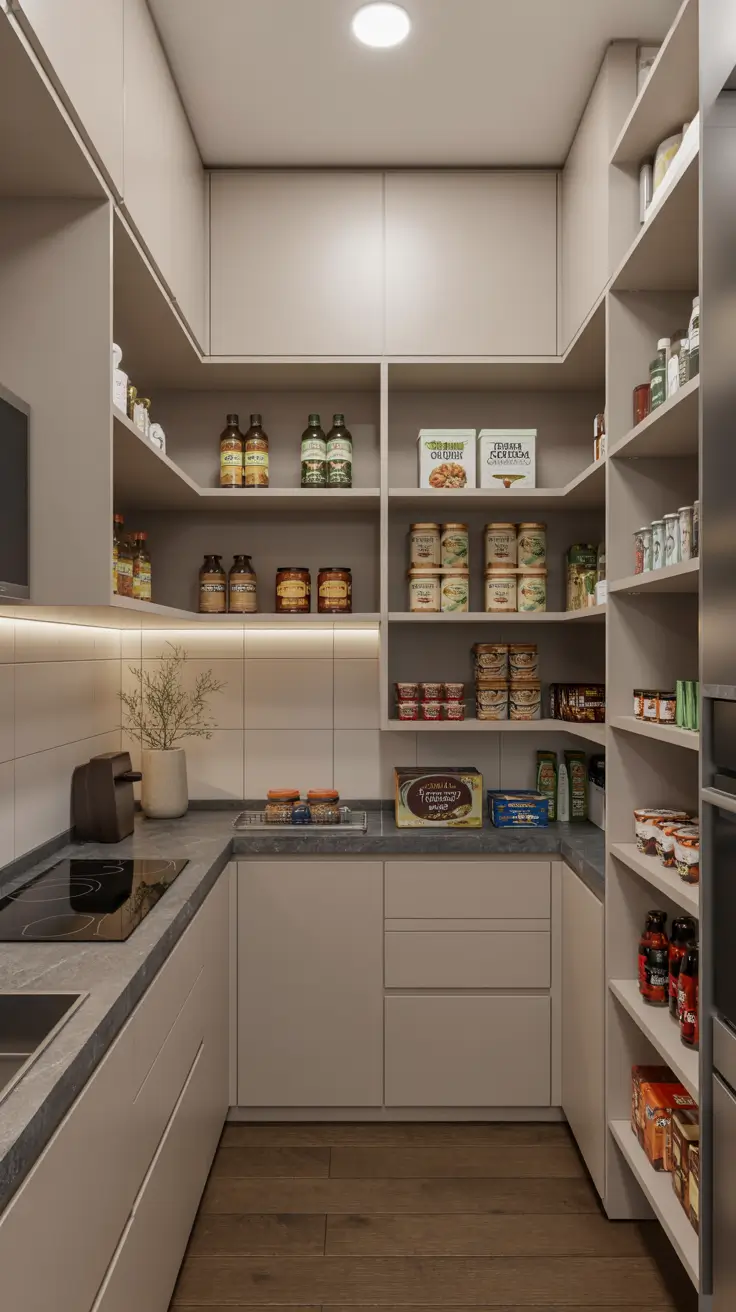
In my professional projects, I prioritize built-in shelving, ceiling-high storage, and cabinets with reduced depth to utilize every inch efficiently. Incorporating glass front doors, matte surfaces, and sleek LED lighting makes the pantry feel integrated within the home, elevating it beyond a mere storage utility. These features facilitate order without causing the space to feel congested.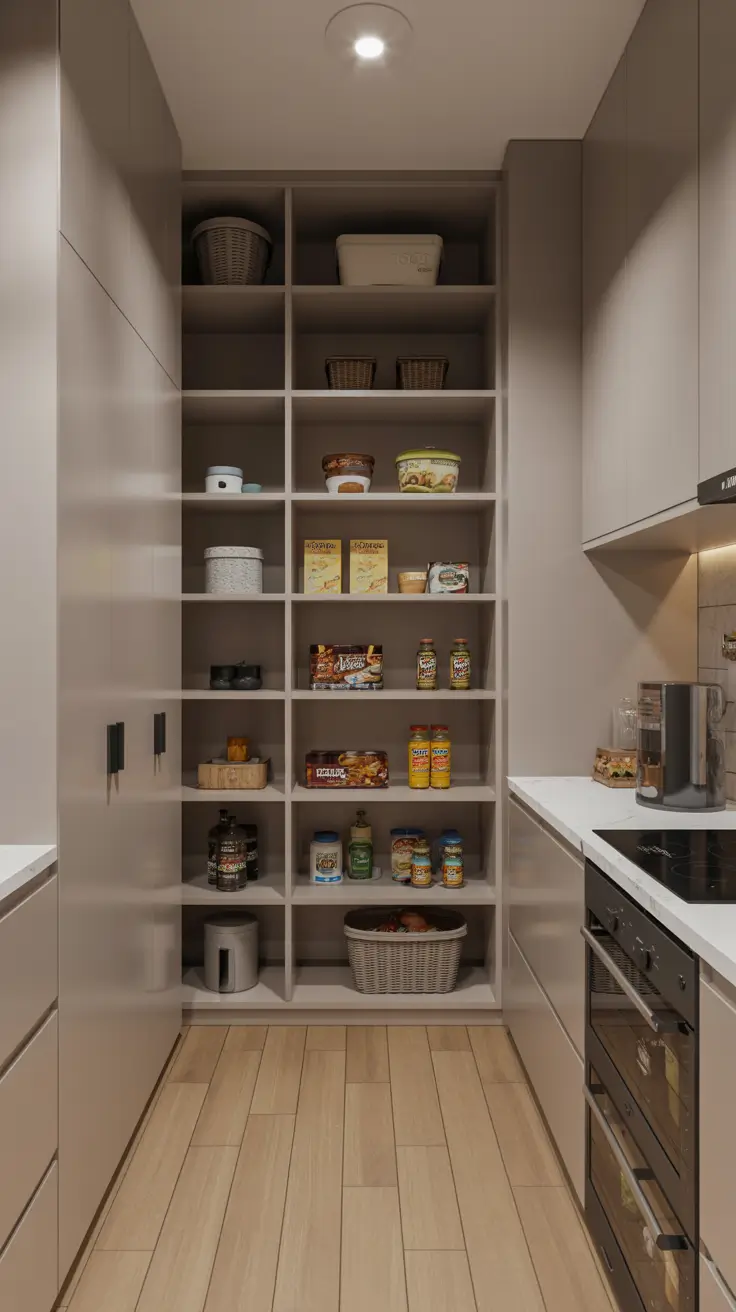
Design experts across the country consistently advocate minimizing visual noise. Leading publications underscore that small pantries benefit from coherent material choices and color harmonization, creating a serene yet purposeful environment.
Additionally, integrating eco-friendly components such as recycled woods and modular setups capable of evolving with changing storage demands enhances sustainability in pantry design.
2. Innovative Pantry Solutions for Urban Compact Living
In designing small urban environments, my strategy centers on layouts that streamline daily life. Optimized tiny pantry ideas emphasize vertical arrangements, slim shelving units, and clearly defined zones for various pantry staples, proving especially beneficial in apartments where wall space is limited.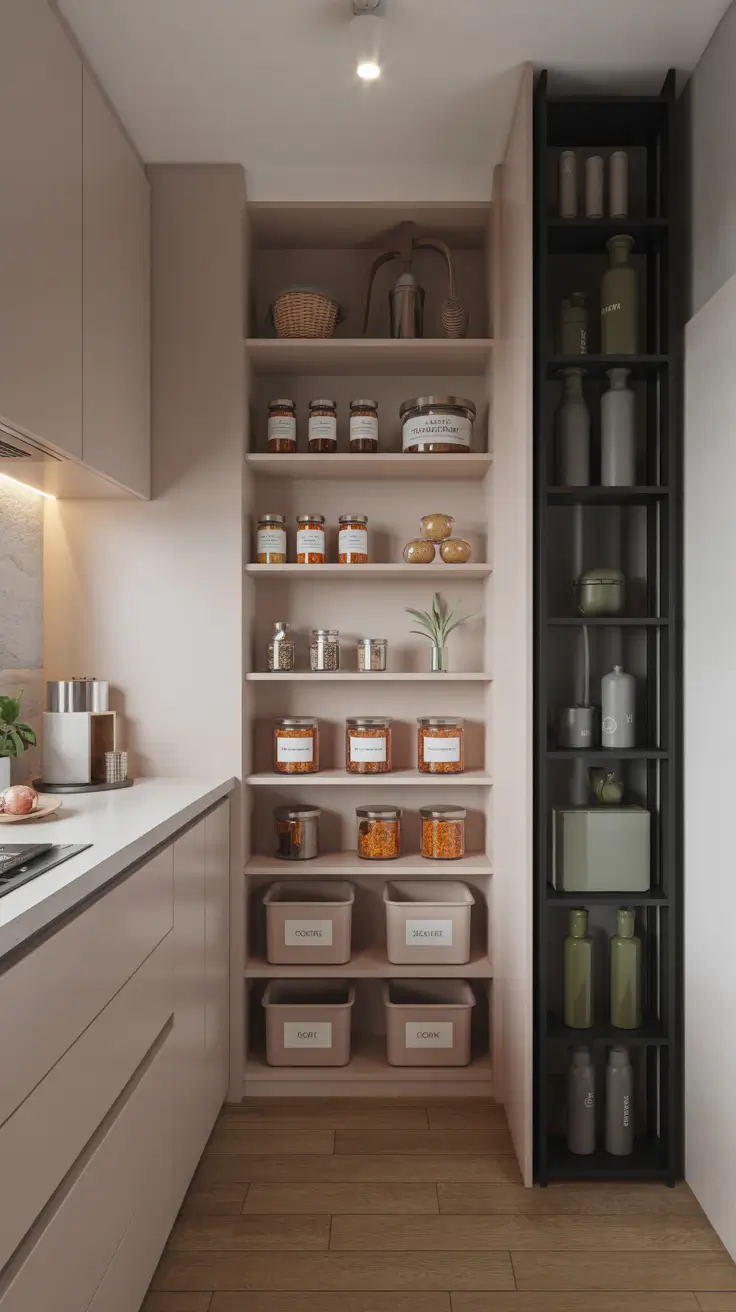
Adjustability is key: shelves that move, pull-out baskets, and well-marked bins simplify categorization. Features like narrow racks for spices and top-level storage for bulk goods maximize utility without clutter. Pantry doors with built-in racks add practical storage without increasing spatial demands.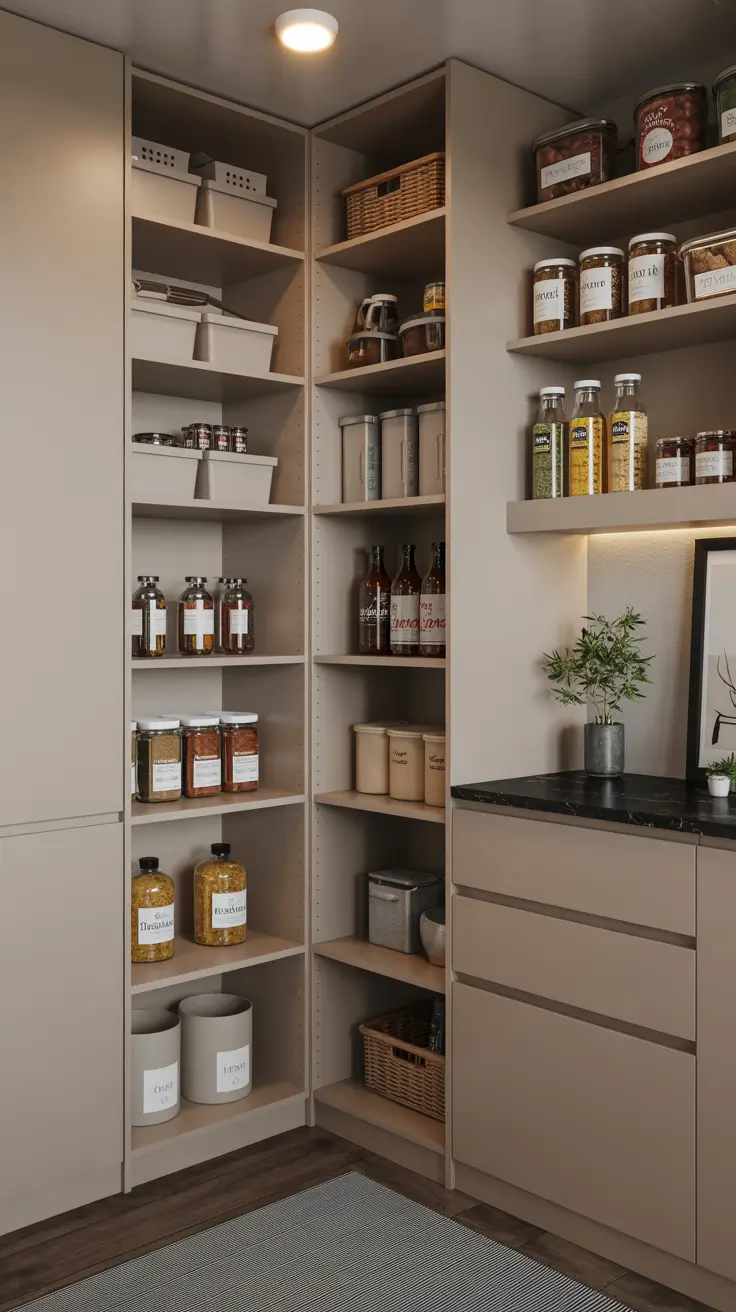
From experience, when elements are readily visible, users are more likely to maintain order—a concept often endorsed by lifestyle resources like Better Homes and Gardens.
It’s important to consider modular shelving solutions that allow easy reconfiguration to adapt to evolving storage needs over time.
3. Maximizing Space: Smart Storage Techniques for Tiny Pantries
When dealing with small pantries, maximizing storage is about efficiency, not just size. I focus on exploiting every nook—including corners, backs of doors, and upper shelves. Innovative corner options such as swivel shelves unlock spaces that usually go unused.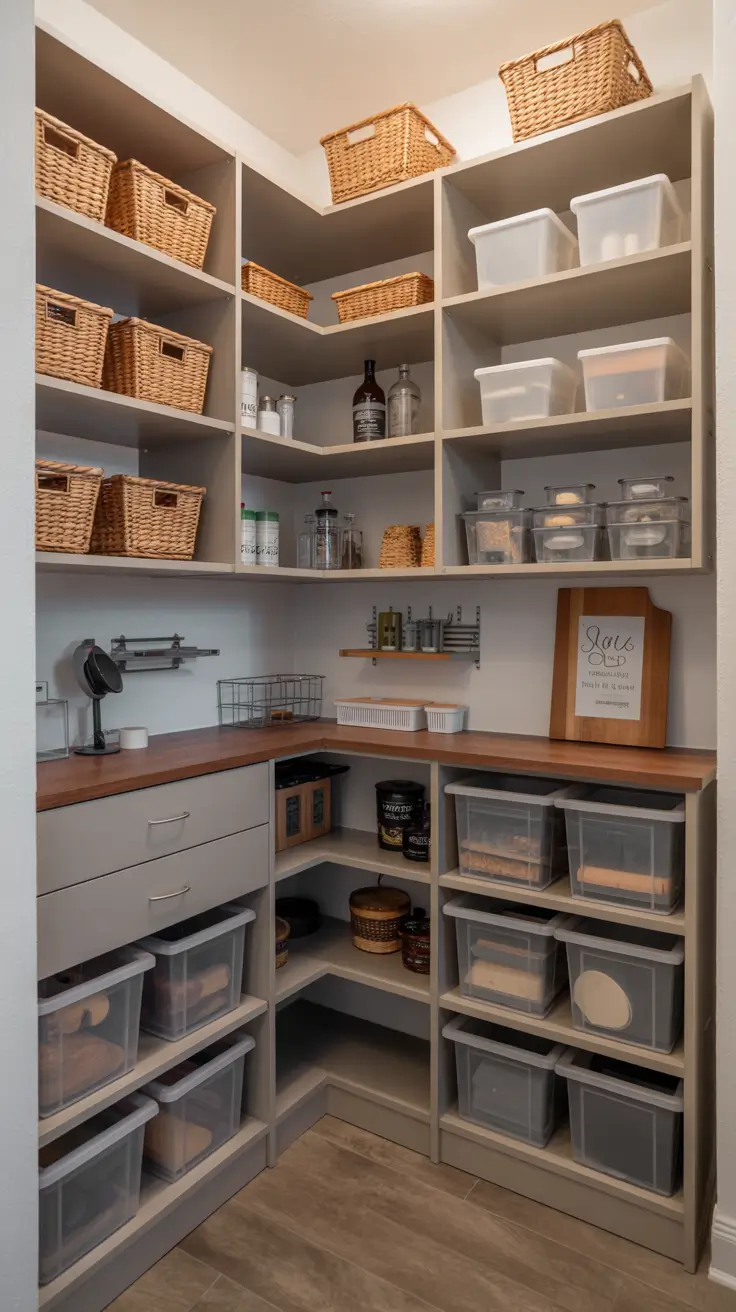
Heavy items fit comfortably in deep lower drawers, while essentials are kept within easy reach on shallow upper shelves. Utilizing clear bins, stackable containers, and labeled jars achieves functional and neat pantry organization.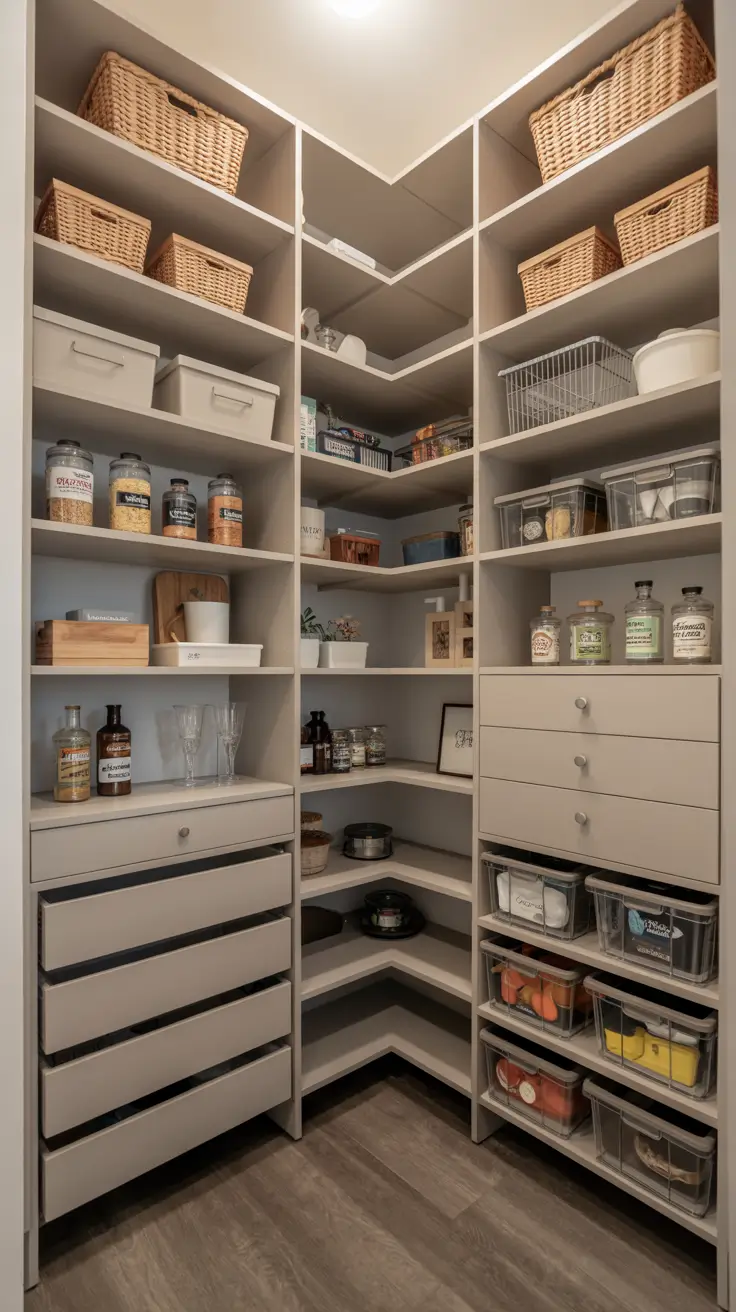
Rather than crowding a pantry with excessive shelving, choosing well-planned, fewer storage zones is more effective—a principle frequently endorsed by professional organizers nationwide.
Before beginning a pantry update, a checklist for evaluating specific storage requirements can prevent unnecessary construction and ensure tailored solutions.
4. Cohesive Pantry Integration in Small Kitchen Designs
A well-designed tiny kitchen with pantry blends the storage seamlessly into the kitchen cabinetry. This approach enhances cohesiveness and facilitates better spatial flow in compact home layouts.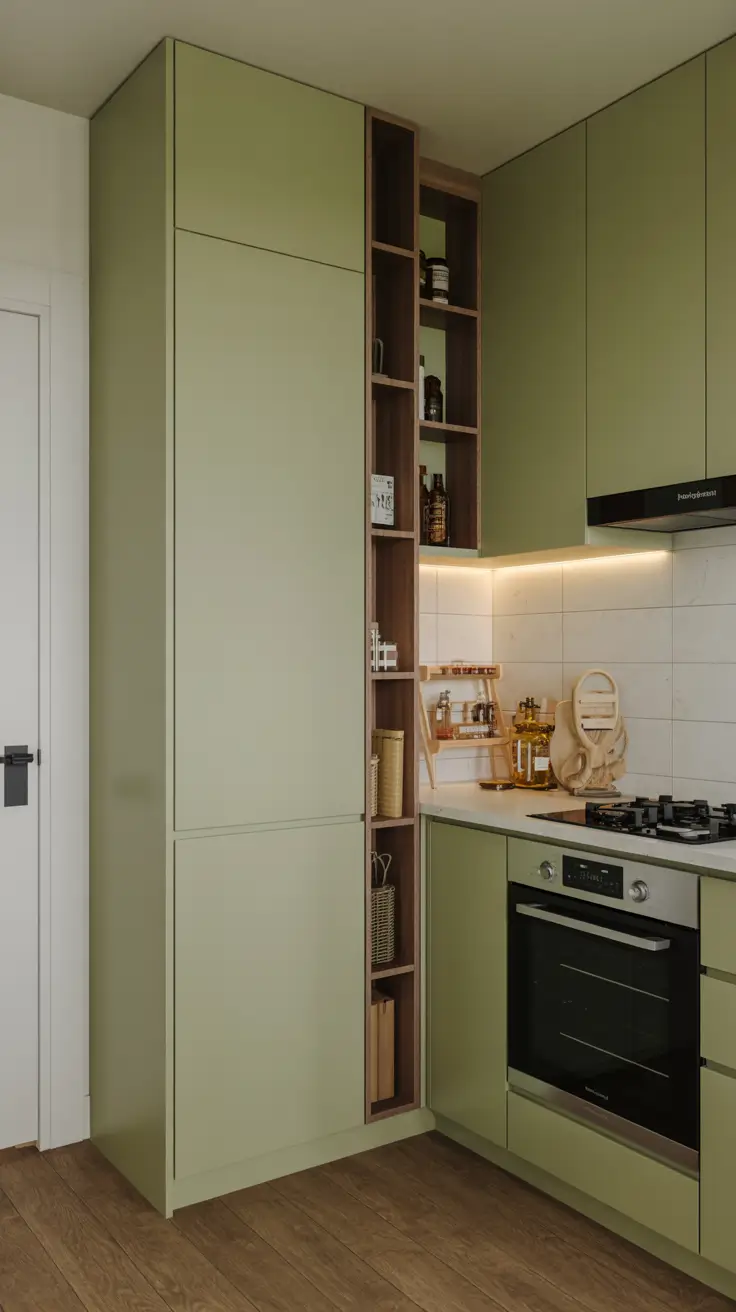
Tall pantry cabinets with concealed pull-out shelving units behind coordinated doors maintain visual simplicity while offering ample vertical storage. Integrated lighting inside these cabinets delivers functionality without disrupting the kitchen’s clean lines.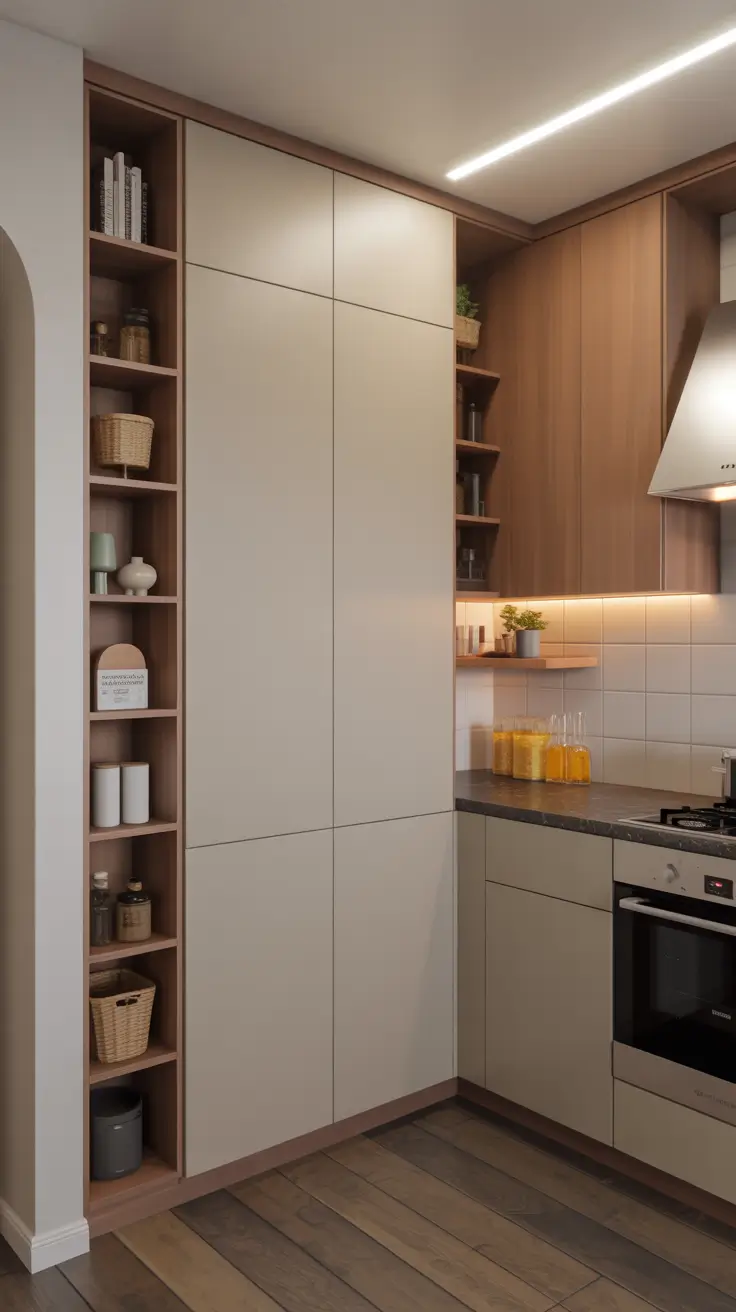
Design professionals often recommend treating storage elements as architectural features rather than afterthoughts, resulting in kitchens that feel larger and more polished.
Extending this idea, positioning the pantry close to food preparation zones enhances workflow and kitchen efficiency.
5. Seamless Pantry Integration Within Kitchen Layouts
Rather than existing as a separate entity, today’s tiny kitchen pantries are designed to intimately coalesce with appliances like refrigerators, ovens, or even under-stairs spaces, optimizing every inch.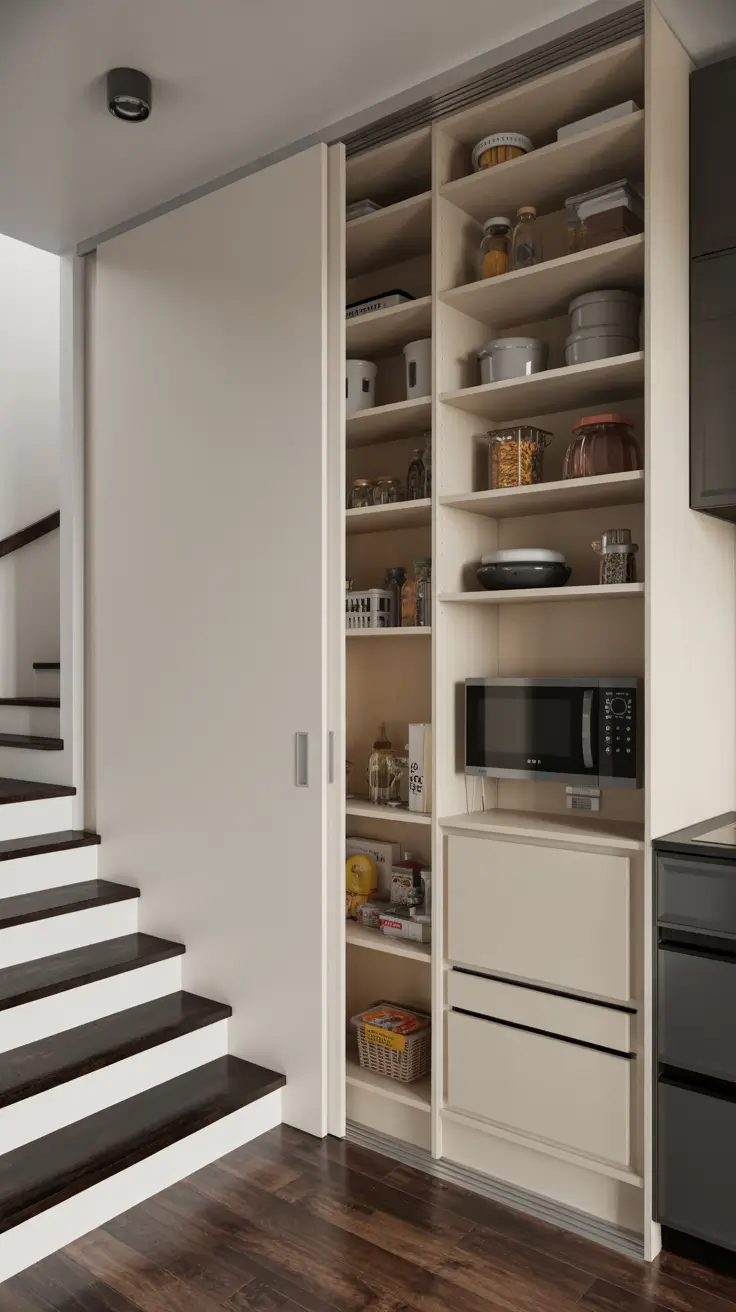
Depending on frequency of use, sliding or pocket doors, and open shelves are curated to tailor accessibility and preserve fluidity.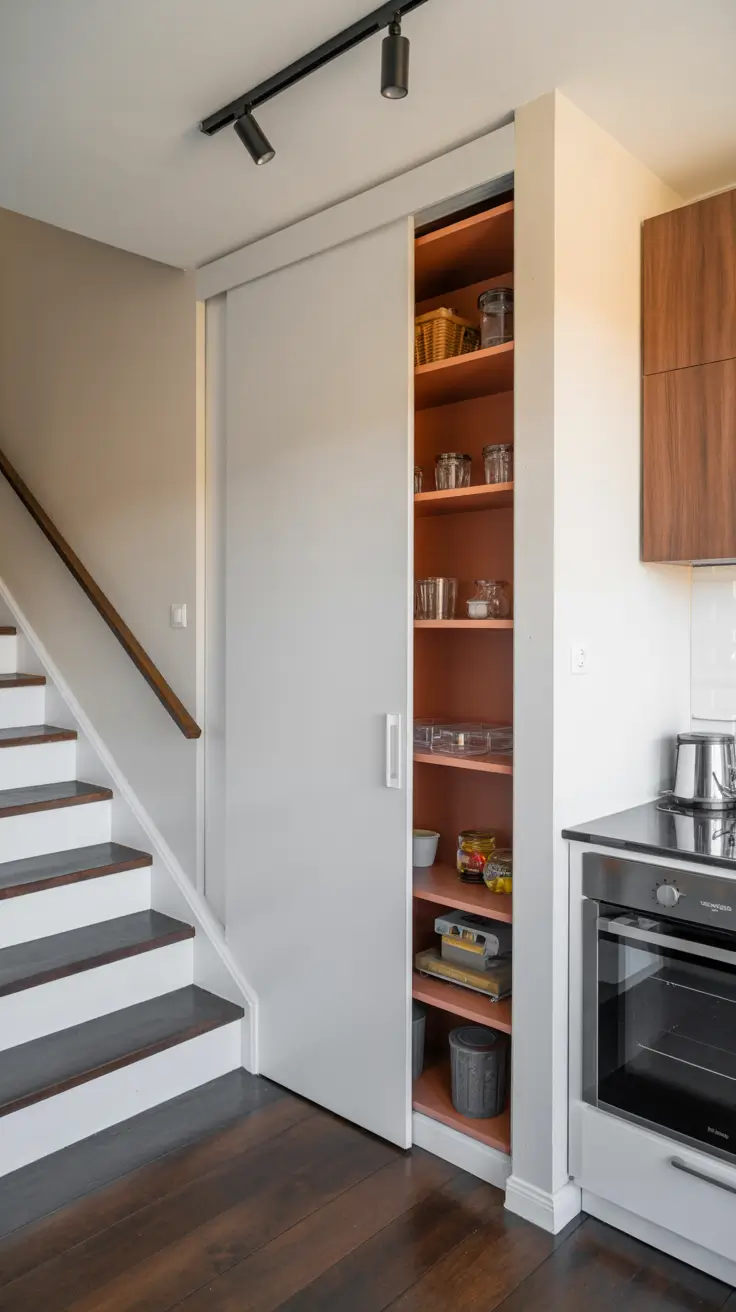
Personally, I prefer a unified design language throughout to minimize visual interruptions, a sentiment echoed by many interior professionals focusing on spatial harmony in tight quarters.
More comprehensive attention to ventilation and noise control around appliance-adjacent pantries would enhance user comfort.
6. Compact Pantry Designs Tailored for City Life
Urban pantry solutions address confined living spaces and bustling lifestyles, requiring each shelf to serve a distinct purpose. I frequently transform narrow nooks or closets using sleek metal racks and versatile furniture that doubles as storage and display.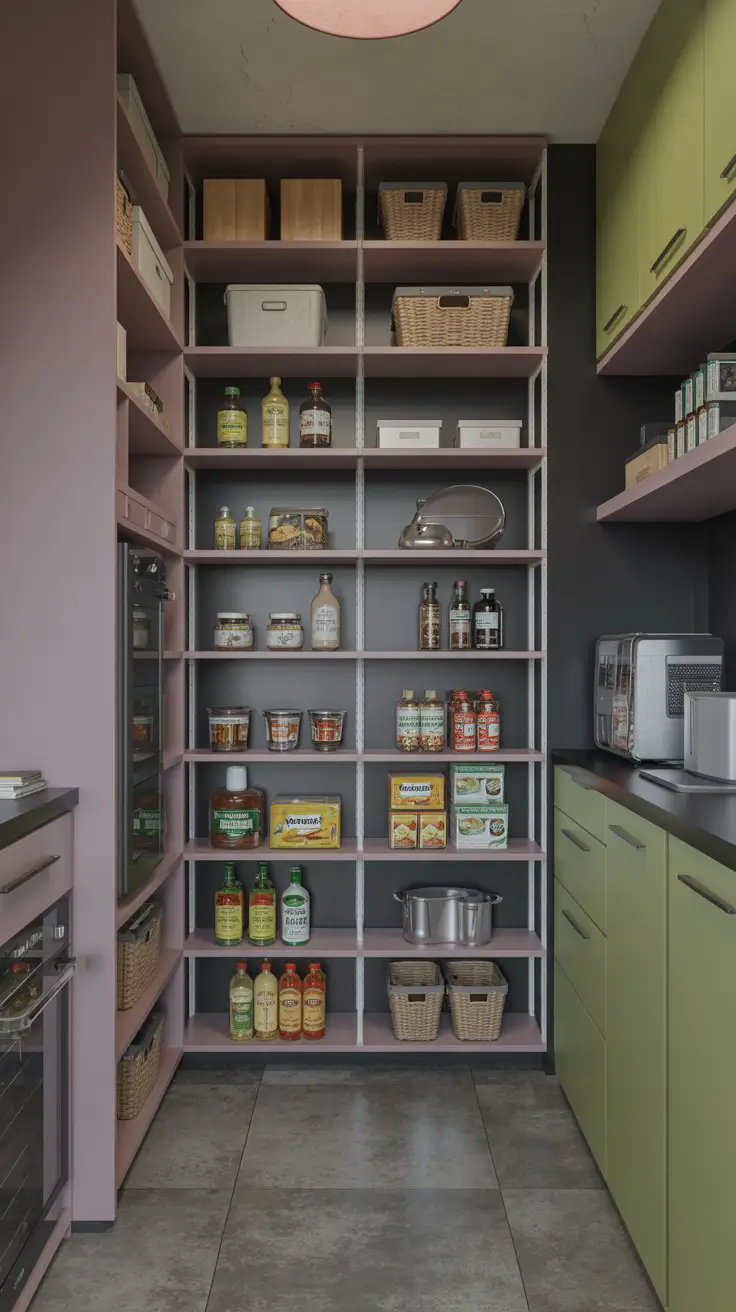
Wall-mounted options and foldable furniture pieces are popular, matching the evolving needs of city apartments where space efficiency is paramount.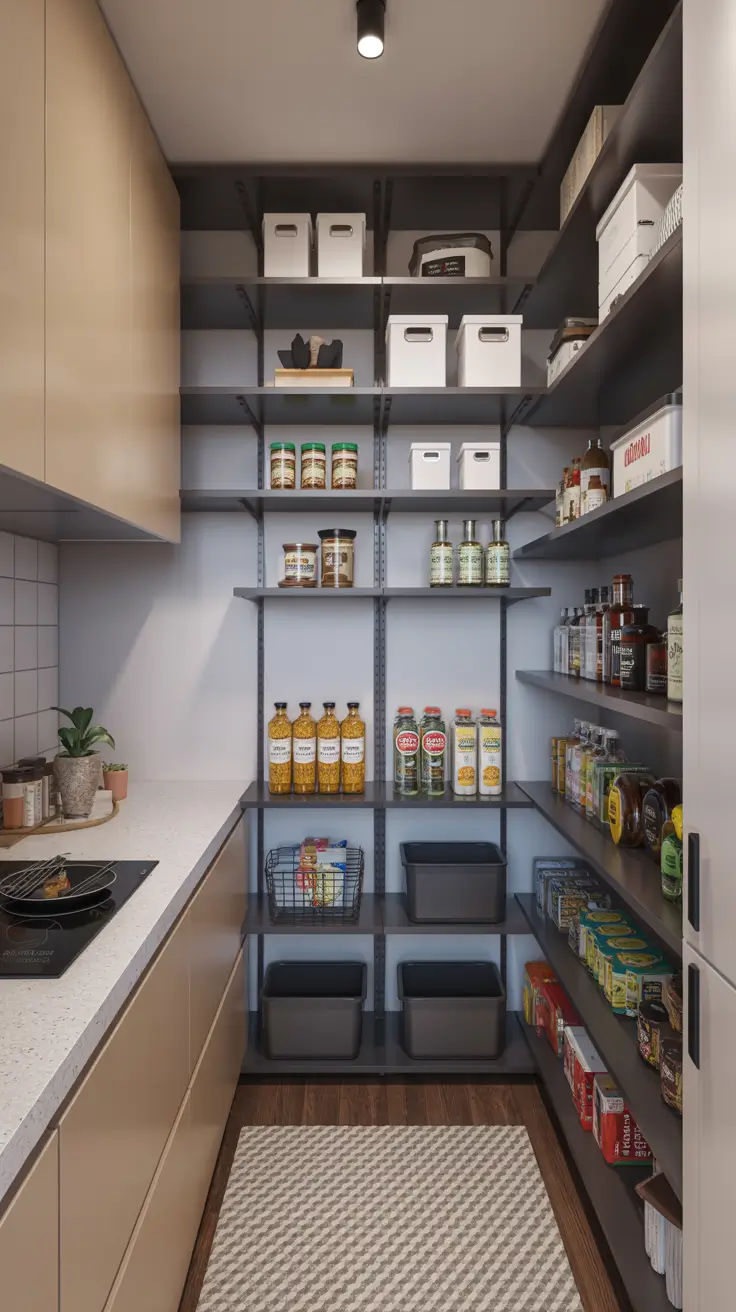
Urban dwellers value simple, accessible designs—a principle supported by platforms such as Apartment Therapy, emphasizing ease and functionality.
Additional functional synergy between pantry and utility storage spaces would further maximize efficiency in multipurpose urban homes.
7. Concealed Pantry Closets: Elegant Space-Saving Storage
Pantry closets that vanish when closed blend effortlessly into surrounding architecture. I incorporate flush doors lined with clean, neutral finishes to achieve this discreet effect.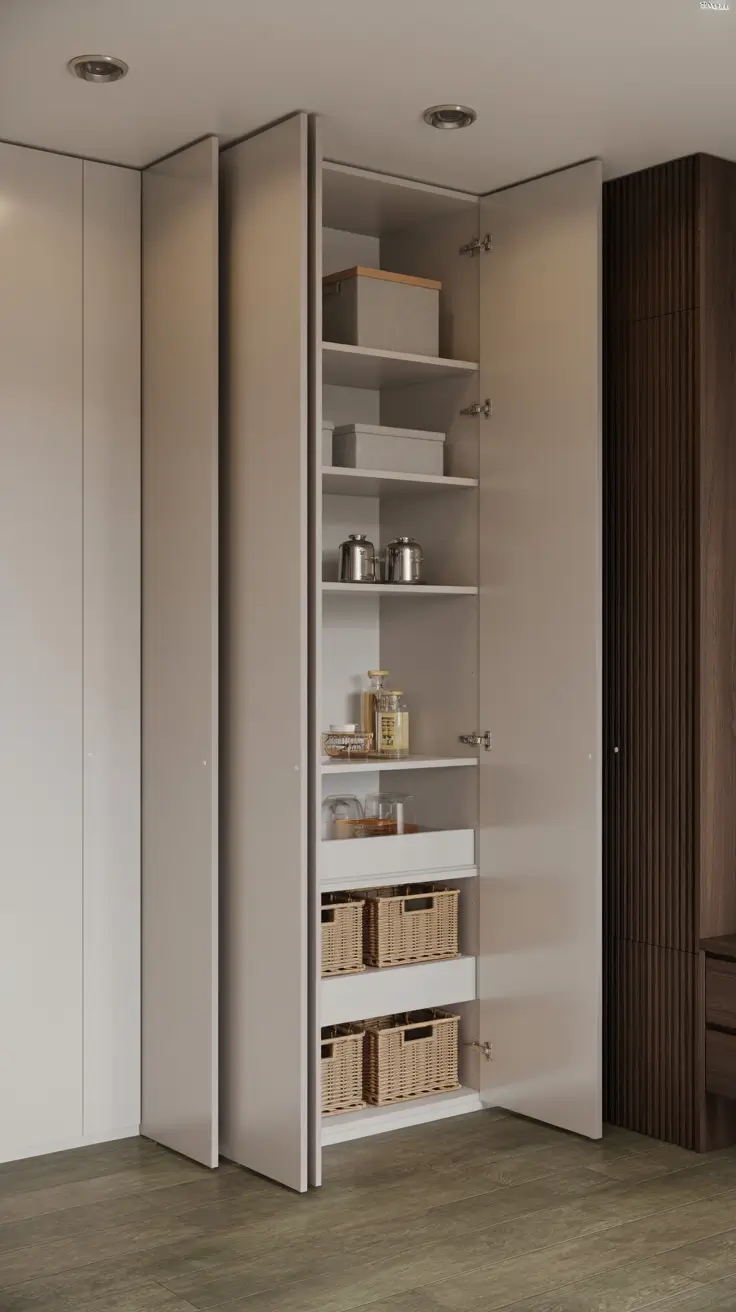
Inside, features like adjustable shelving, pull-out compartments, and racks mounted on the door optimize storage functionality while maintaining tidy food storage.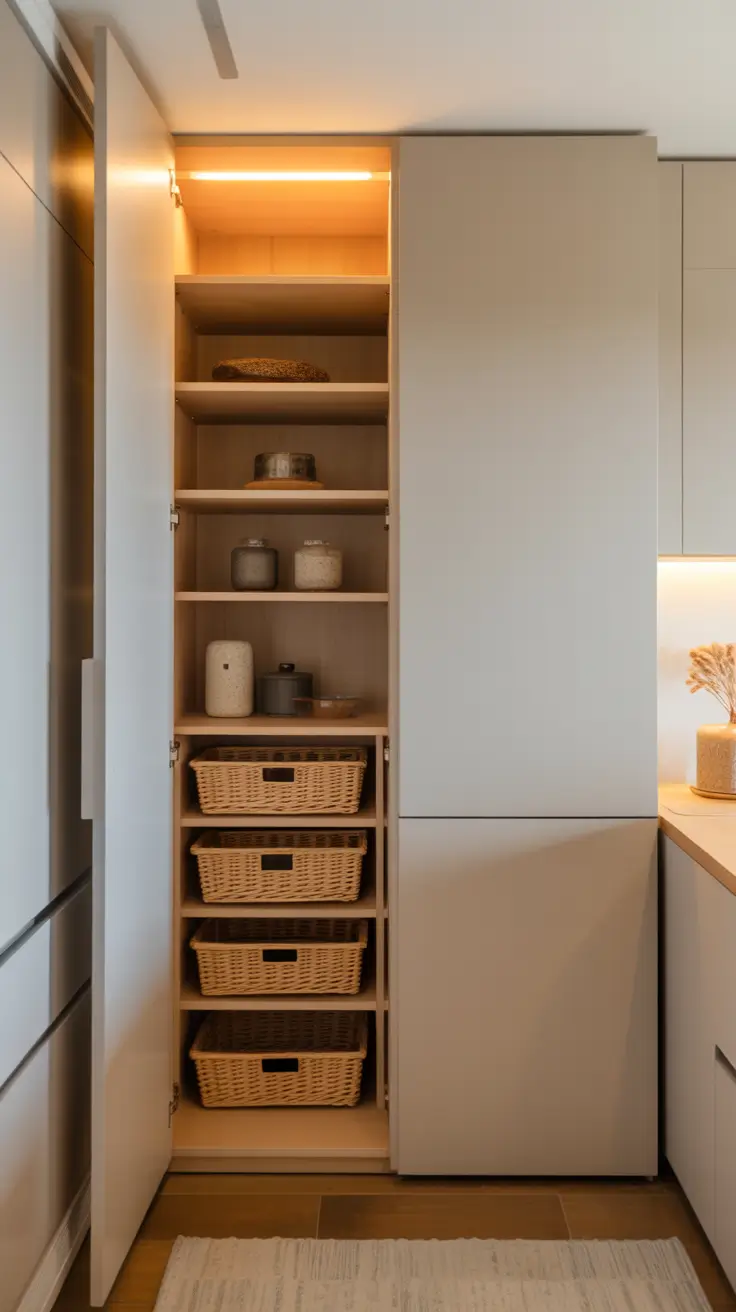
This hidden storage approach significantly reduces stress in compact homes and aligns with many designers’ recommendations to promote visual serenity for comfort.
Choosing subtle door hardware and understated handles further elevates usability without distracting from the overall minimalist ambiance.
8. Practical Organization for Pantry Closets
Effective pantry closet organization prioritizes transparency and routine. The goal is to transform even a small closet into a meticulously crafted storage area rather than a neglected overflow.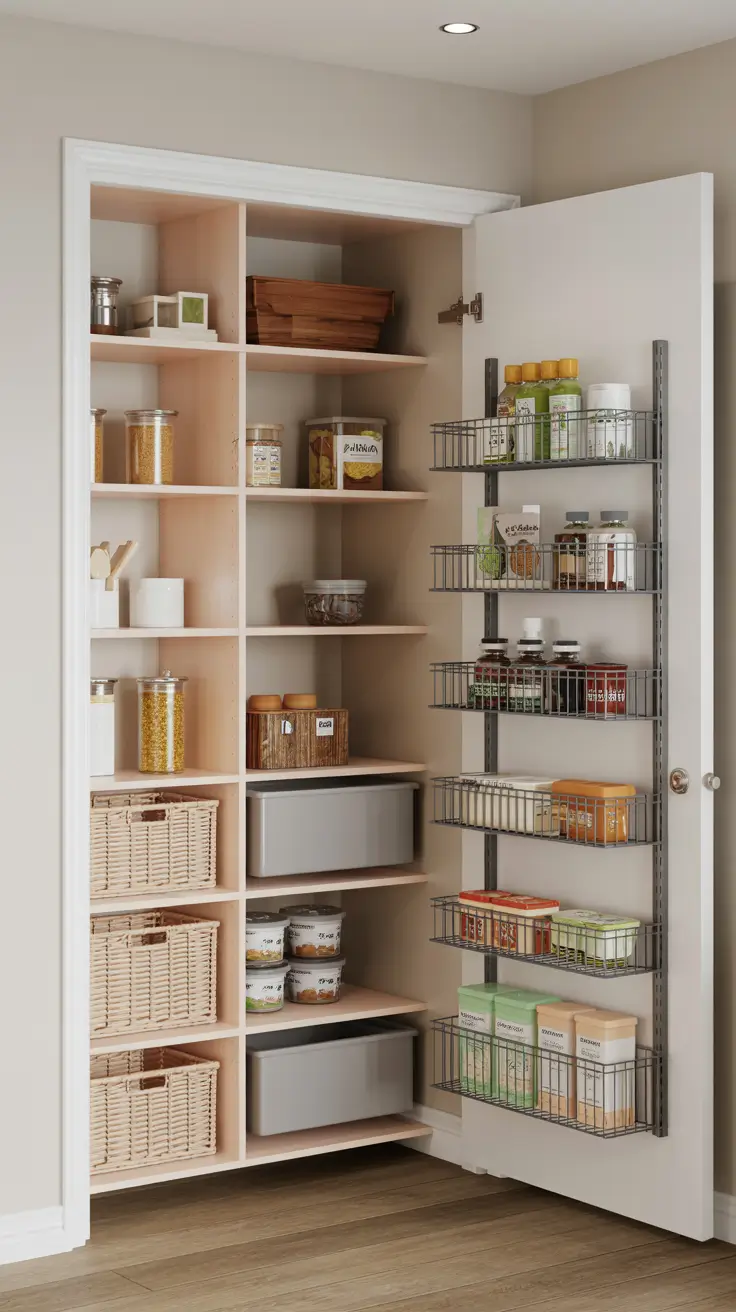
Adjustable shelves, stackable clear containers, and door-hung racks maximize use of vertical space. Uniformity among containers creates visual harmony and simplifies item identification, facilitating easier restocking.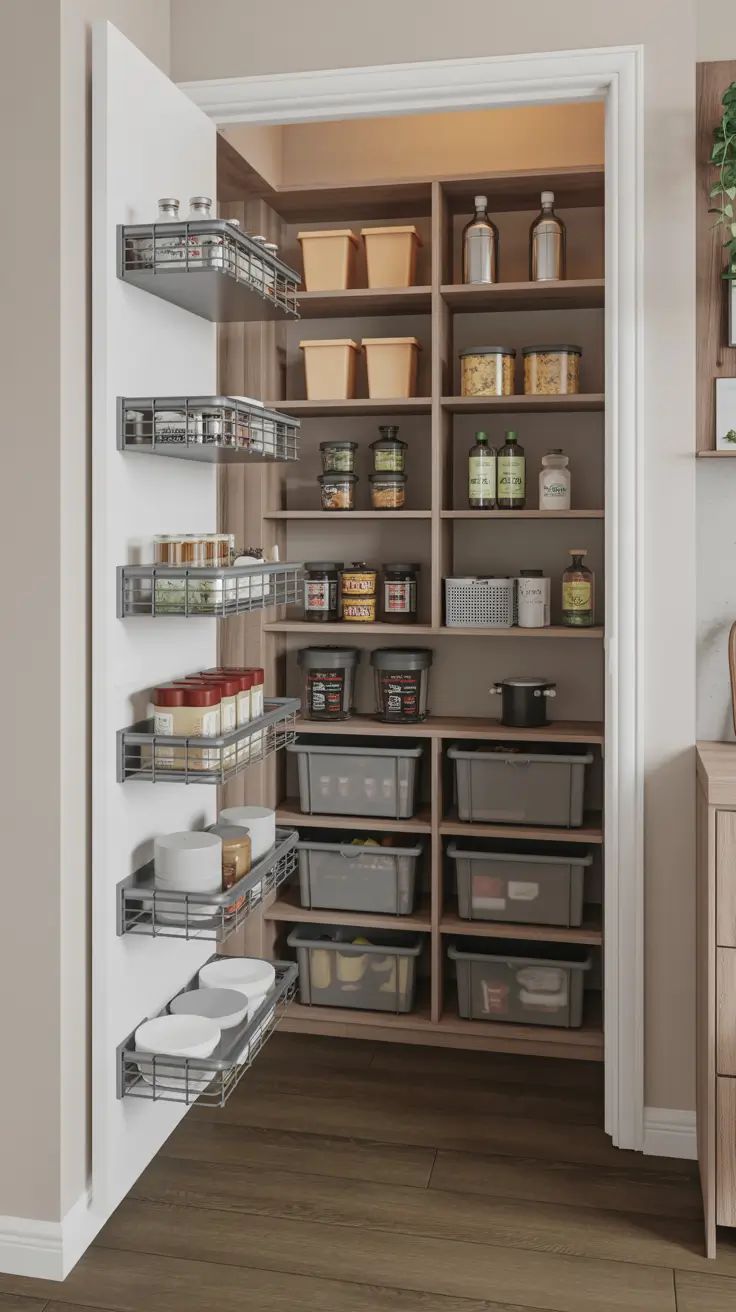
Many professional organizers advocate for categorizing by function rather than product type, a method I apply to synchronize storage with daily habits and promote sustainable order.
Implementing a dynamic labeling system that adapts to changing contents ensures the pantry remains relevant and efficient over time.
9. Trends in Pantry Closet Transformations
The essence of small pantry closet makeovers lies in refinement rather than enlargement. I focus on enhancing lighting, updating finishes, and reorganizing layout to elevate even the most basic spaces.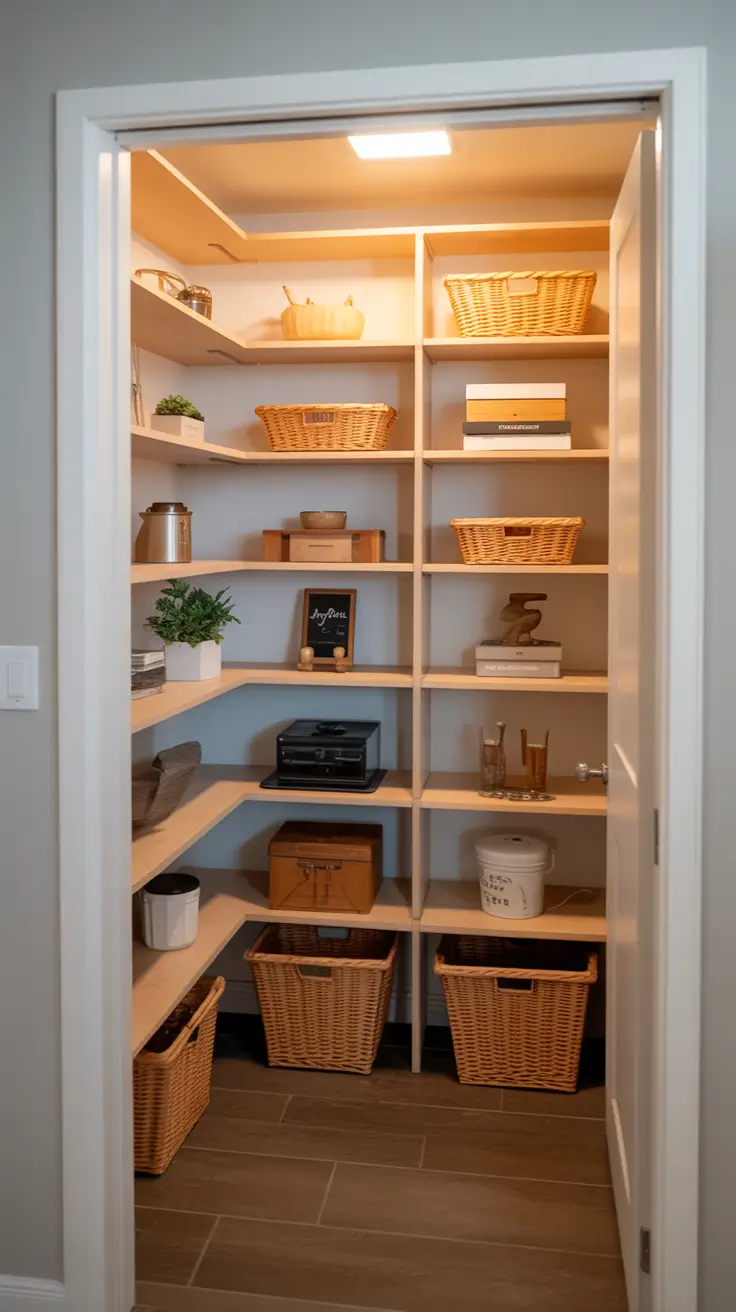
The addition of warm LED lighting, lighter shelving materials, and consistent color schemes revitalizes the space. Replacing wire shelving with solid wood or laminate options boosts both strength and style. Thoughtful details like matching handles and fine shelf edges enrich the overall aesthetic.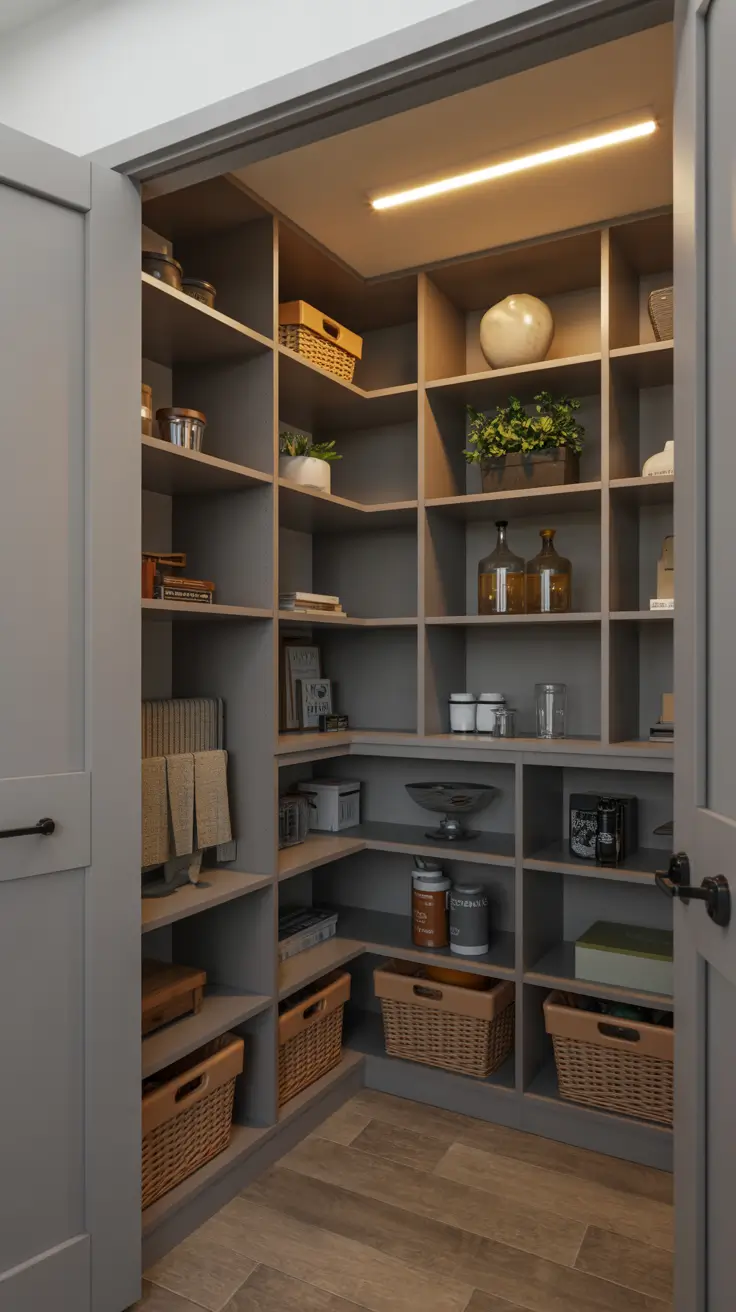
Many home improvement outlets emphasize prioritizing finishes first, a strategy I wholeheartedly endorse since these changes often yield the highest visual impact.
Including budget advice helps readers allocate resources wisely, emphasizing upgrades that provide the best functional and aesthetic returns.
10. Efficient Walk-In Pantry Solutions for Limited Floor Plans
Designing walk-in pantries in small layouts demands optimal traffic flow. The layout must allow smooth turning and convenient shelf access, creating a space that is functional without feeling cramped.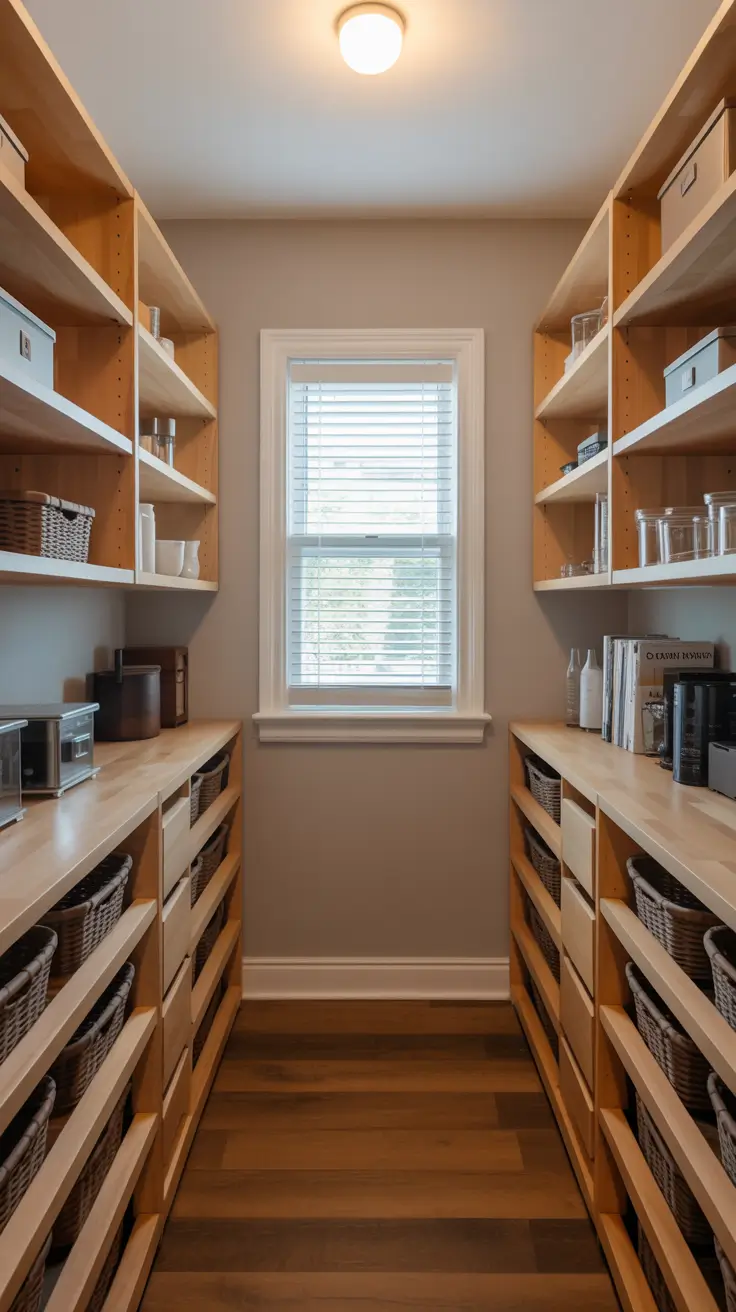
Shallow shelving on parallel walls flanks deeper storage at the end, with deliberate shelf spacing and vertical alignment offering balance. Ceiling or under-shelf lighting keeps the environment bright and inviting.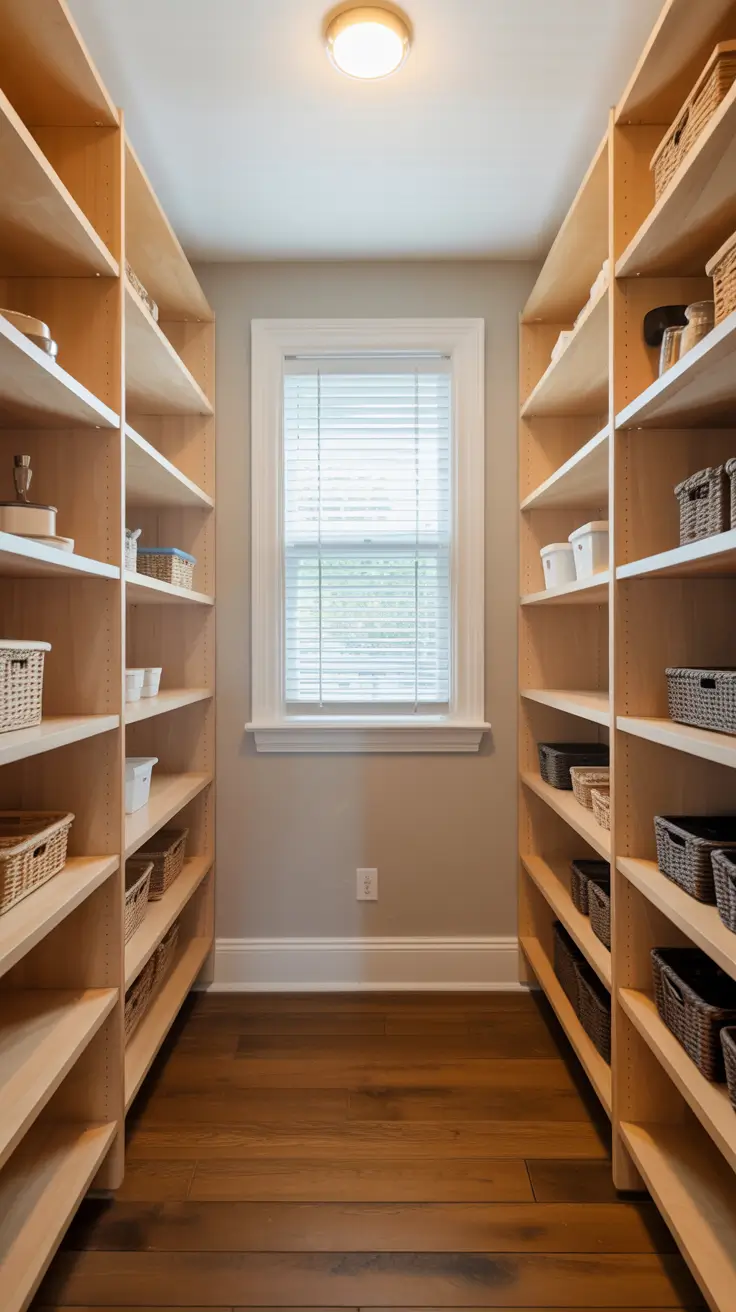
Many architects recommend limiting shelf depth in walk-in pantries to maintain item visibility and reduce clutter.
Enhancing air circulation within enclosed walk-in pantries is key to preserving food freshness and preventing odors.
11. Space-Savvy Walk-In Pantry Concepts
Efficient use of compact space defines effective walk-in pantry design. I incorporate multi-purpose components like fold-away counters and built-in ladders for upper-level shelves, maximizing functionality without expanding the footprint.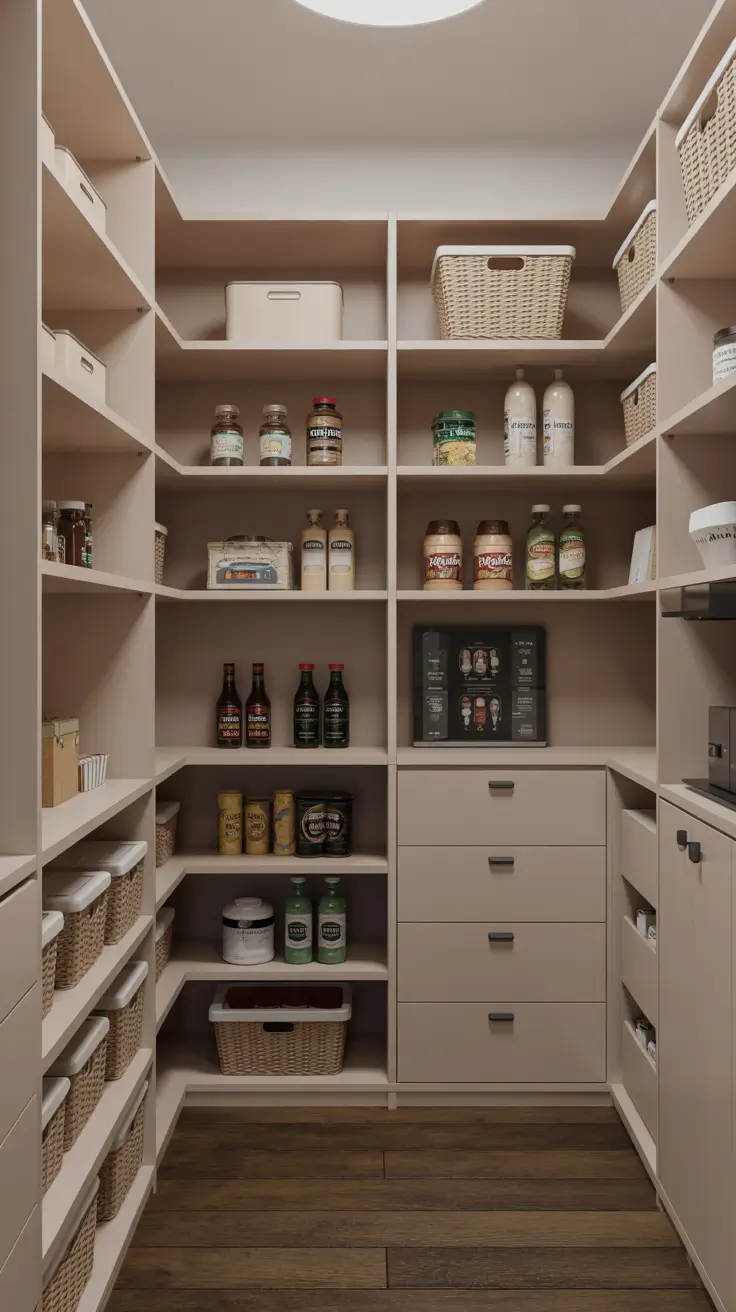
Additional touches include narrow spice drawers, vertical dividers for pans and trays, and hooks for reusable bags—each contributing to a highly adaptable storage area.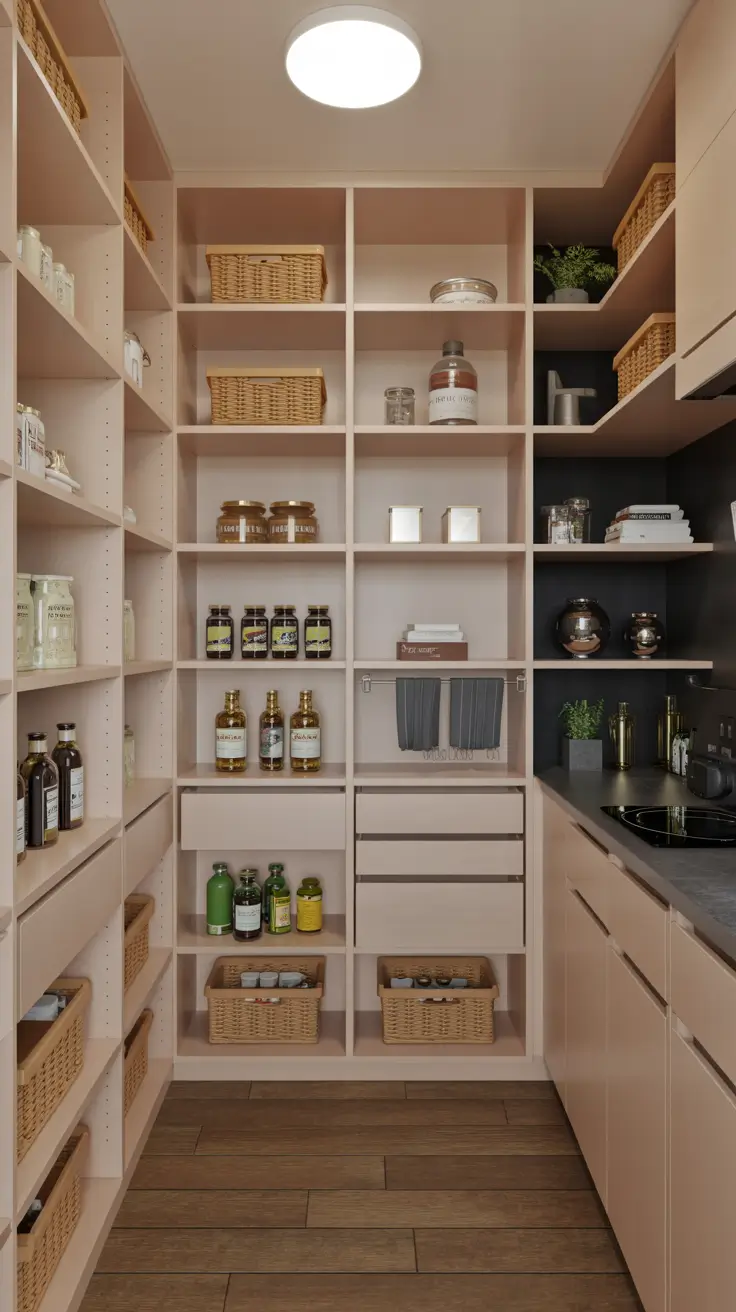
Flexibility is a prized attribute in walk-in pantries, with design authorities underscoring versatility as a critical component for long-term satisfaction.
Introducing modular shelving that can be tailored as organizational demands shift adds significant longevity to pantry usability.
12. Compact Pantry Designs for Workplace Settings
Efficient and clean layouts characterize tiny office pantries. These spaces should encourage restful breaks without accumulating clutter. Small, shared workplaces benefit from compact but highly functional pantry planning.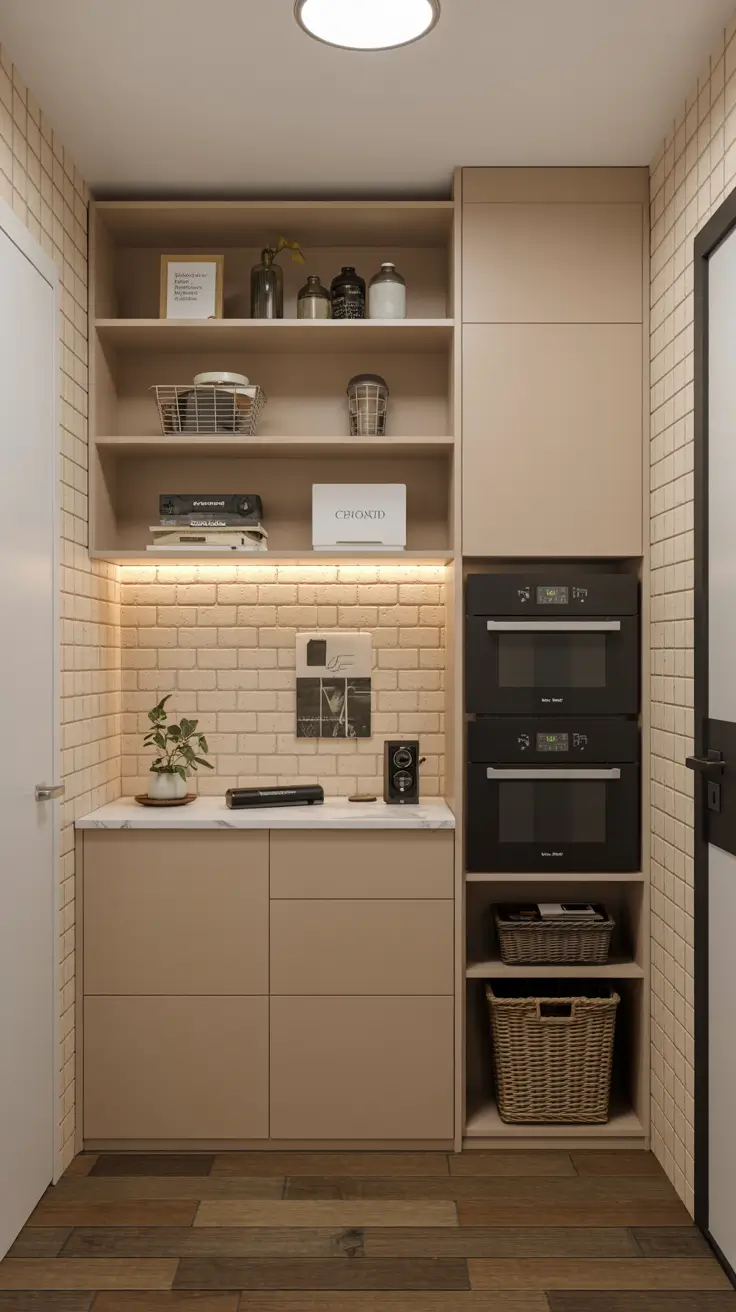
Closed cabinetry stores supplies neatly, while open shelving offers easy access to daily necessities. Built-in mini-fridges and durable, low-maintenance surfaces ensure practicality.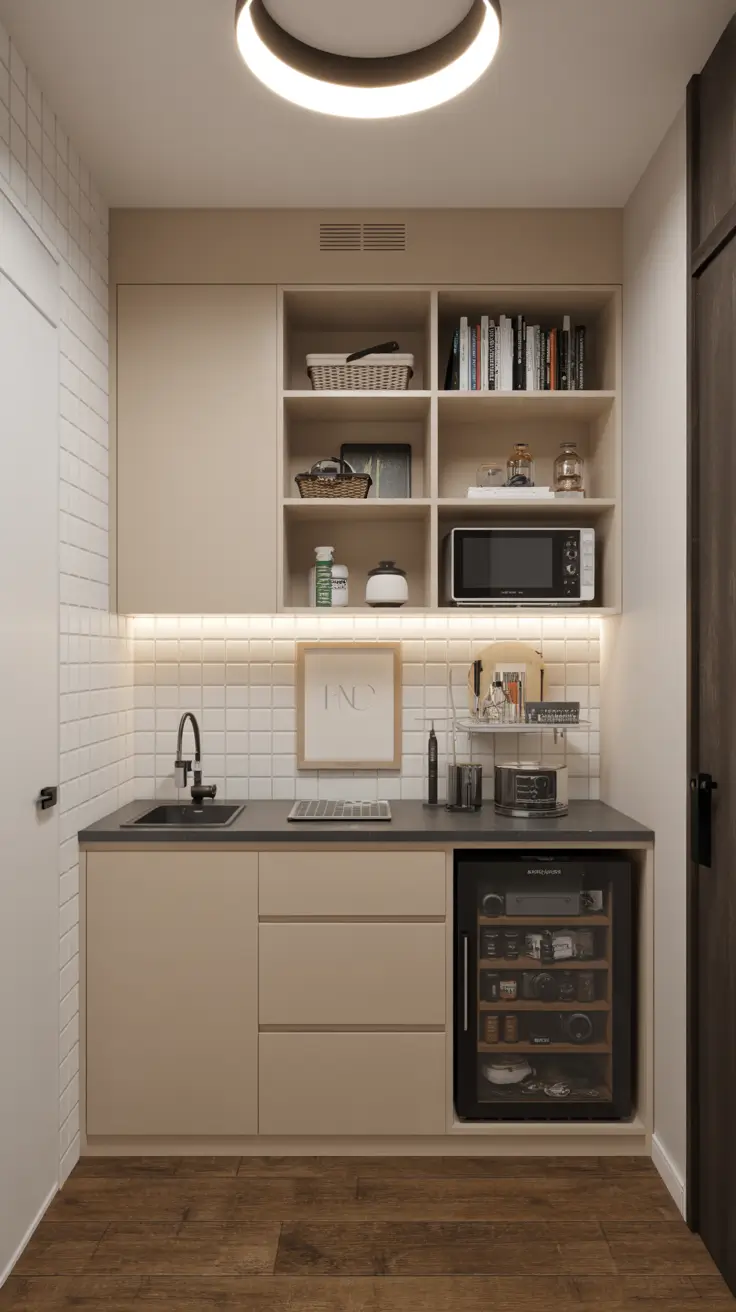
Balance between openness and order fosters a welcoming environment that enhances productivity, a philosophy echoed by workplace design specialists.
Adding soundproofing measures could further improve the atmosphere by reducing noise distractions common in open-plan offices.
13. Multifunction Pantry Room Design
Many small pantry rooms serve multiple roles, combining food storage with other household functions. Clear zoning is imperative to maintain order and prevent chaos.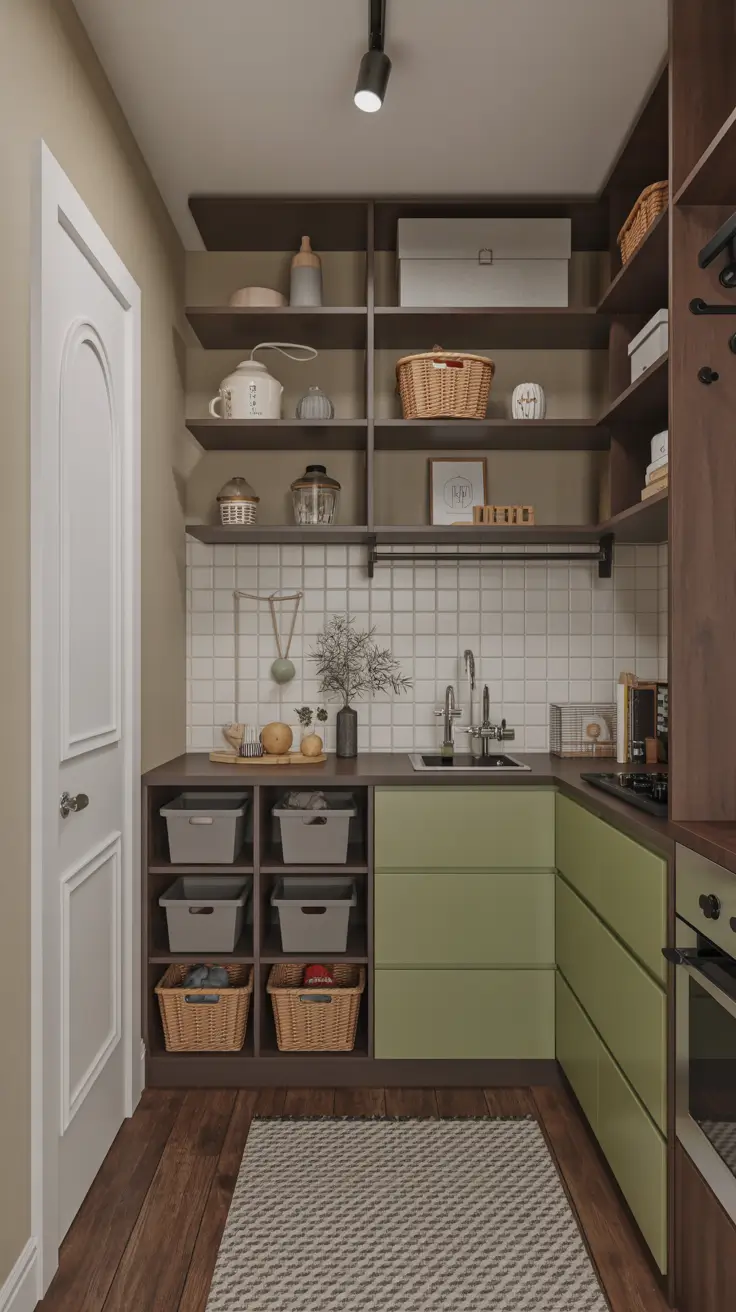
Shelving with varied depths and closed cabinetry isolate food from cleaning supplies or appliances, maintaining visual harmony. Uniform materials and colors unify the multi-use space.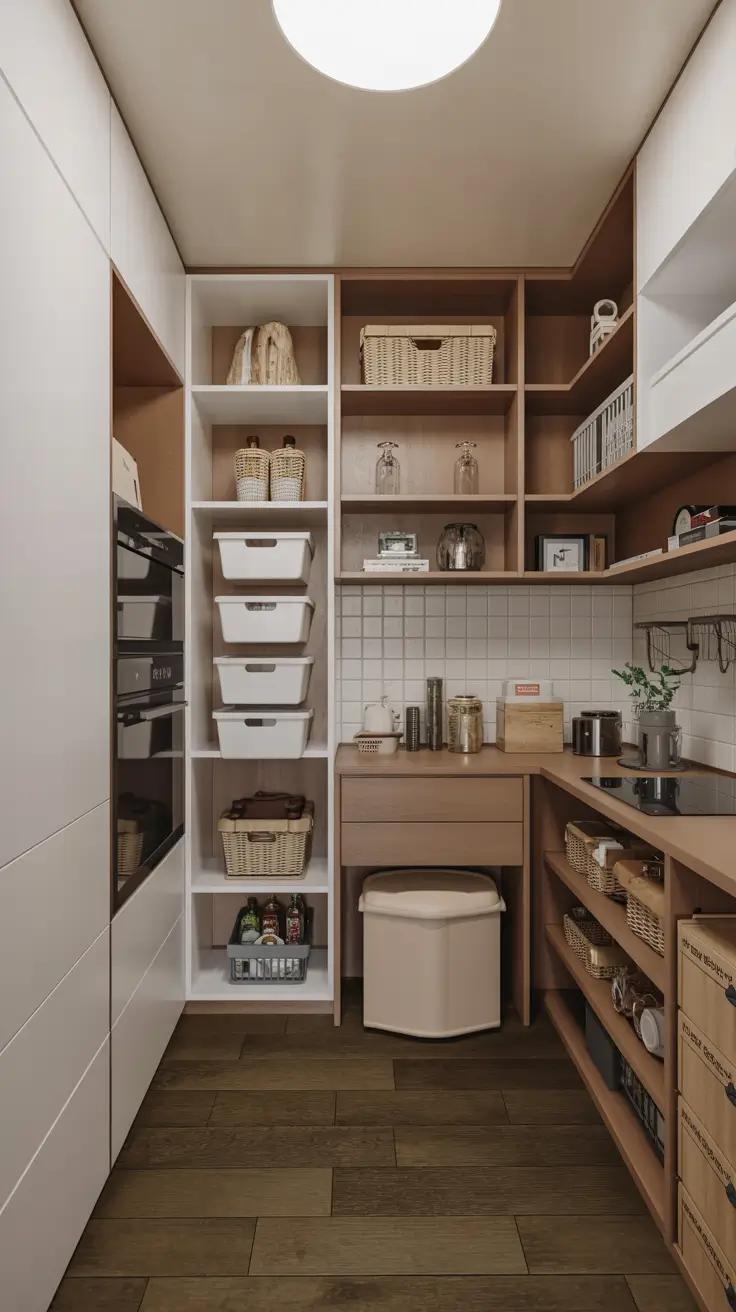
This method is widely supported by interior designers as an effective small home strategy to maximize utility while preserving order.
Incorporating subtle signage or visual markers can help users maintain organization consistently over time.
14. Everyday Organization Strategies for Tiny Pantries
Simple, practical organization drives daily success in small pantries. I craft easy-access layouts that fit into established routines, ensuring the pantry supports effortless use.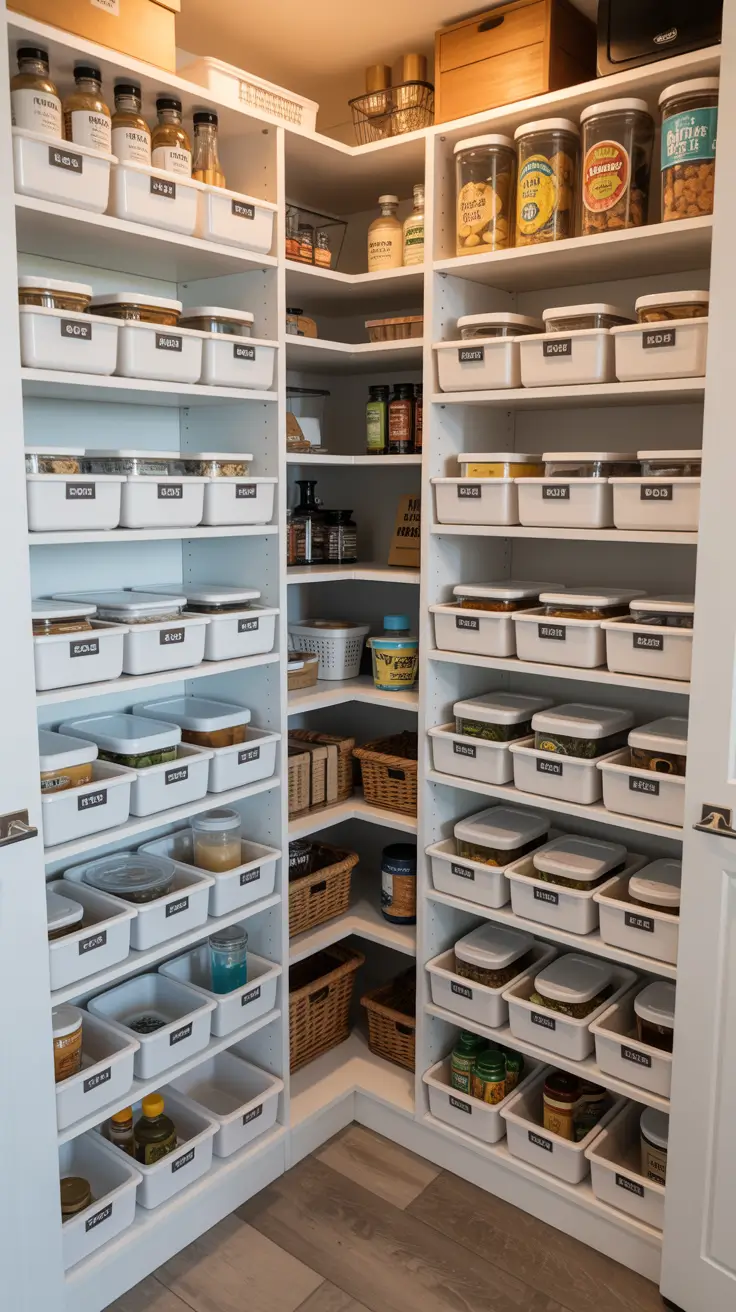
Uniform containers, sliding shelves, and clear labeling reduce clutter and minimize food waste by helping users track inventory.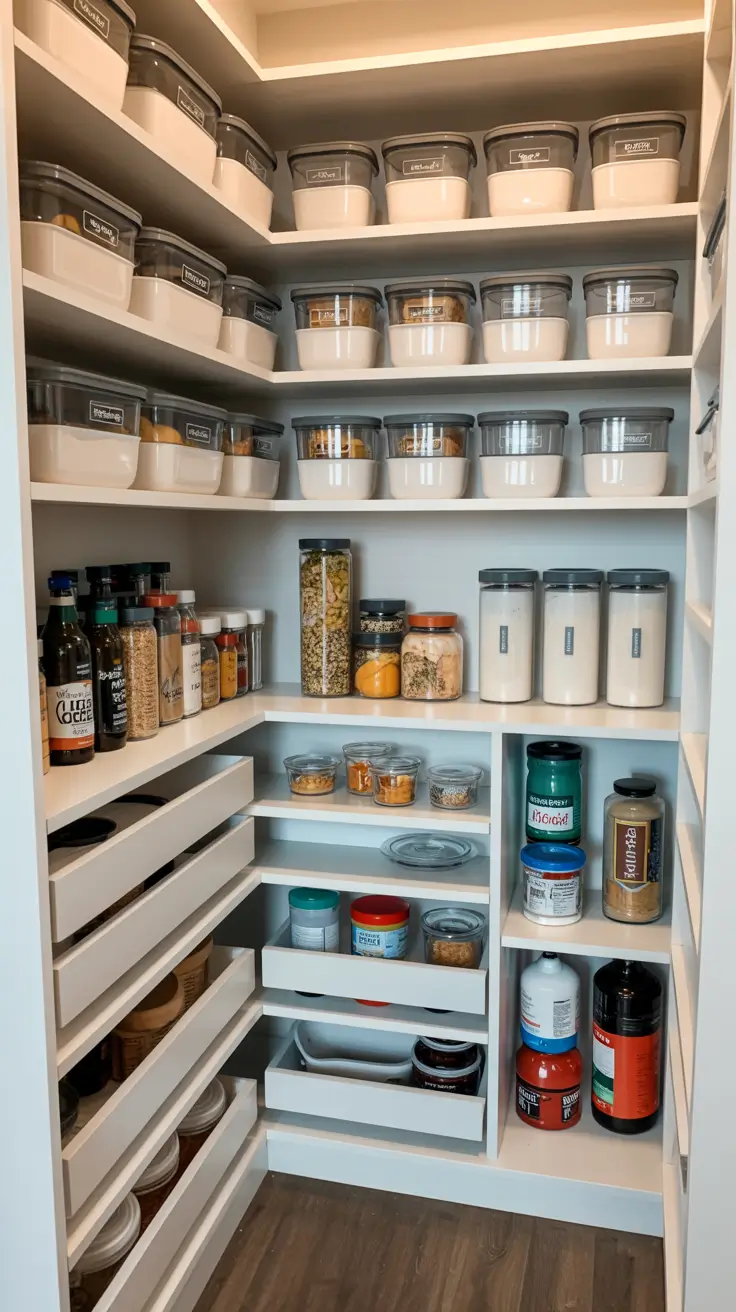
Experts often recommend routine pantry audits to keep the system current and functional, an approach I strongly endorse.
Introducing a seasonal refresh plan enables users to revitalize their pantry organization without a complete overhaul.
15. Vertical Storage: The Key to Expanding Tiny Pantries
Maximizing vertical space is crucial in tiny pantry design since height is often overlooked in small interiors. Comprehensive wall-to-wall shelving creates visual openness and keeps everything within reach.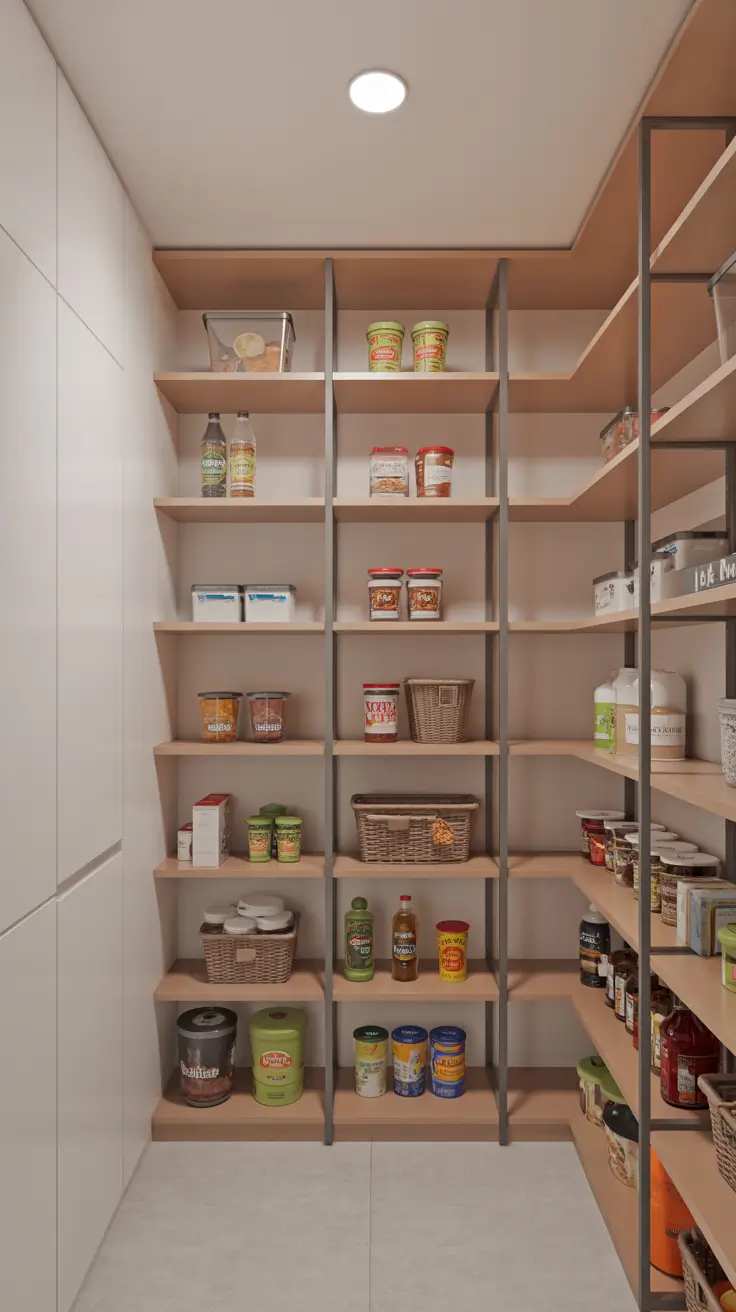
Adjustable units, slender metal supports, and wood shelves that extend to the ceiling allow for versatile configuration in both pantry closets and kitchen pantries. Features like pull-down shelves and ladders make high storage accessible without impeding movement.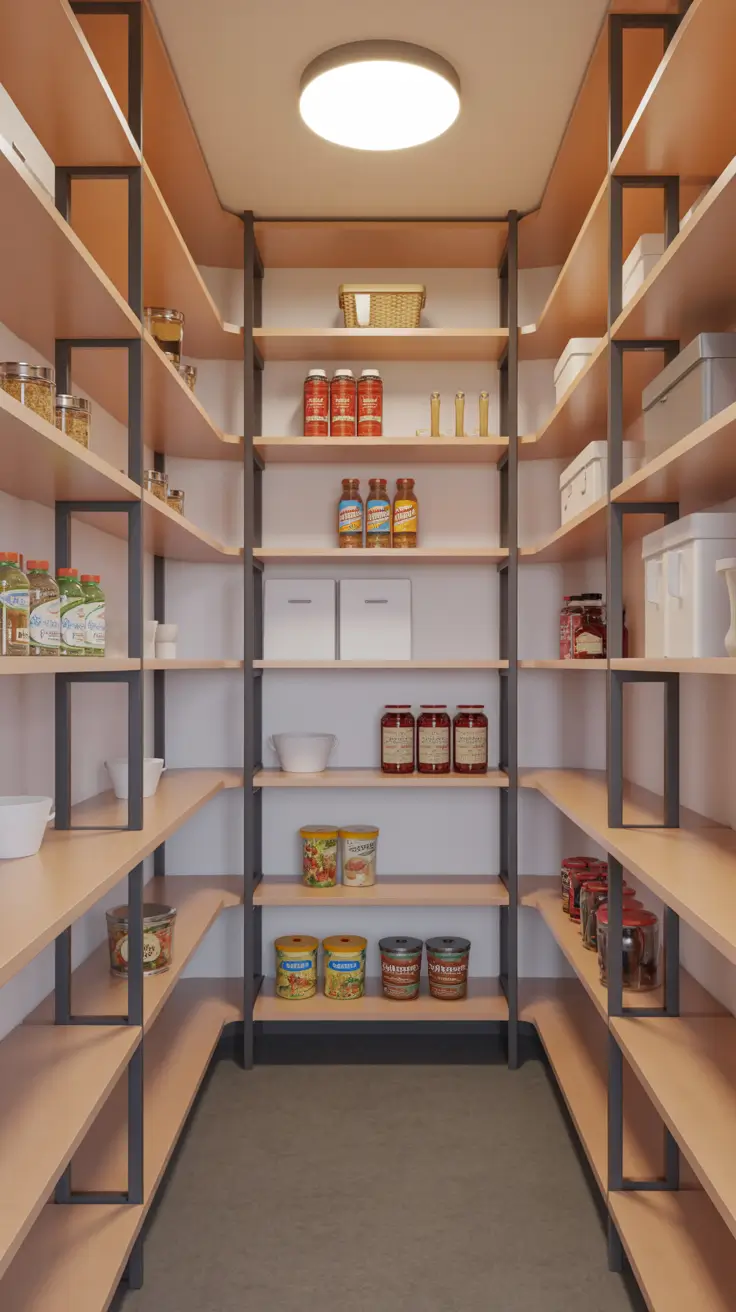
Designers such as Nate Berkus highlight the importance of balanced vertical spacing and negative space for an intuitive, stress-free organization system.
Integrating concealed LED lighting beneath shelves dramatically enhances visibility and transforms pantry storage into a design feature.
16. Modular Storage Solutions for Dynamic Pantries
Storage must resolve real-life challenges, not just add visual appeal. Modular, adaptable storage units are vital in tiny kitchen pantries, allowing homeowners to rearrange components effortlessly as their needs evolve.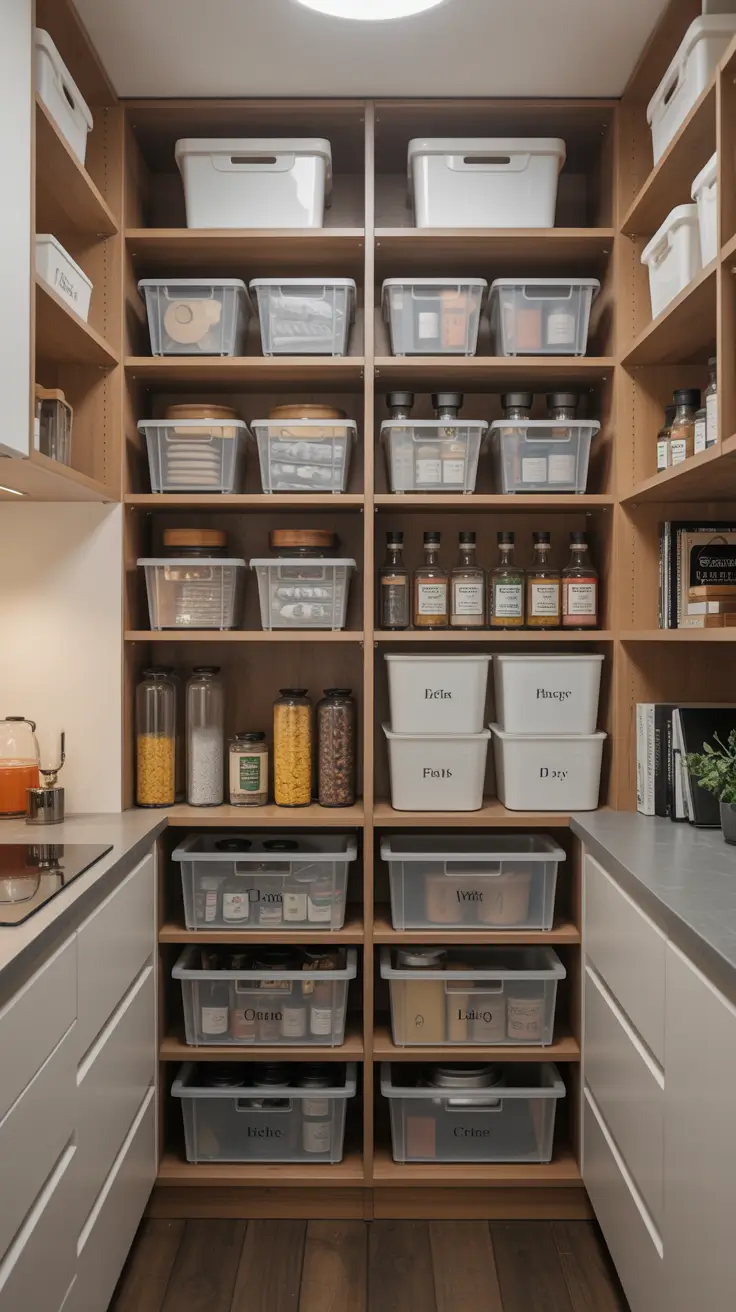
Clear bins, stackable containers, pull-out drawers, and labeled compartments reduce visual disorder and improve daily usability, especially useful in tiny pantry closet layouts.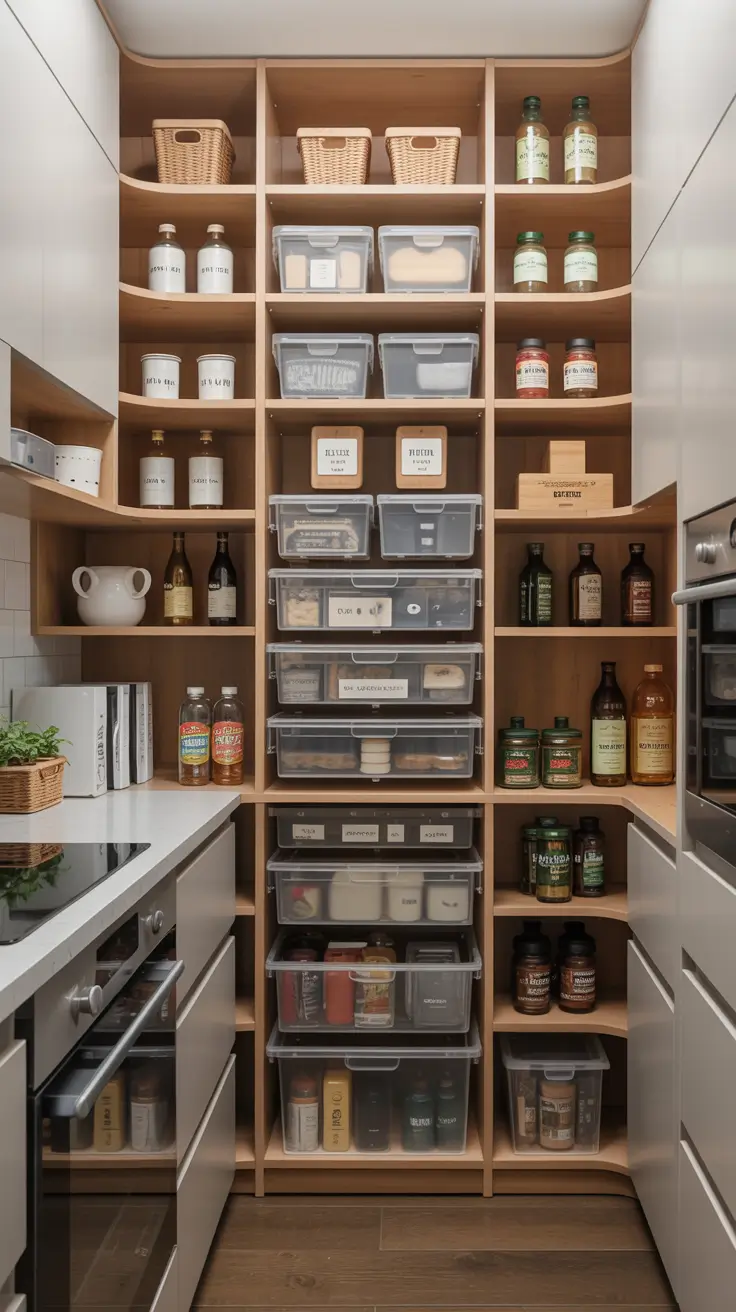
Following principles echoed in Architectural Digest, ensuring that every item has an obvious spot fosters healthier habits and easier meal prep.
Integrating dedicated waste management areas, such as compact bins for recycling and compost, completes a comprehensive pantry storage system.
17. Minimalist Shelving for Serene Pantry Interiors
Minimalist shelving continues to dominate current tiny pantry trends. My designs emphasize simplicity, clean lines, neutral hues, and uncluttered spacing to create calm, purposeful spaces that feel open despite their small size.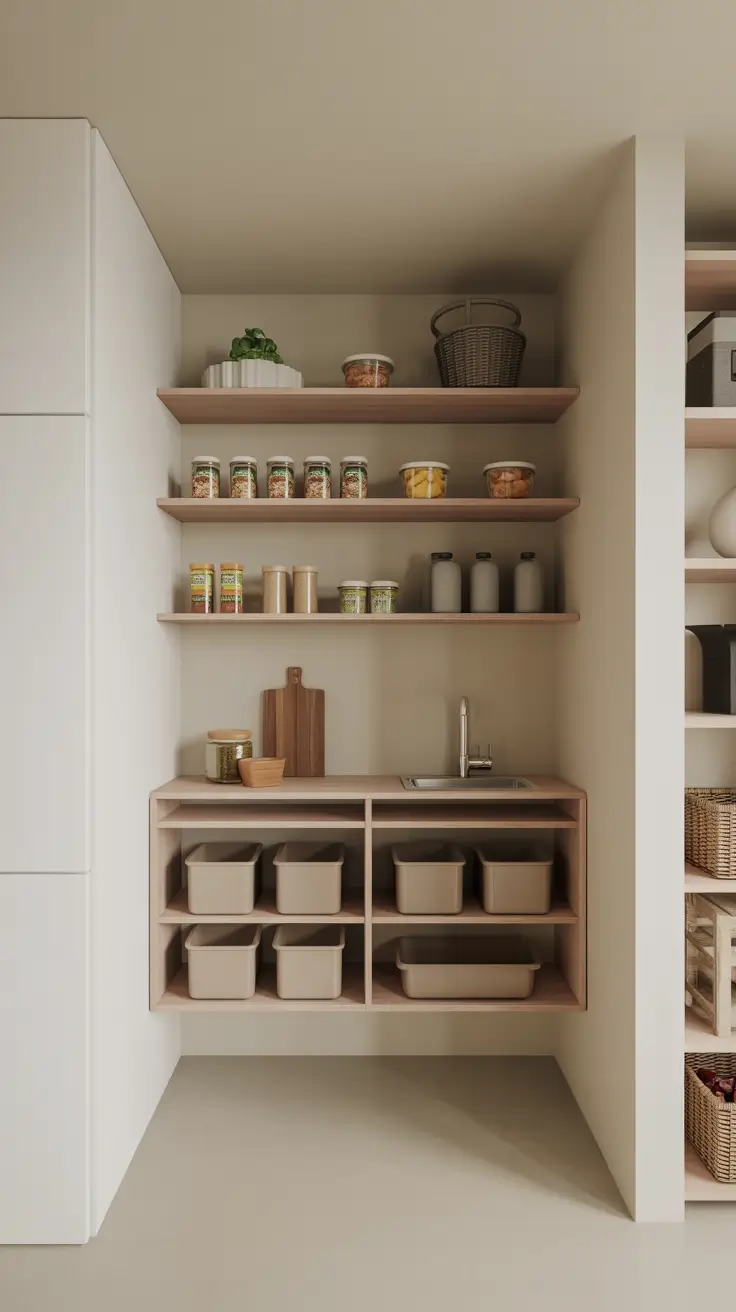
Slim floating shelves, matte finishes, and concealed supports reduce visual distraction. Natural elements like wood shelving paired with soft white walls add warmth and texture, suitable for both kitchen and closet pantries.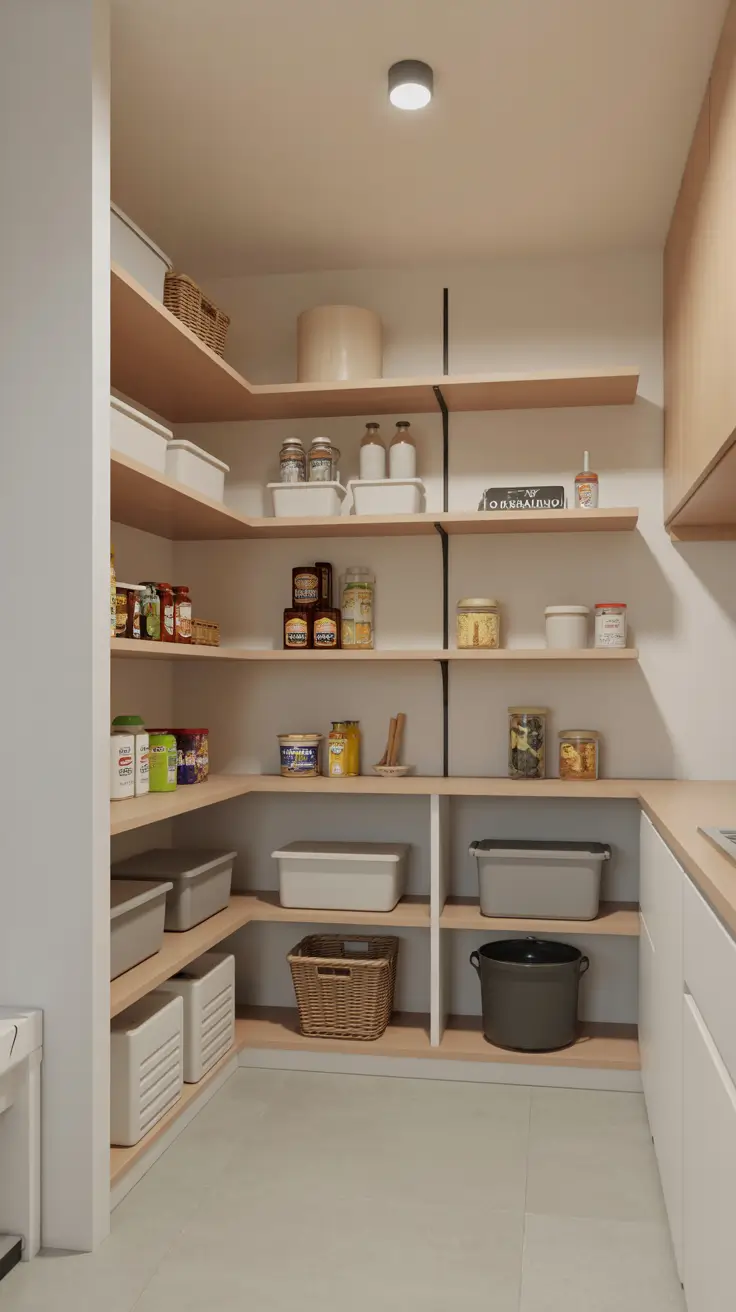
Minimalist spaces are typically easier to sustain, and renowned designers underscore that simplicity fosters lasting appeal and adaptability.
Introducing subtle textures, such as fluted glass jars or natural grain wood, can offset potential sterility in restrained interiors.
18. Layout Planning for Fluid Pantry Use
Functional layouts are essential in tiny pantry design. I prioritize smooth movement, unobstructed door access, and convenient reachability, particularly in kitchen pantries.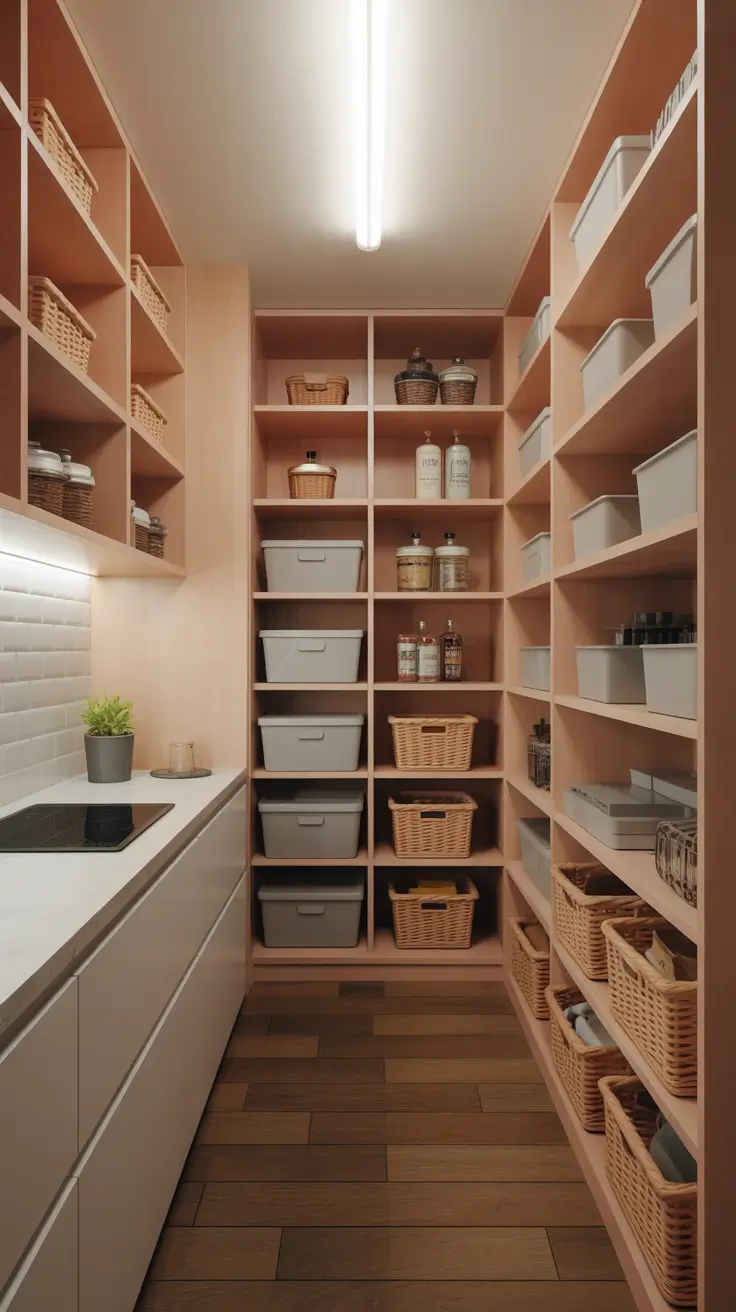
Common configurations include single-wall setups, galley pantries, and compact walk-in designs. Solutions like pull-out shelves, corner swivel mechanisms, and strategic zoning prevent congestion and optimize daily usage.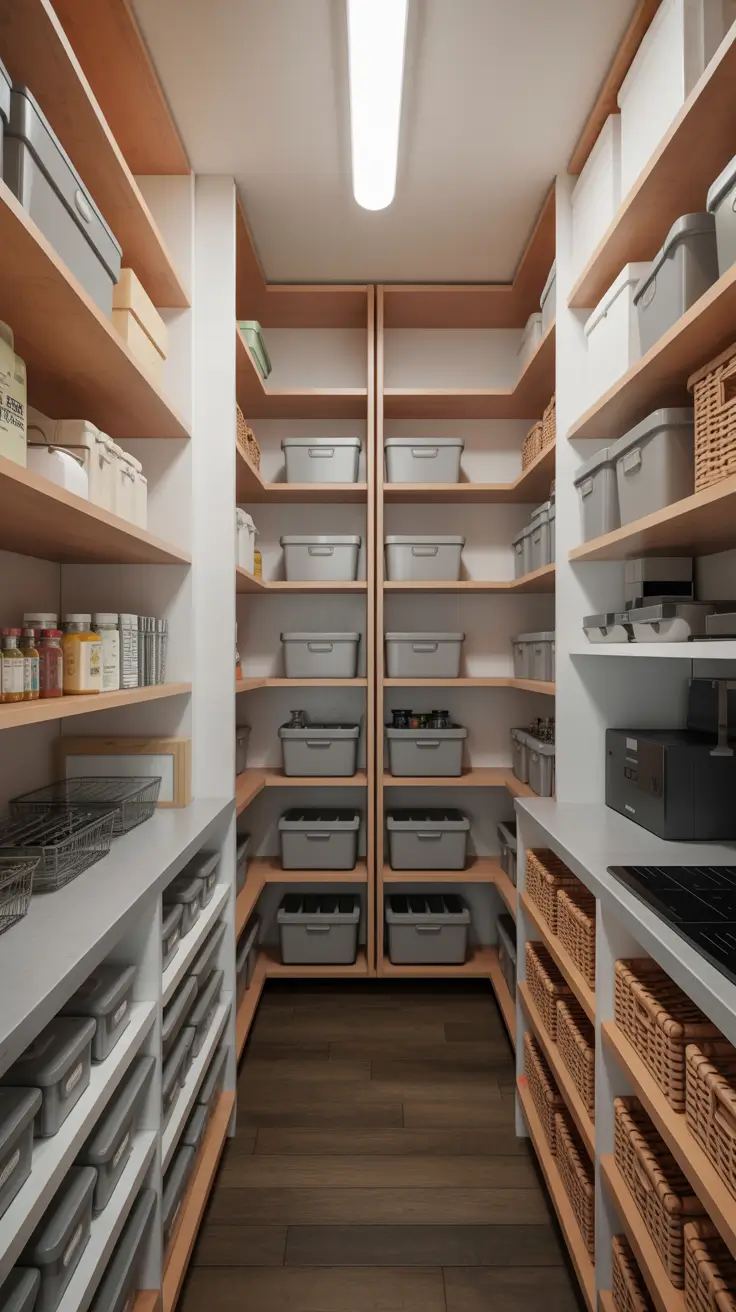
Effective flow directly correlates with sustained organization, as many leading designers stress that usability trumps sheer capacity.
Developing and visualizing clear zones for dry goods, appliances, and bulk storage early in planning greatly enhances layout cohesion and efficiency.
19. Corner Storage Innovations in Small Pantries
Corners often represent wasted potential in tiny pantries. I treat these areas as hidden assets by employing smart geometric storage designs.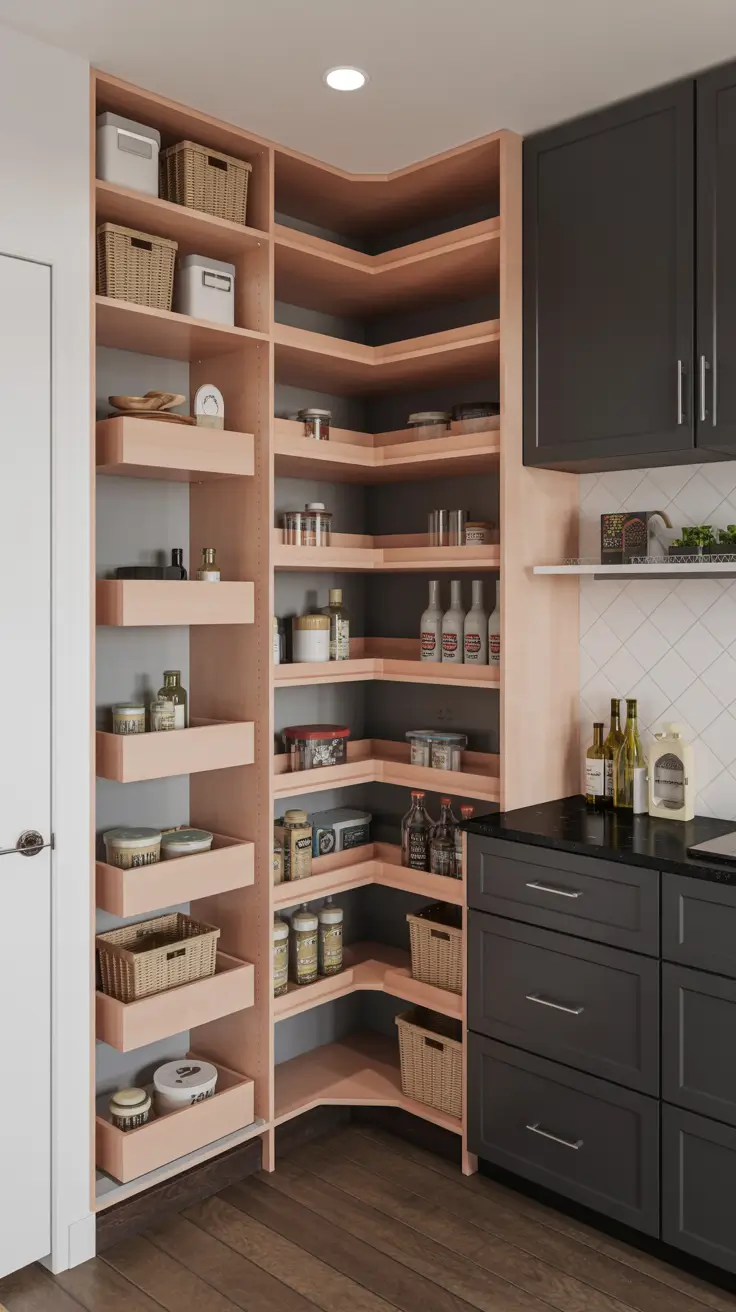
Rotating shelves, angled cabinetry, and open corner racks maximize access and usability in tight kitchen or closet pantries.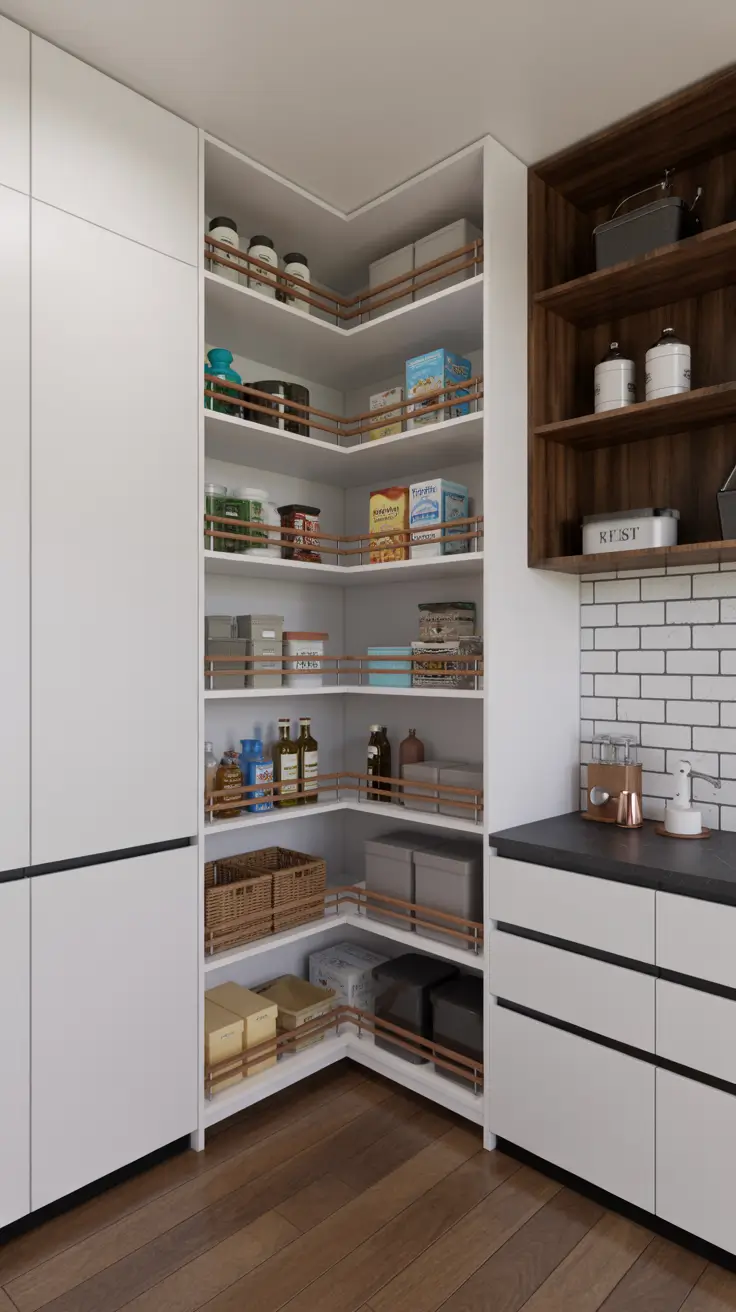
Such corner solutions reduce frustration and optimize spatial layout. The popularity of lazy Susan mechanisms among designers is a testament to their practicality.
Installing dedicated lighting within corners eliminates shadows, heightening both visibility and ease of use in these tucked-away areas.
20. Under-Stairs Pantries: Transforming Transitory Spaces
Utilizing the typically neglected area beneath staircases turns it into an efficient pantry without enlarging the home’s footprint.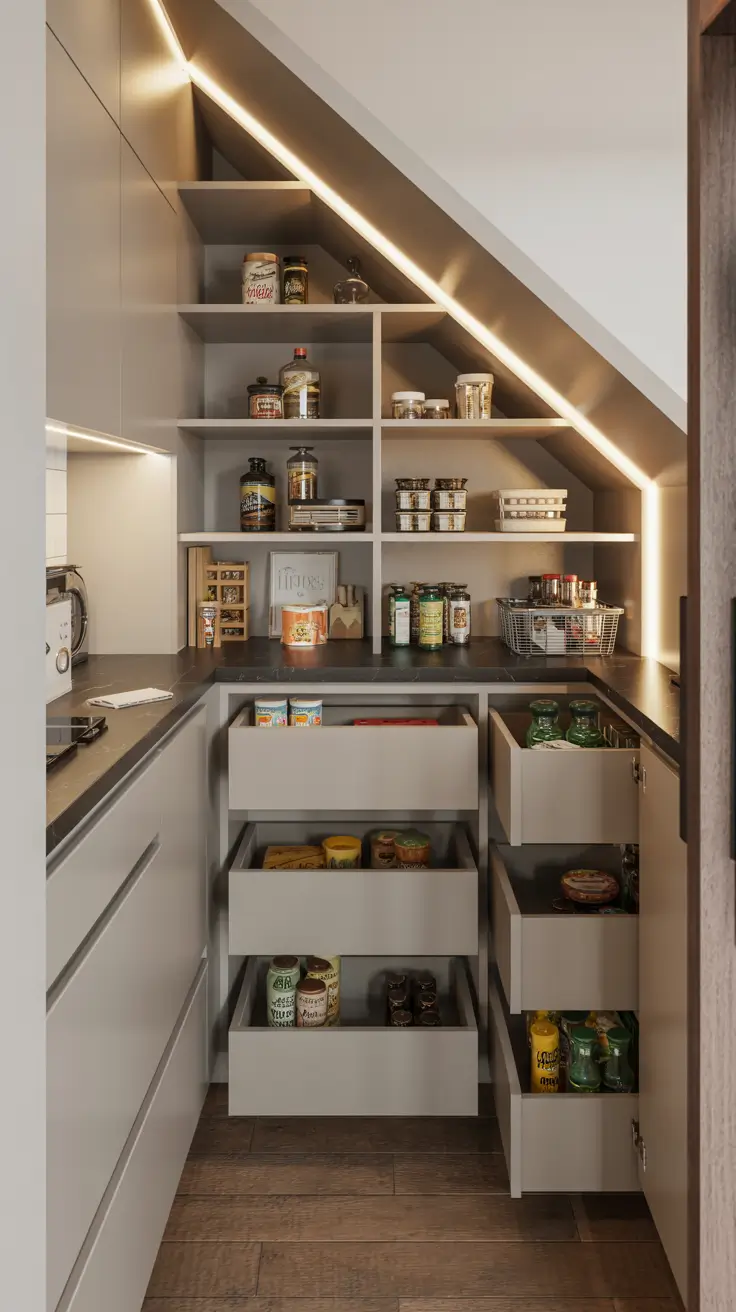
Custom cabinetry follows the staircase’s incline, employing pull-out drawers and stepped shelving tailored for dry goods and bulk storage.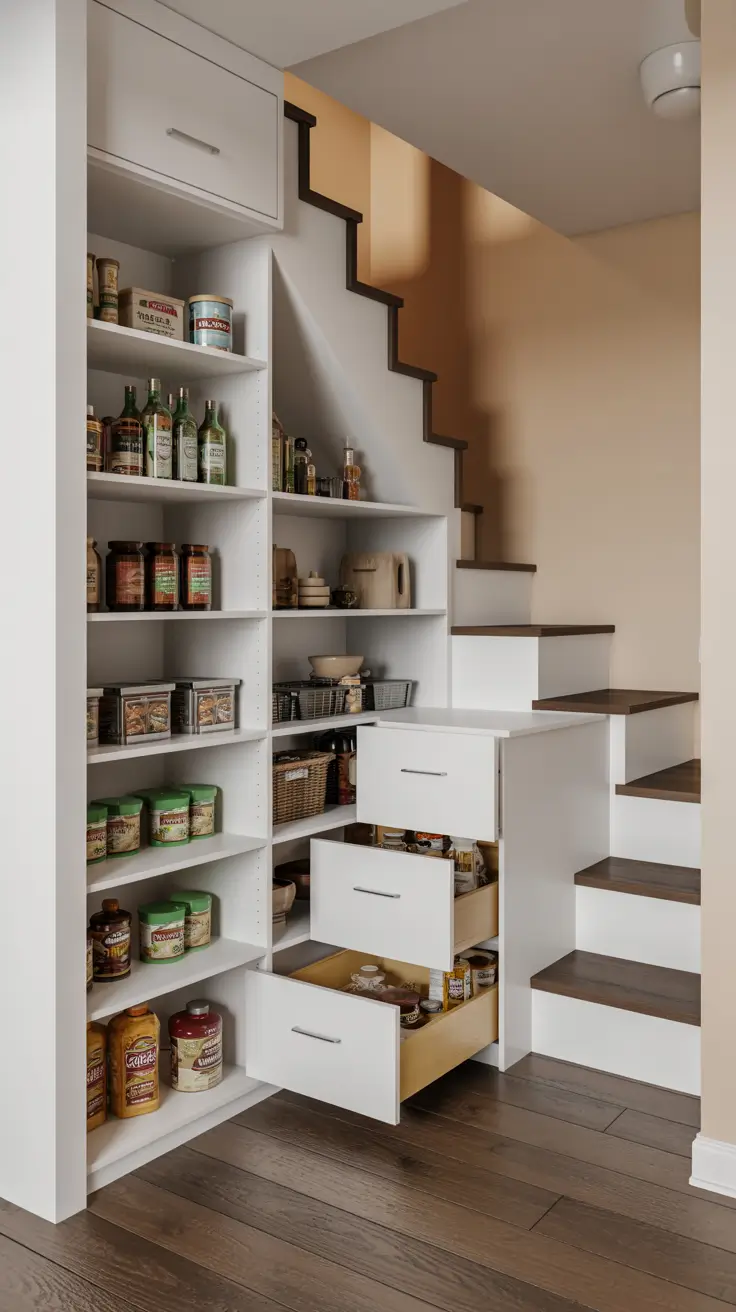
Properly executed, these pantries feel surprisingly spacious and add visual intrigue to transitional areas often overlooked by homeowners.
Incorporating ventilation planning ensures air movement, critical to maintaining food freshness within these enclosed, sloped spaces.
21. Space-Saving Door Designs for Compact Pantries
Doors play a pivotal role in enhancing tiny pantry functionality. Contemporary designs emphasize maximizing space without sacrificing style.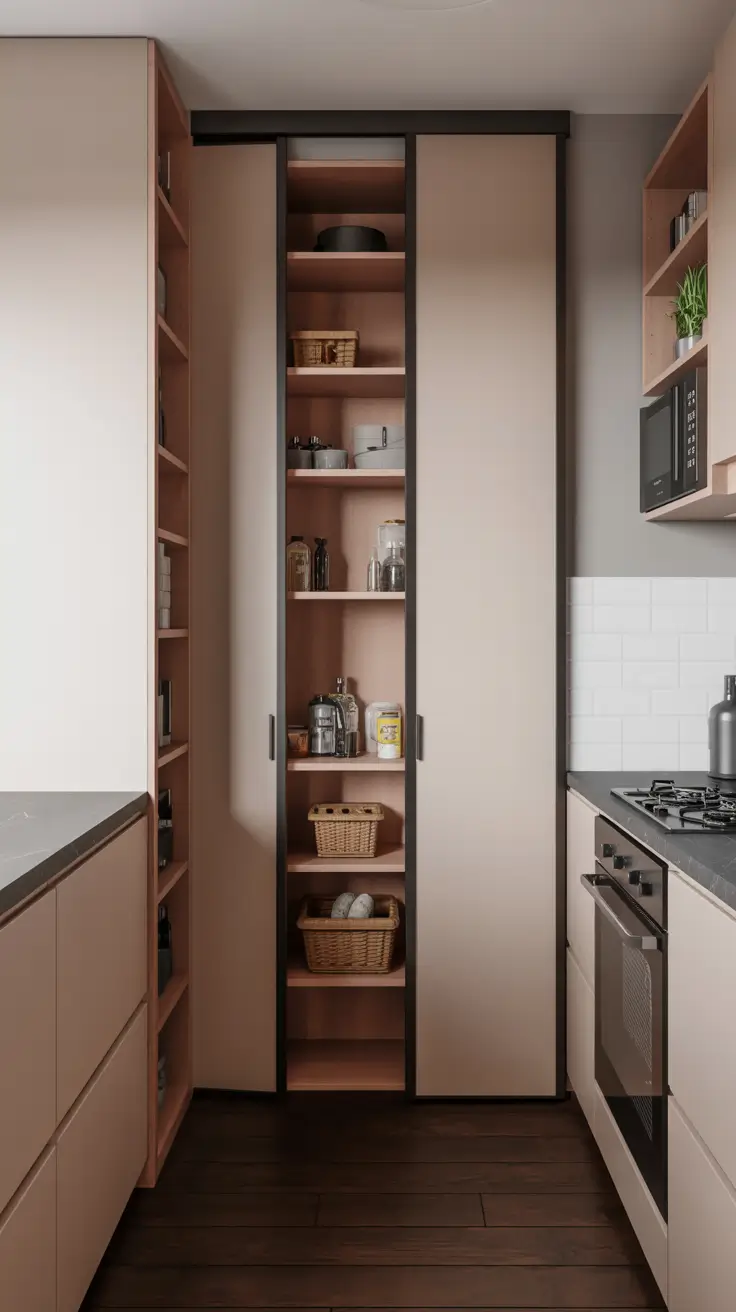
Sliding, pocket, or glass-paneled doors visually expand the pantry, while internal door racks augment storage without hindering movement.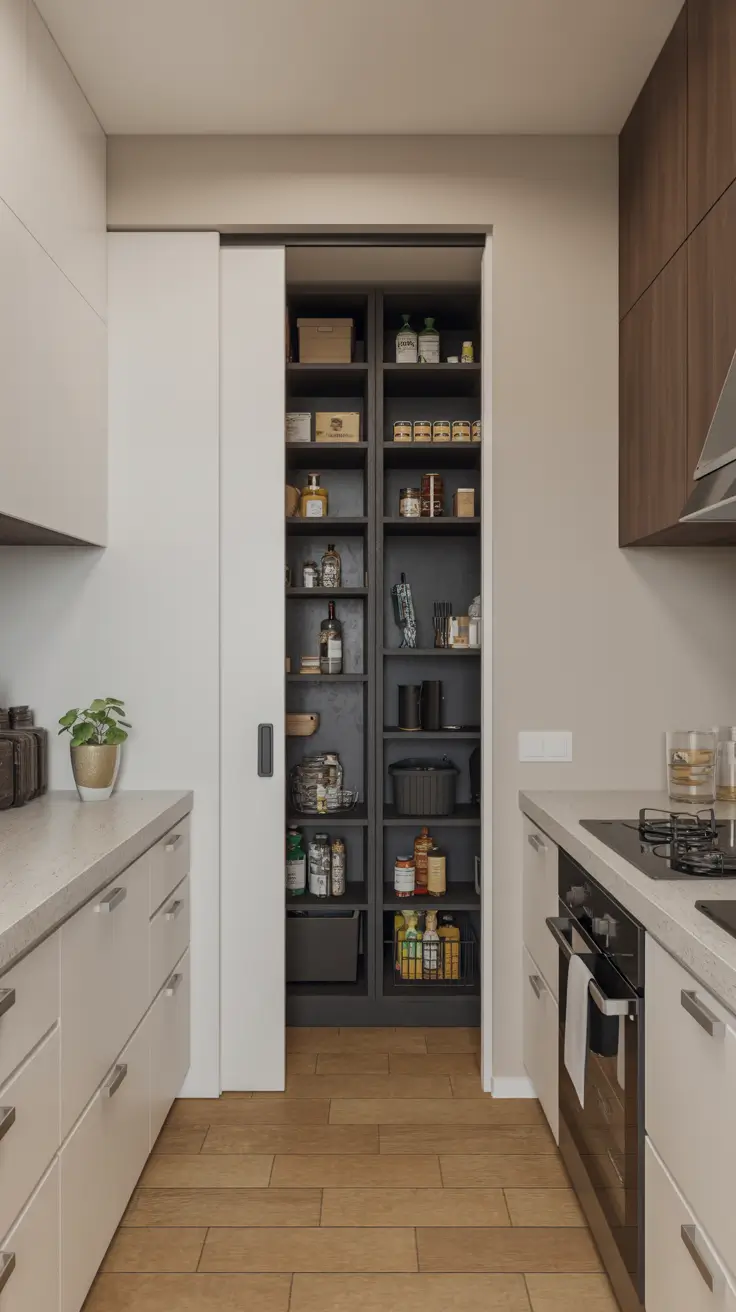
Harmonizing pantry doors with adjoining cabinetry creates spatial continuity, a design best practice widely advocated among interior professionals.
Adding soft-close mechanisms and acoustic dampening hardware significantly enhances daily usability and reduces noise disturbance.
22. Storing Food in Tiny Pantries with Care
Efficient food storage in tiny pantries balances food preservation with maintaining a clean, calm environment. The latest approaches utilize well-defined zones and breathable containers that accommodate varied food types without clutter.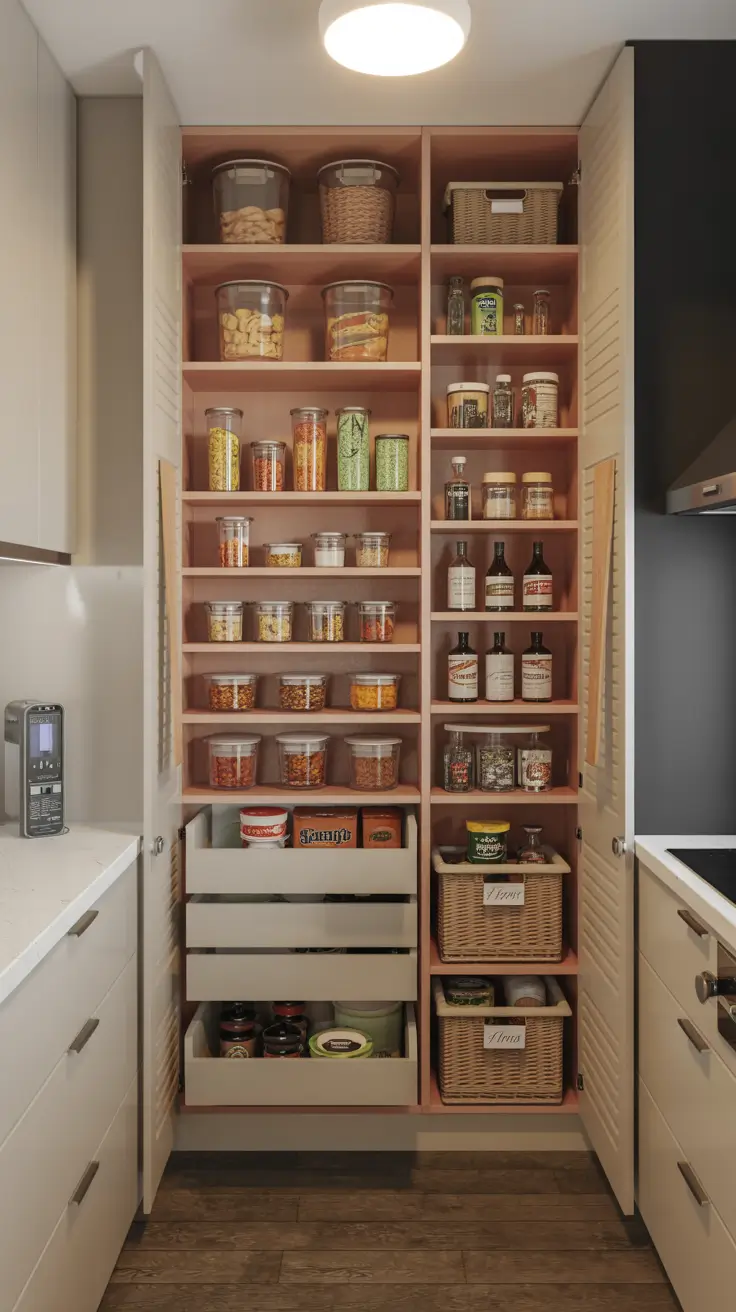
Using airtight containers, stackable glass jars, shallow drawers for packaged goods, and pull-out baskets for fresh produce optimizes storage for both tiny kitchen pantries and pantry closets.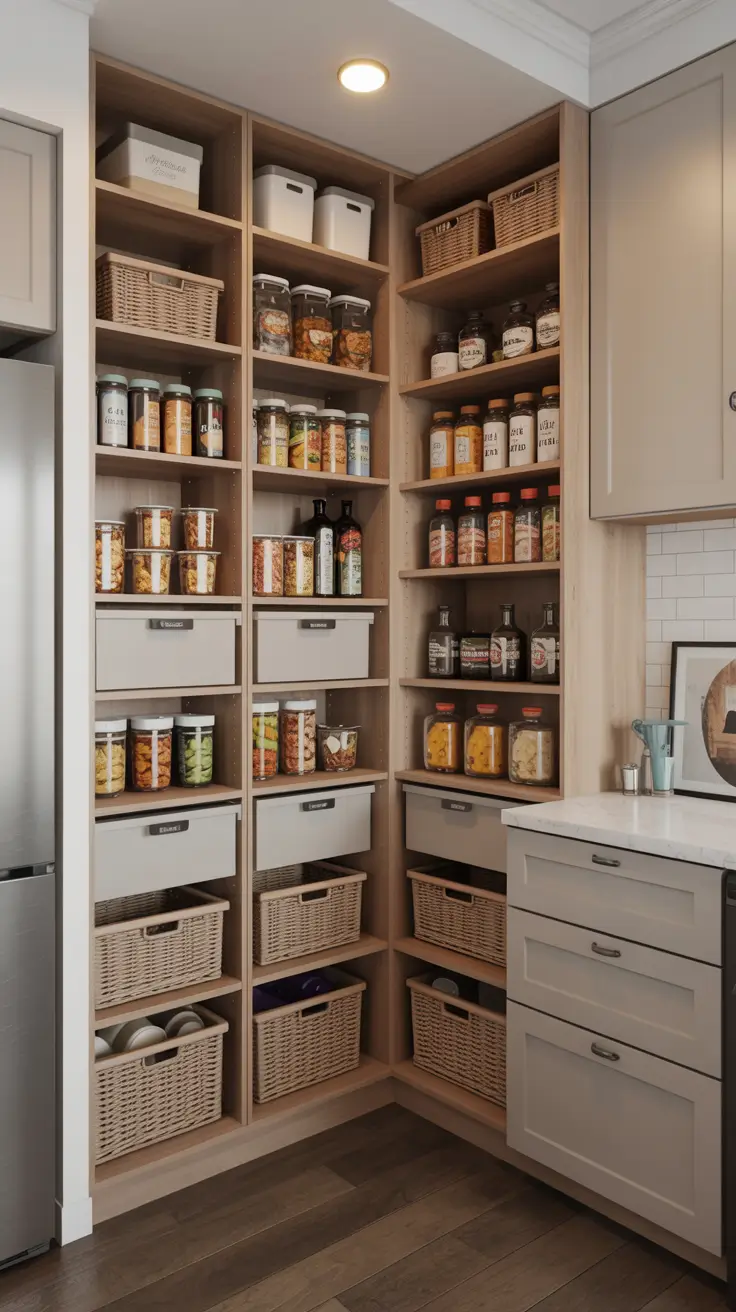
Prominent US designers emphasize visibility and airflow—key factors that contribute to prolonged freshness and user-friendly organization.
Separating temperature-sensitive items from warm appliances or walls through zoning systems noticeably extends food lifespan and pantry performance.
23. Streamlined Organization Frameworks for Small Pantries
Strong organizational frameworks underpin effective tiny pantry design across various small home settings. My approach embraces consistent, easily replicable systems that serve kitchens, closets, and office pantries alike.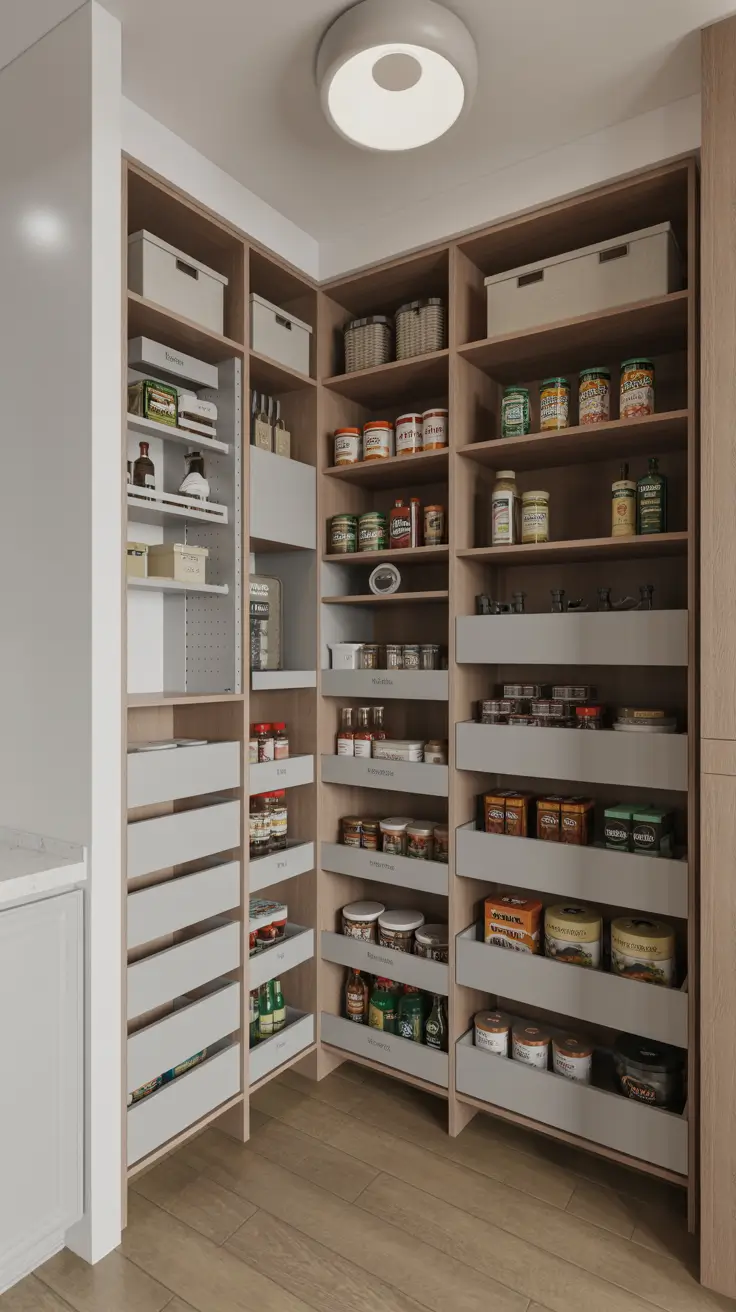
Incorporating clearly marked zones, adjustable shelving, pull-out racks, and drawer dividers allows customization to different spatial needs while supporting sustained organization.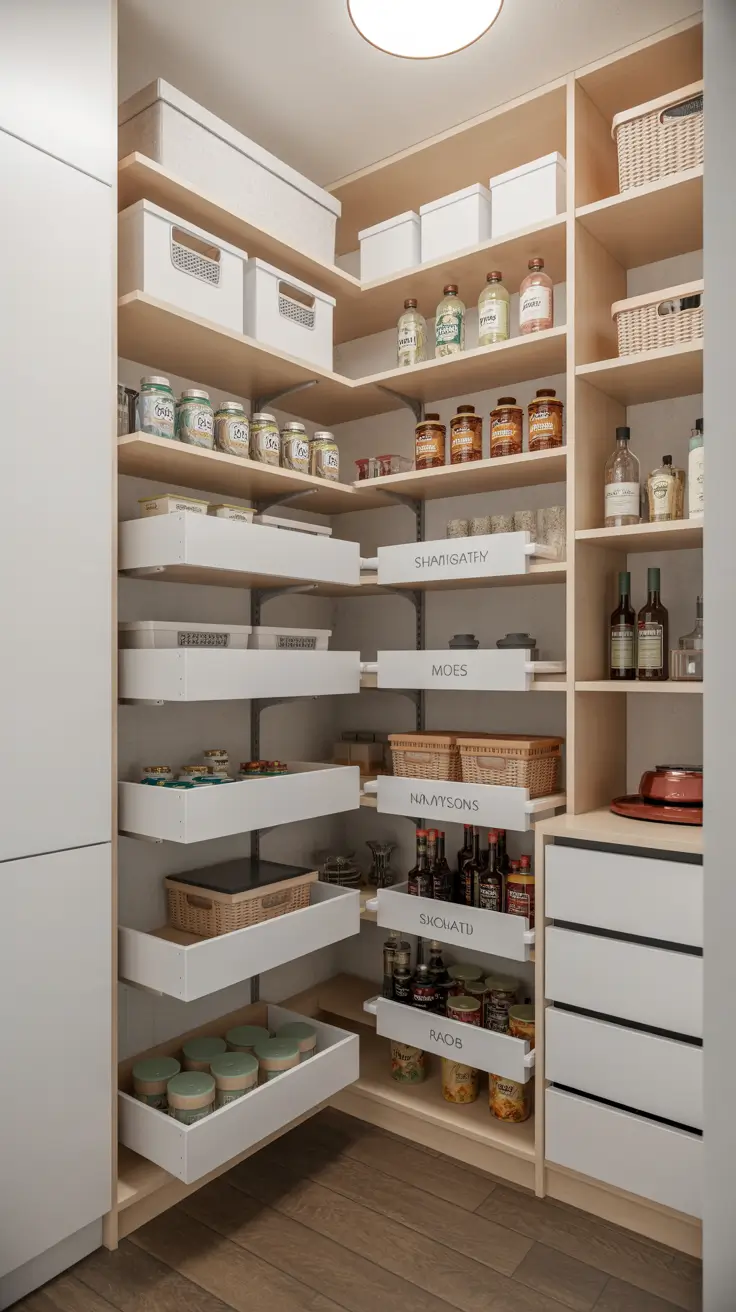
Simplicity trumps complexity: limiting each shelf to one category or container type enhances intuitive use, a vital principle echoed by professional organizers across the US.
Complementing organization with a simple monthly maintenance routine curbs clutter buildup and ensures lasting order.
24. Final Inspirations: Bringing Tiny Pantry Concepts Together
Current tiny pantry design marries inspiration with practical realities, shifting perceptions of pantries from hidden storage to deliberate interior spaces. This vision applies equally to walk-in pantries, under-stairs conversions, and compact kitchen setups.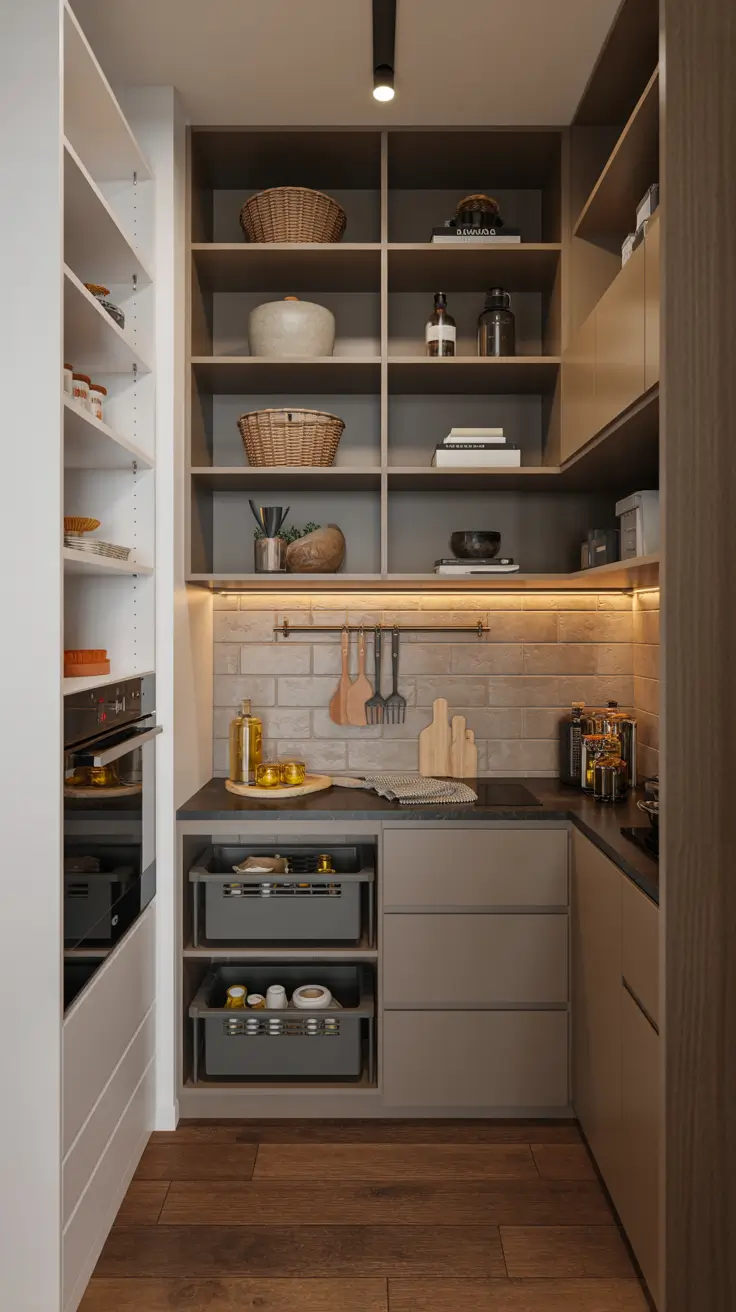
By combining warm textures, intelligent lighting, modular shelving, and strategic layouts, I create pantries that feel inviting and purposeful. Whether refreshing a closet or crafting a new kitchen pantry, every detail optimizes the blend of function and style.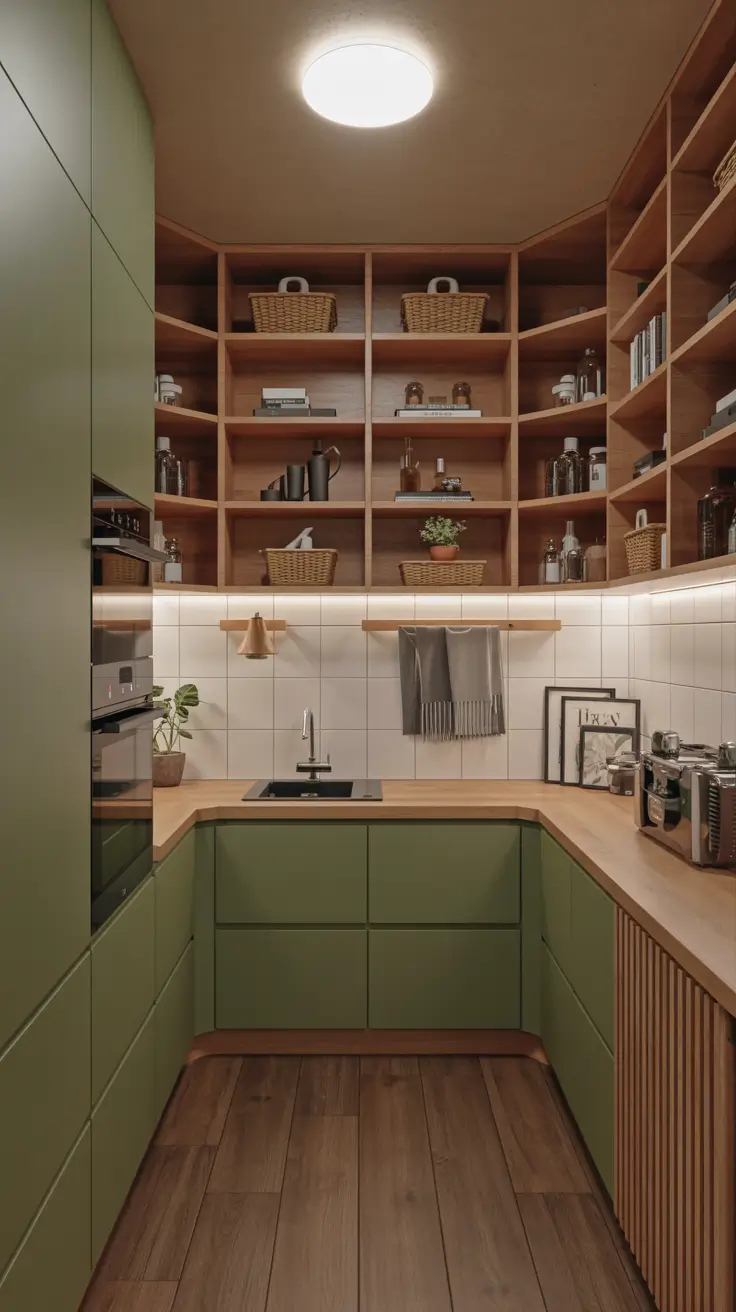
I strongly believe authentic inspiration stems from daily use. Renowned professionals recommend designing for habitual practicality over visual perfection, a philosophy that consistently yields better, more enduring pantries.
Personalizing pantries with dedicated space for favorite foods, subtle decorative touches, and family-specific items completes the transition from mere storage to a truly functional home feature.