Innovative Laundry Room Makeover Tips: Clever, Chic & Space-Efficient Designs

Many homeowners today are eager to optimize their laundry spaces with compact yet chic storage solutions that exude a sense of style and sophistication. The foundation of a well-organized laundry area often hinges on efficient cabinetry and shelving, which not only streamline the workflow but also contribute to an elegant atmosphere. Whether the goal is to rethink laundry shelves or creatively integrate pet food storage, this guide explores affordable, decor-friendly, and highly functional arrangements. Here, we’ll explore innovative layouts fit for unfinished basement setups, mudrooms, and narrow garage washer-dryer areas.
1. Innovative and Stylish Laundry Room Organization Ideas for Every Home
When embarking on laundry room redesigns, my priority is balancing storage capacity, space layout, and aesthetic appeal. Contemporary preferences lean towards minimalist designs with touches of greenery, moody color themes, or rustic farmhouse vibes depending on the home’s character. Whether working with a cozy apartment or a spacious residence, my focus is crafting adaptable spaces that can accommodate laundry baskets, cleaning products, and daily essentials while managing foot traffic efficiently.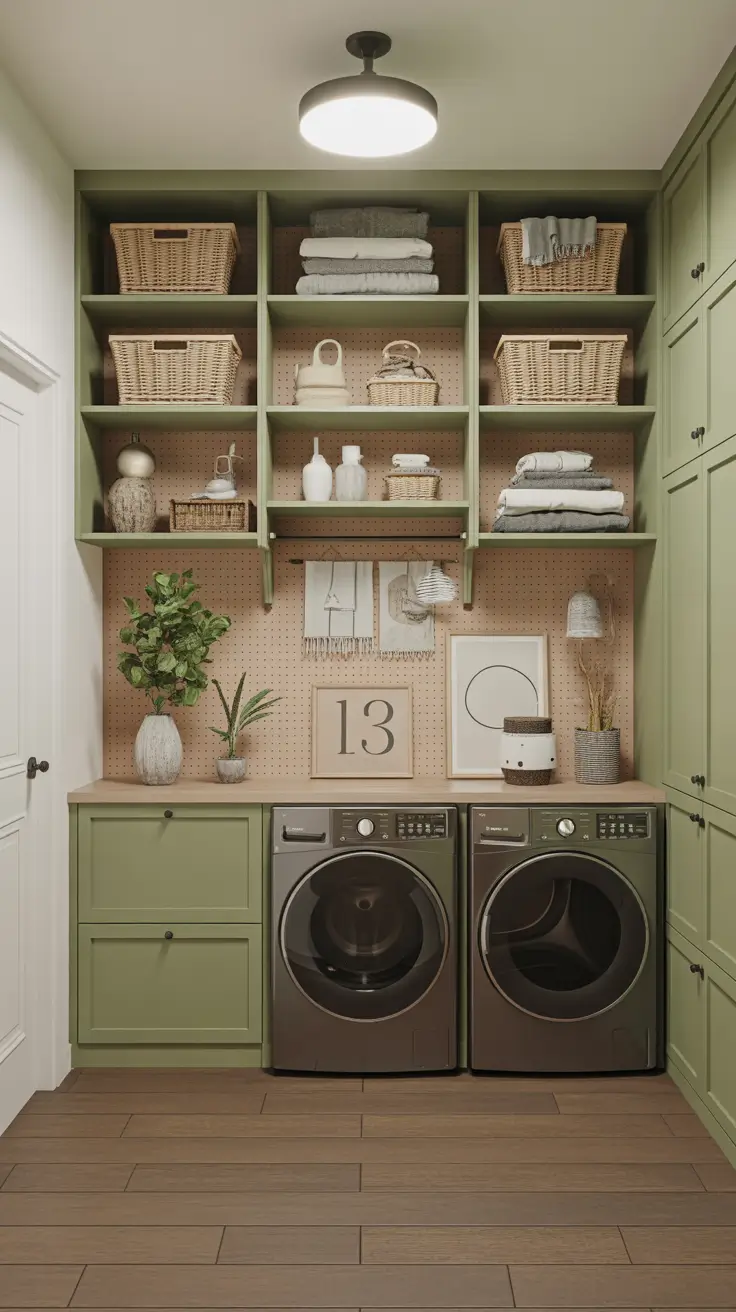
Key elements include slimline furniture, wall-mounted drying racks, and cabinetry with doors to curb clutter visibility. I often recommend adjustable pegboard systems from trusted brands like Ikea, complemented by premium features such as matte black knobs and integrated soft lighting. These details help maintain tidiness, especially around pet supplies and cleaning gear.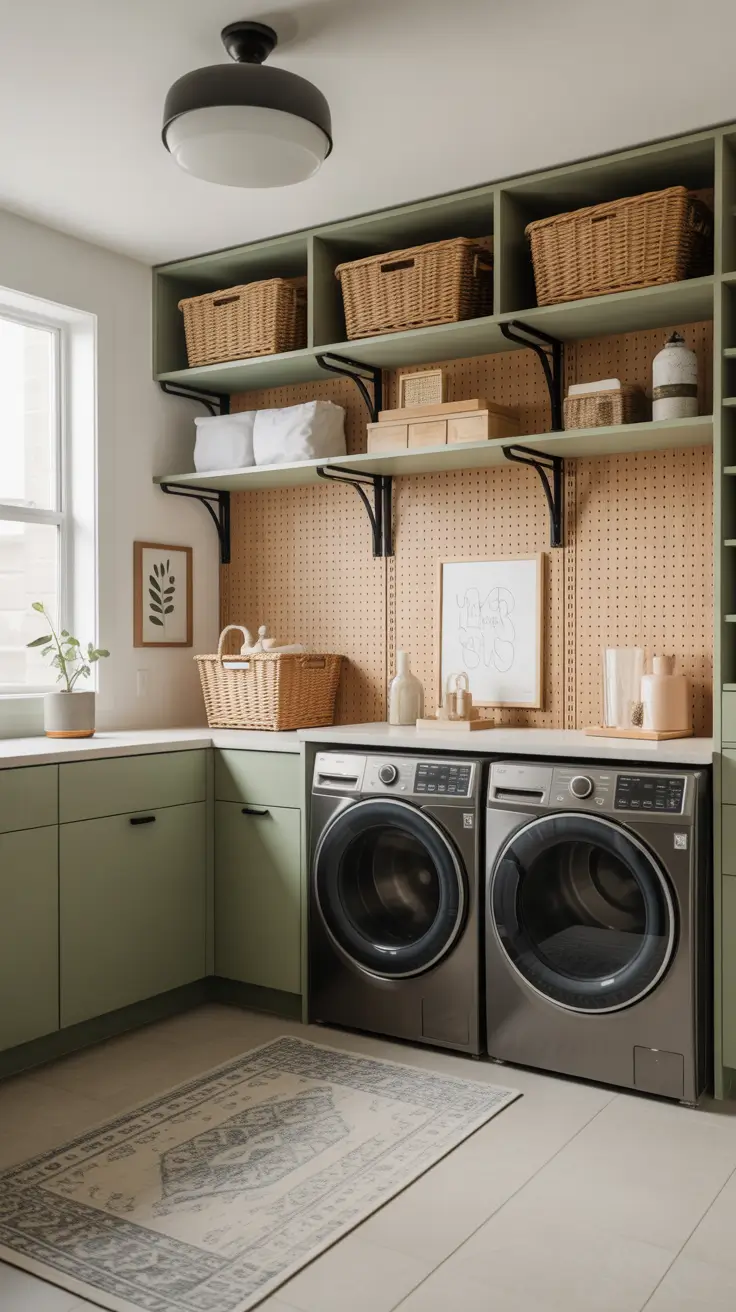
Drawing inspiration from designers such as Emily Henderson and guidance from Real Simple, the approach always emphasizes editing belongings carefully to avoid overcrowding. Laundry spaces often serve as catch-alls, so planning for flexibility and gradual addition of storage is essential to long-term success.
An often-overlooked aspect is the choice of flooring; waterproof vinyl or durable tile enhances longevity and ease of maintenance. Moreover, optimal lighting plays a crucial role in usability and ambiance, something I always highlight in project plans.
2. Maximizing Vertical Space with Efficient Storage Solutions
Designing for limited laundry spaces means exploiting vertical surfaces to their fullest potential—especially in compact areas like basements or mudroom corners. My organizing style integrates appliances within surrounds of coordinated shelving, drawers, and baskets that facilitate seamless workflow and minimize wasted zones.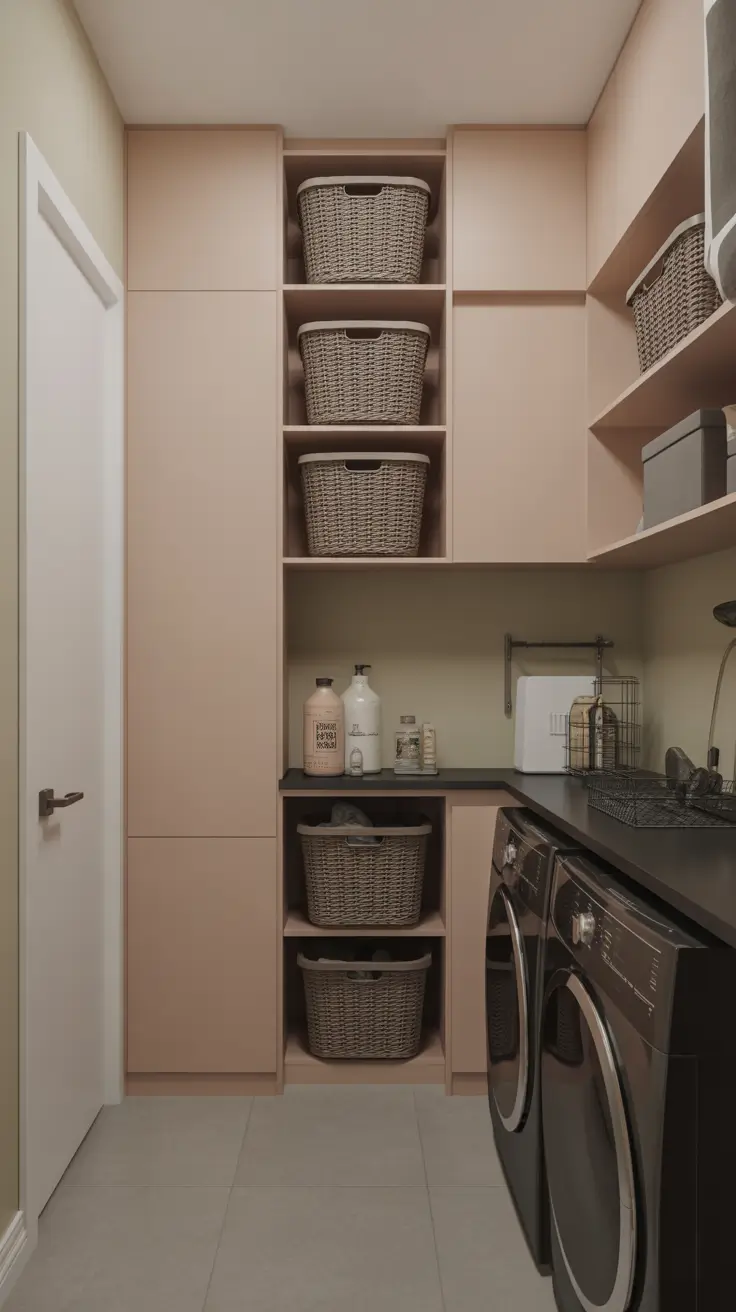
Common tactics include tall storage cabinets, narrow rolling carts, and slim stackable shelves that fit in tight spaces beside appliances. Open shelving typically holds detergents and offers pull-out baskets for laundry sorting. Folding counters above front loaders allow for quick surface conversion without cramping the space. Marrying open and closed storage balances aesthetic appeal with clutter concealment.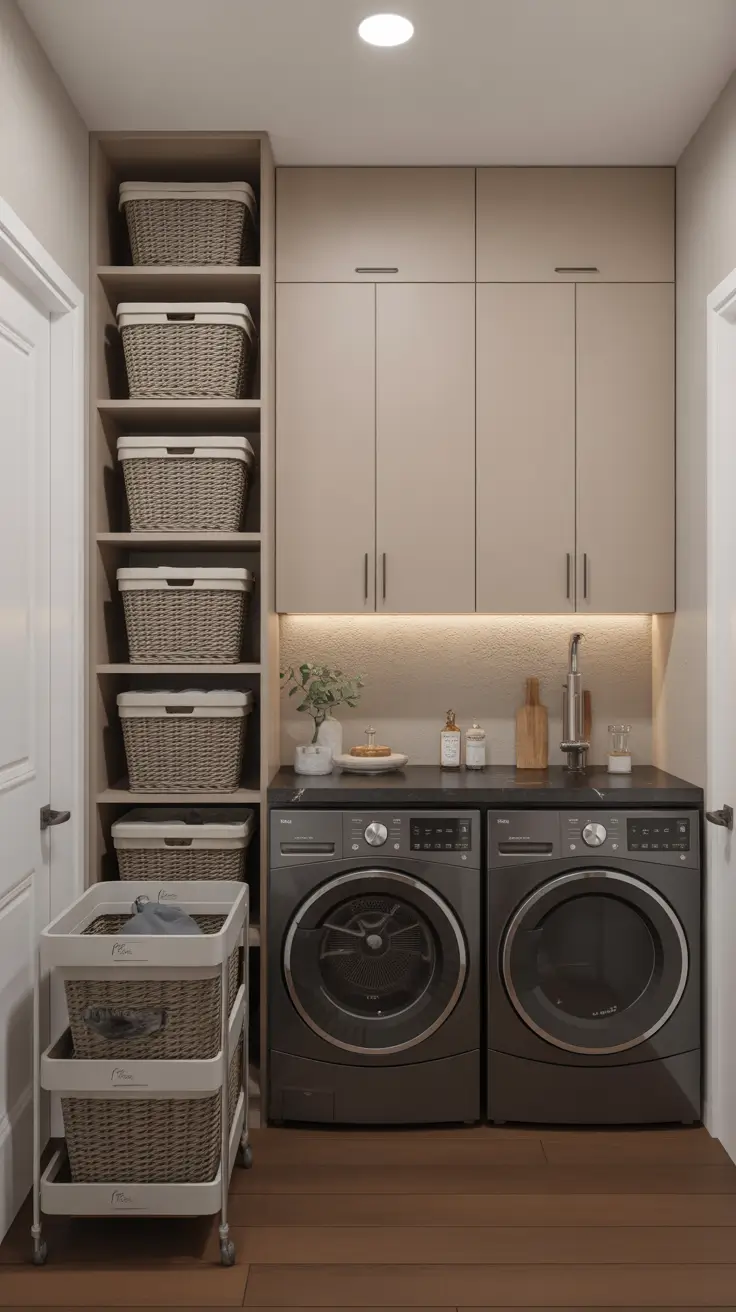
Ikea-inspired and budget-friendly finds often surprise clients with their practicality and style. Adjustable modules are especially popular for seasonal fluctuations and changing household needs.
Adding dedicated zones for laundry drop-offs and cleaning supplies, enhanced by clearly labeled containers, further streamlines daily operations in compact spaces.
3. Contemporary Shelf Designs to Enhance Laundry Room Functionality
Modern shelving trends emphasize clean designs, light-toned woods, and modular components maximizing order. When planning shelves, I aim to fit essentials without overwhelming limited laundry areas. In narrow layouts, shallow shelving ensures room to move freely while organizing detergents and tools neatly.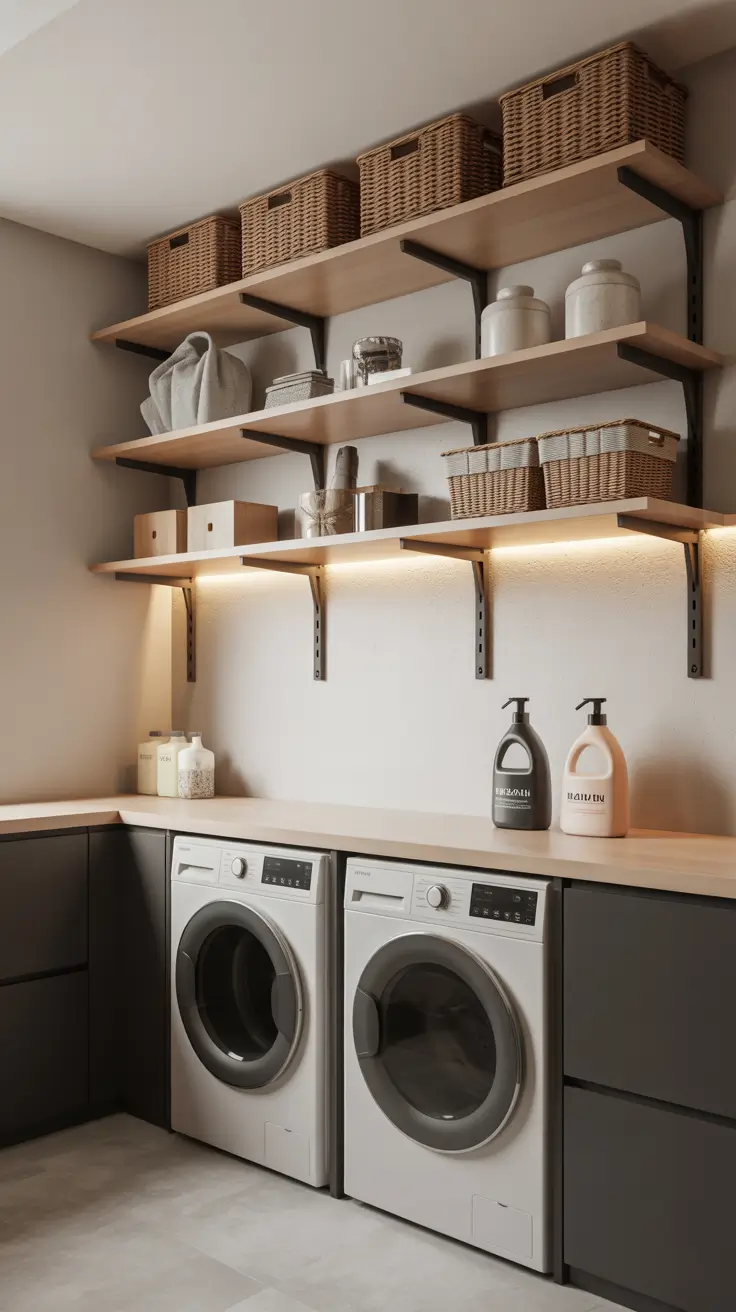
I prefer adjustable brackets, floating shelves, or industrial metal frames styled with contrasting dark green or black accents. Woven baskets, transparent jars, and labeled containers help tame clutter, integrating function with visual charm.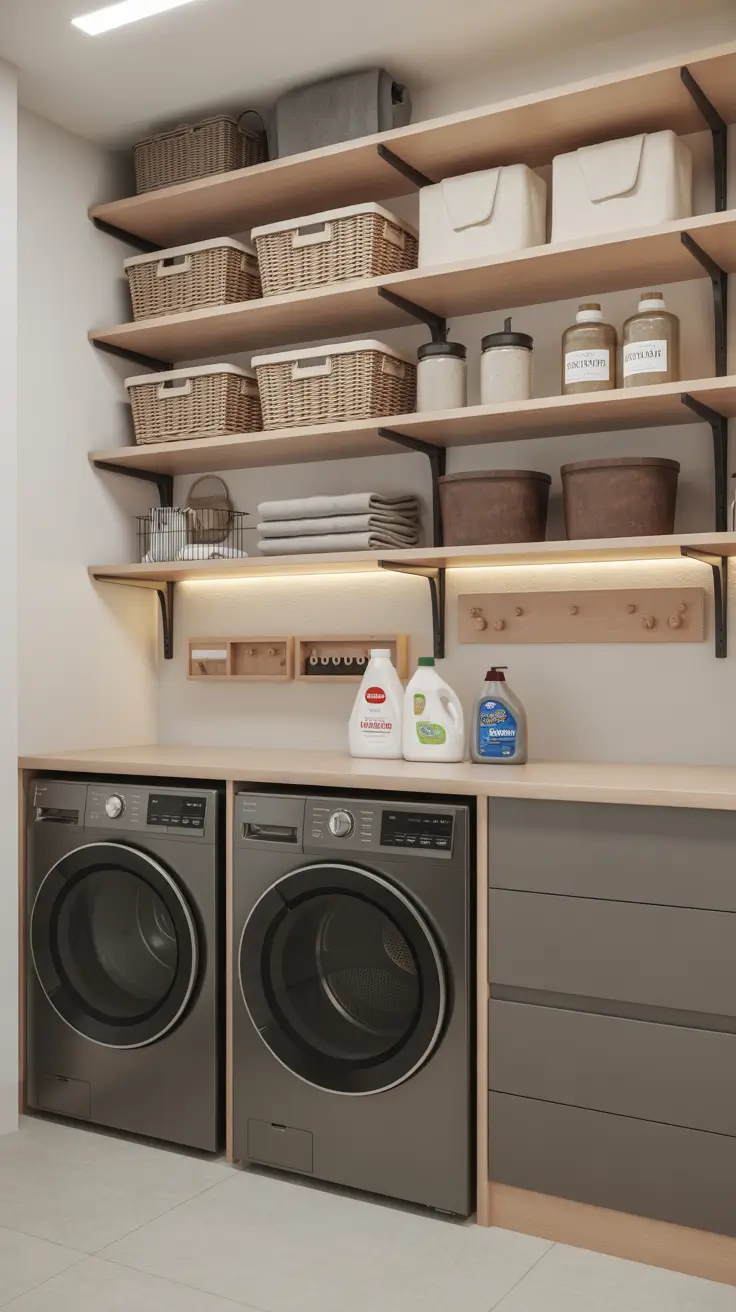
Incorporating under-shelf lighting adds a touch of elegance while improving accessibility. As Apartment Therapy highlights, varying shelf heights avoids monotony and keeps the eye engaged—an approach I routinely apply in my projects.
To accommodate heavier containers, I recommend reinforced shelving brackets or sturdier supports to guarantee stability and safety.
4. Integrating Discreet and Functional Dog Food Storage in Laundry Spaces
With pet care increasingly part of the laundry room’s function, designing tidy, unobtrusive dog food storage is essential. I advocate for concealed storage like built-in drawers or pull-out bins that keep pet supplies neatly hidden, particularly effective in shared-use spaces like mudrooms.
Dog food storage containers such as tilt-out bins, wall-mounted dispensers, or slim rolling carts help reduce mess. Elevated feeding stations integrated into cabinetry are favored by busy families wanting everything in one place. Neutral hues and farmhouse textures seamlessly blend pet zones into the broader aesthetic.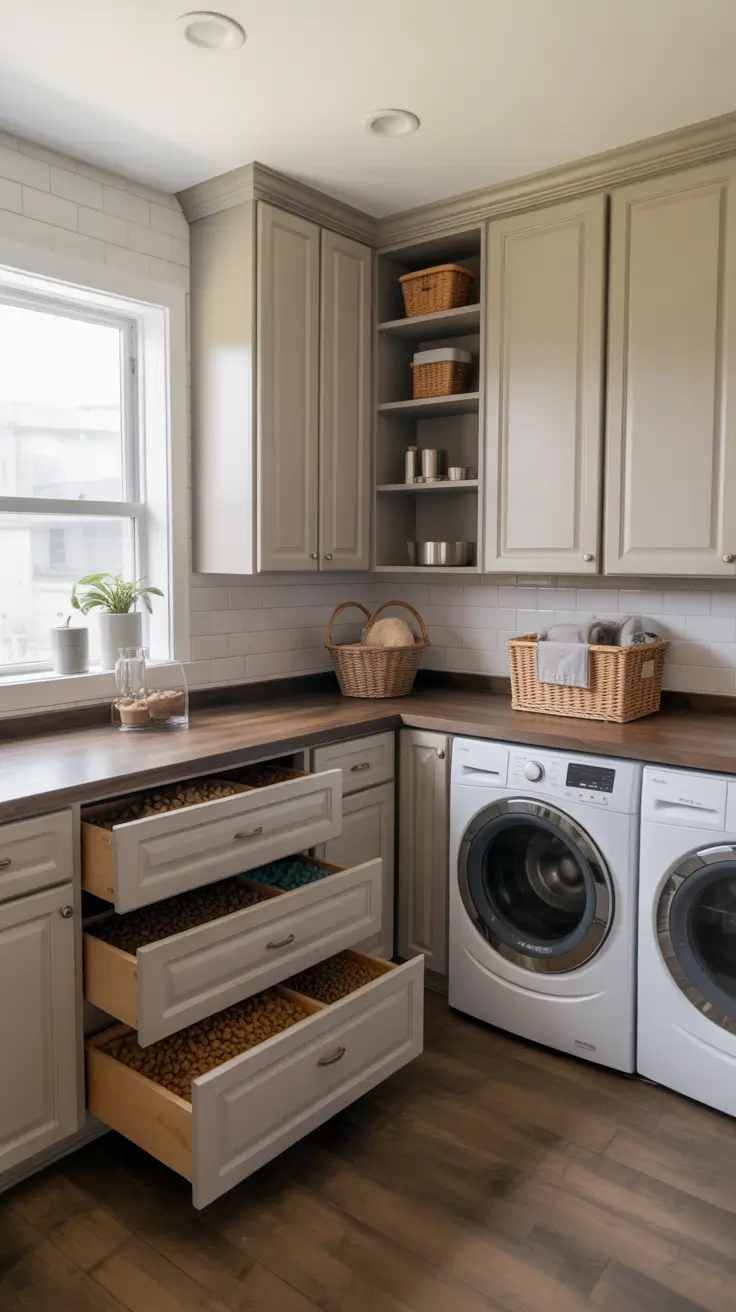
To ensure cleanliness, a washable mat or waterproof flooring beneath the feeding area prolongs cabinetry life and simplifies maintenance. Based on recommendations from sources like The Spruce Pets, securely sealed containers and durable materials safeguard pets and maintain room order.
5. Cost-Effective DIY Projects to Enhance Laundry Room Organization
DIY projects remain popular for their affordability and customization potential. Many homeowners create their own shelves, paint cabinetry in fresh green tones, or install rustic hooks to personalize laundry rooms without overspending.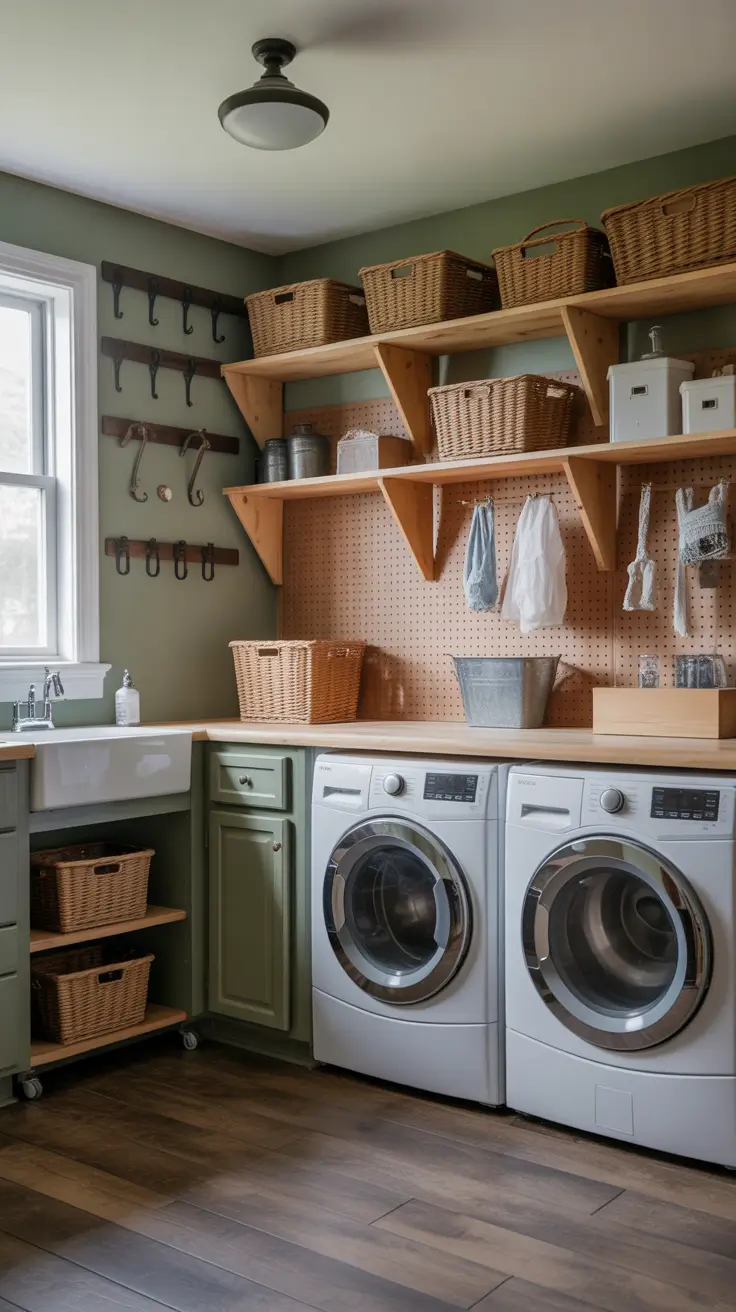
DIY solutions might include pegboard walls, homemade detergent dispensers using glass jars, or cost-effective rolling carts. Fold-out counters crafted from simple wood provide valuable workspace without permanent installations, enhancing daily functionality rather than just decoration.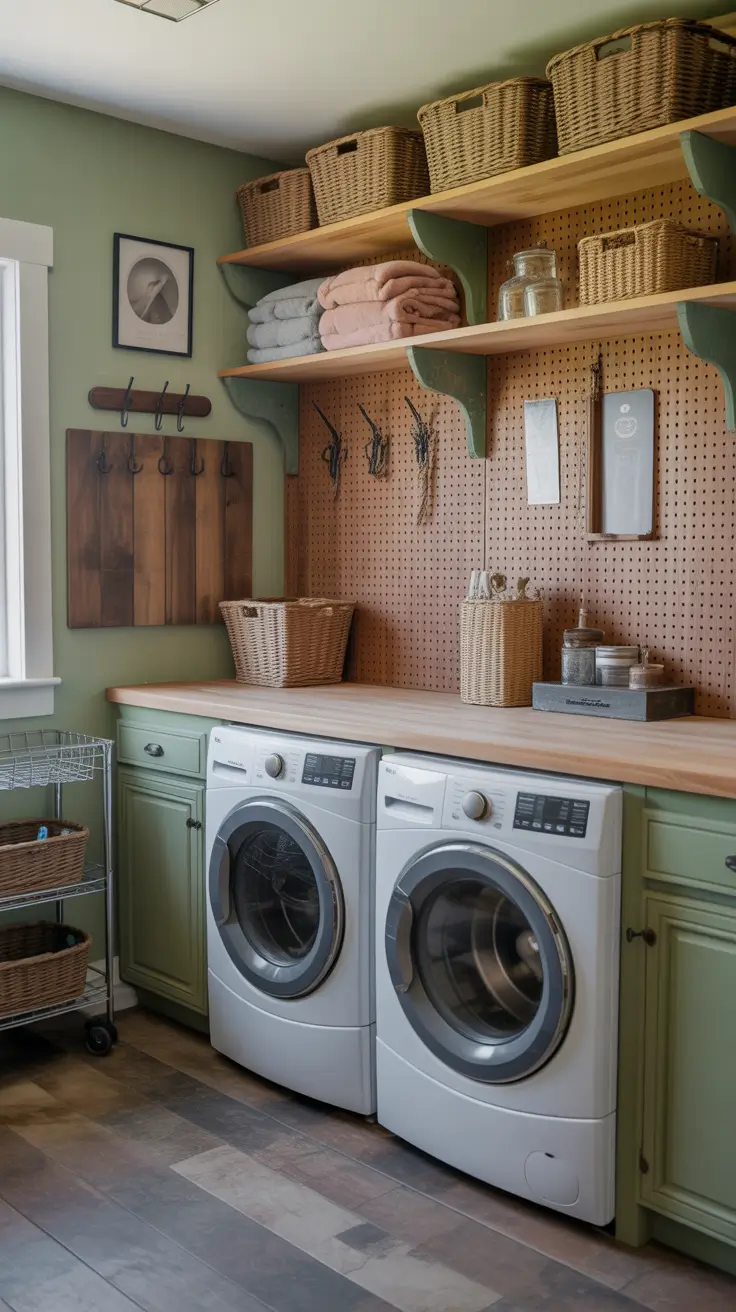
Professionals often recommend tackling one area at a time to avoid overwhelm and deliver cohesive results. Choosing moisture-resistant finishes extends the life of these projects in often humid laundry environments.
Fold-away work surfaces fit perfectly into this DIY ethos, offering practical, space-saving options suitable for both small rooms and top-loader configurations.
6. Versatile Ikea-Inspired Storage Ideas for Functional Laundry Rooms
Ikea’s modular solutions consistently inspire practical laundry room designs, offering flexible elements at reasonable prices. Popular items like pegboards, lightweight baskets, and modular cabinetry allow homeowners to tailor layouts easily.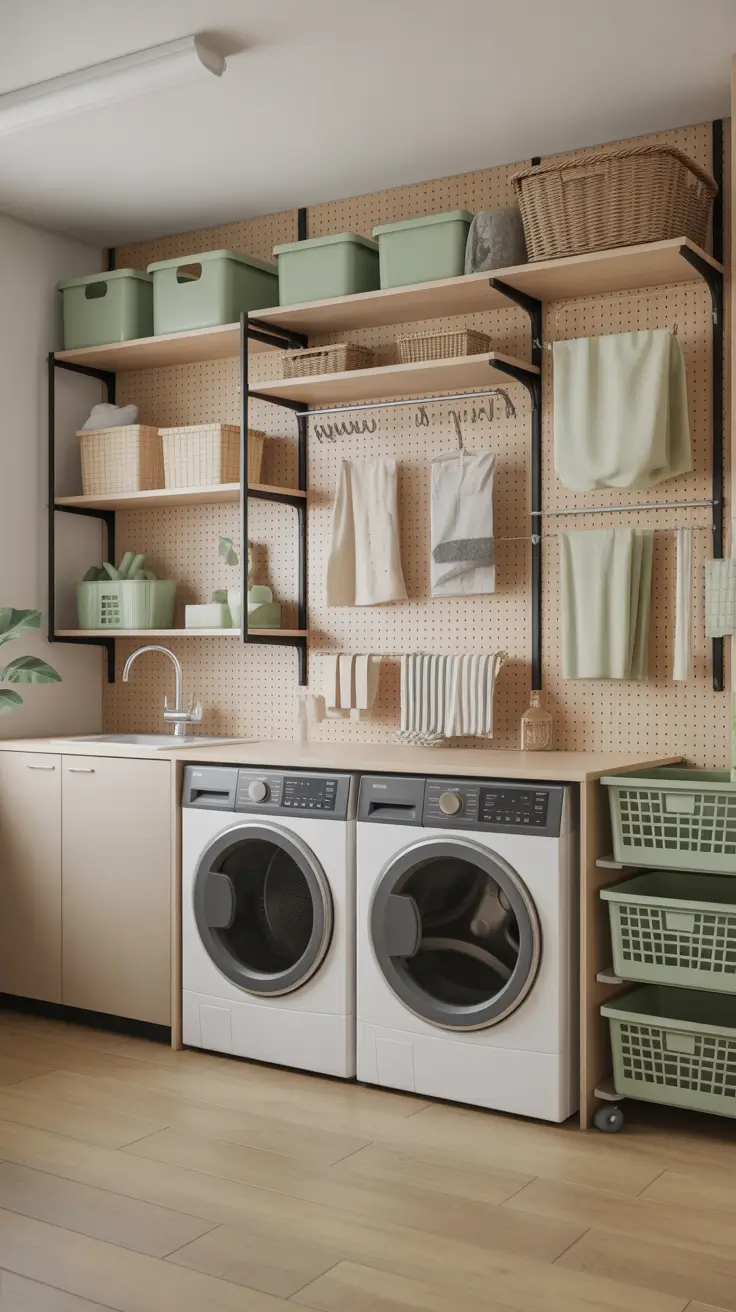
I favor black-framed shelving with green or natural wood finishes, which inject character while maintaining a cohesive look. The combination of open shelves, hidden drawers, rolling carts, and adaptable rails forms an orderly and stylish laundry hub. Ikea pieces excel at securing detergents, pet food, and broom storage efficiently.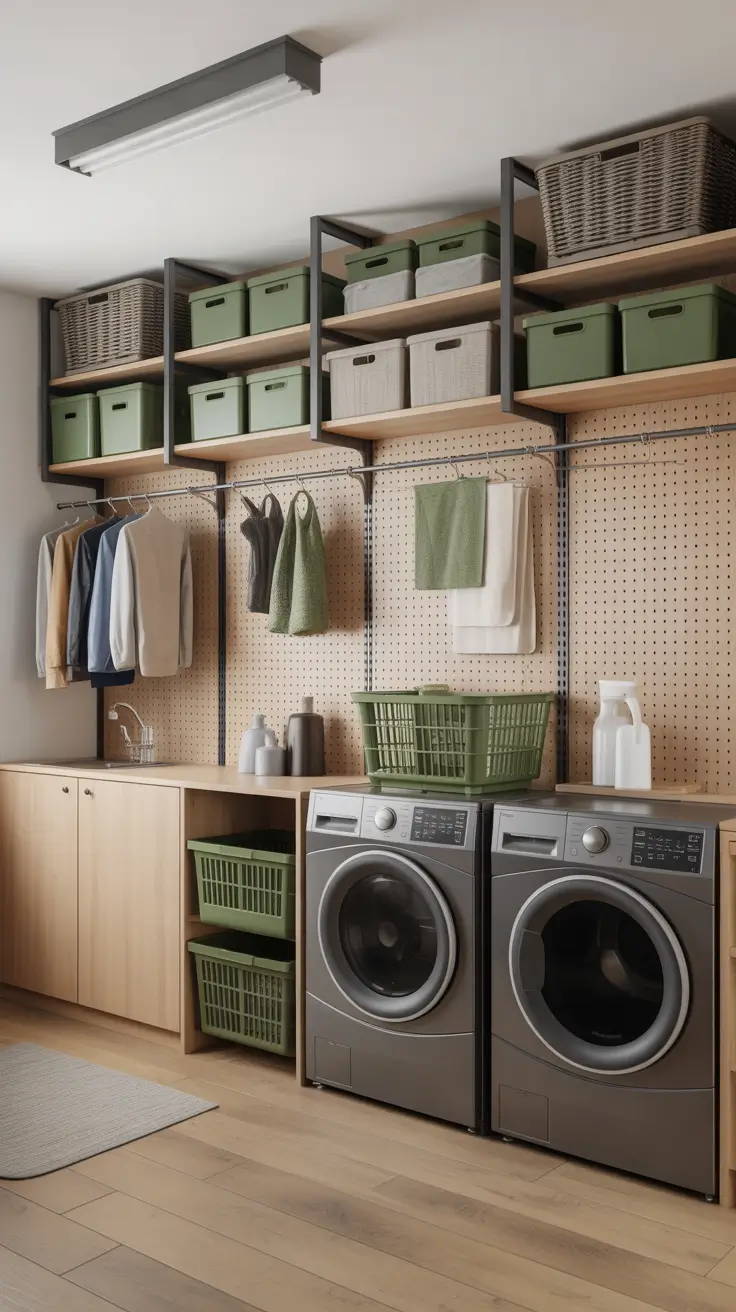
Clients often report enhanced satisfaction when these systems are enhanced with premium touches such as quality hardware and under-cabinet lighting. Matching cabinetry colors and storage baskets to the home décor elevates the overall design impact.
Adding a countertop above machines complements Ikea shelves nicely, providing an essential work surface.
7. Transform Your Laundry Walls into Functional Storage Hubs
Maximizing wall space is critical in laundry room design, especially in compact or basement locations. I incorporate tall shelving towers, hanging panels, narrow cabinets, and modular rails to utilize every inch effectively.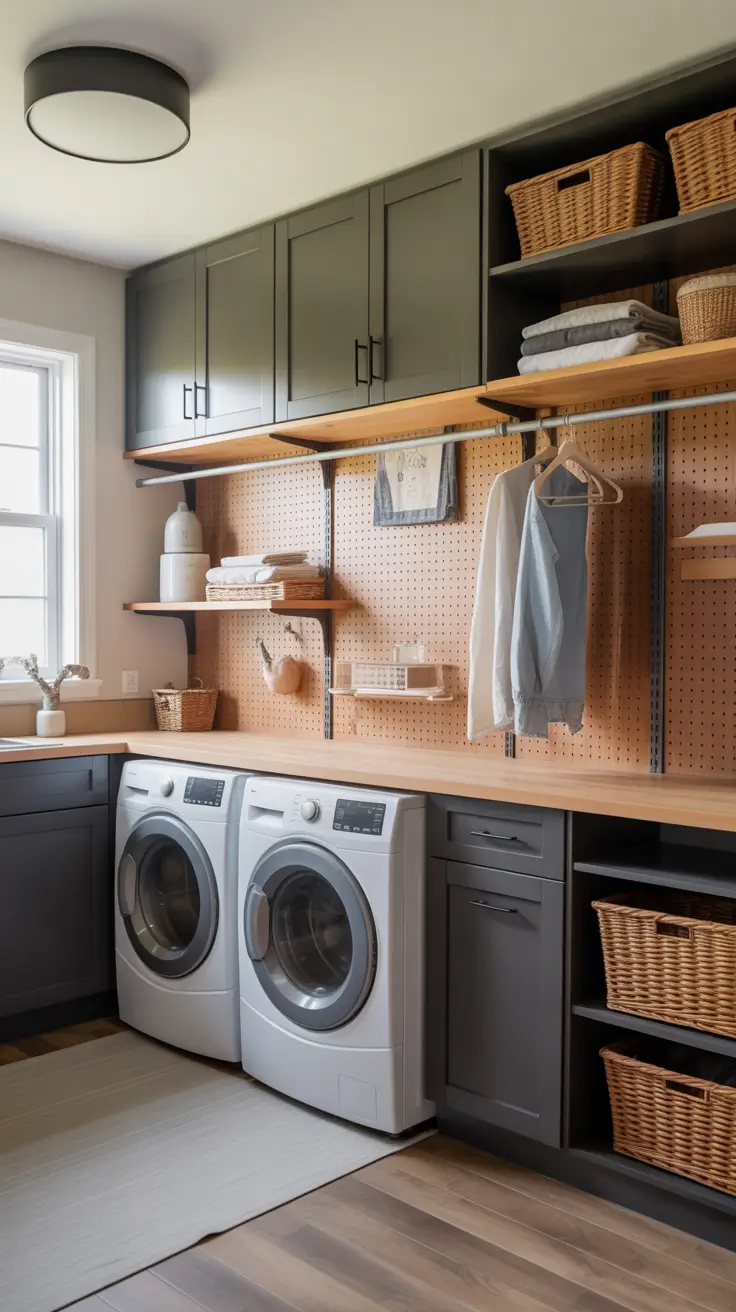
Floating shelves for detergents, wall-mounted drying racks, concealed upper cabinets, and pegboard systems keep essentials in reach while maintaining visual appeal. Green or black accent colors and wood tones add warmth and personality.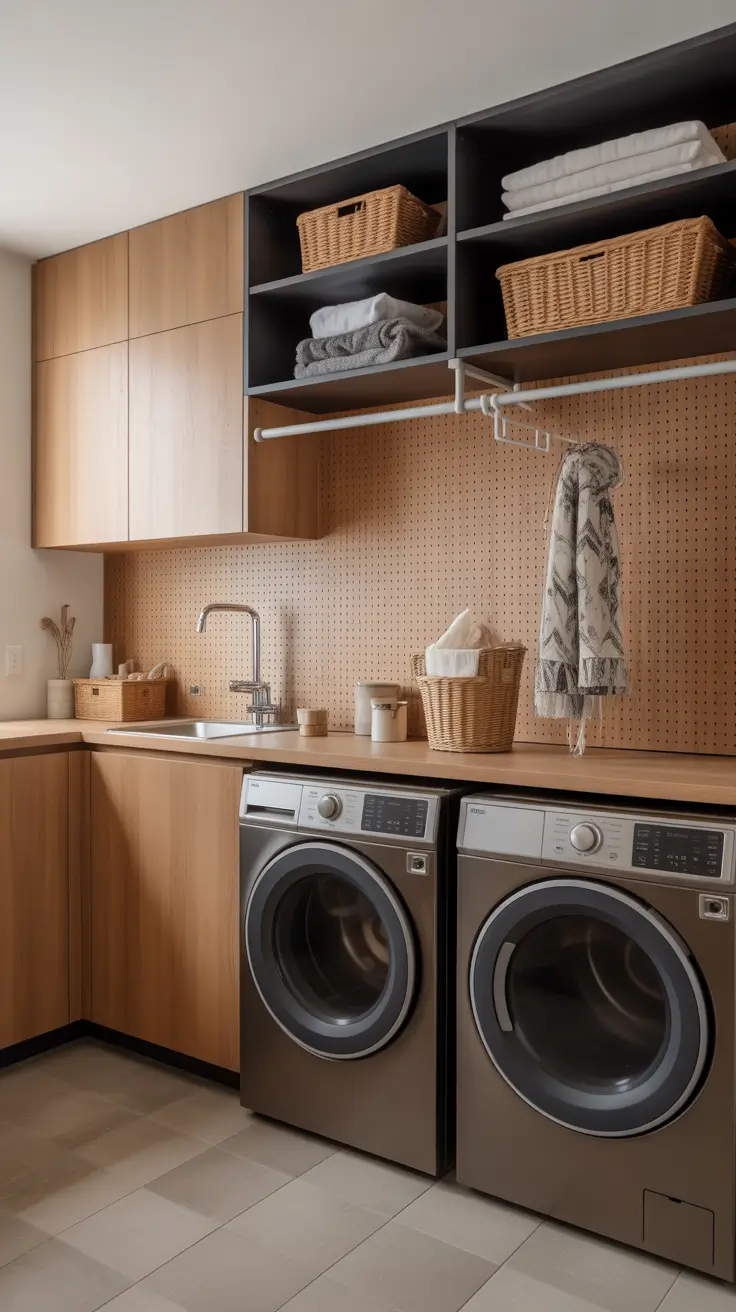
By zoning wall storage, clutter diminishes and spatial harmony improves—principles I integrate consistently into my designs.
Adding personal touches like framed artwork or plants helps balance the utilitarian storage with inviting aesthetics.
8. Fresh Organizational Approaches Tailored to Any Laundry Room
Each home demands a unique laundry layout that reflects its spatial constraints and user flow. My vision focuses on creating flexible storage systems that marry elegance with practical efficiency in both minimalist closets and spacious laundry rooms. Integrating sorting, washing, drying, folding, and storage into a smooth sequence turns this essential space into an extension of the home’s style.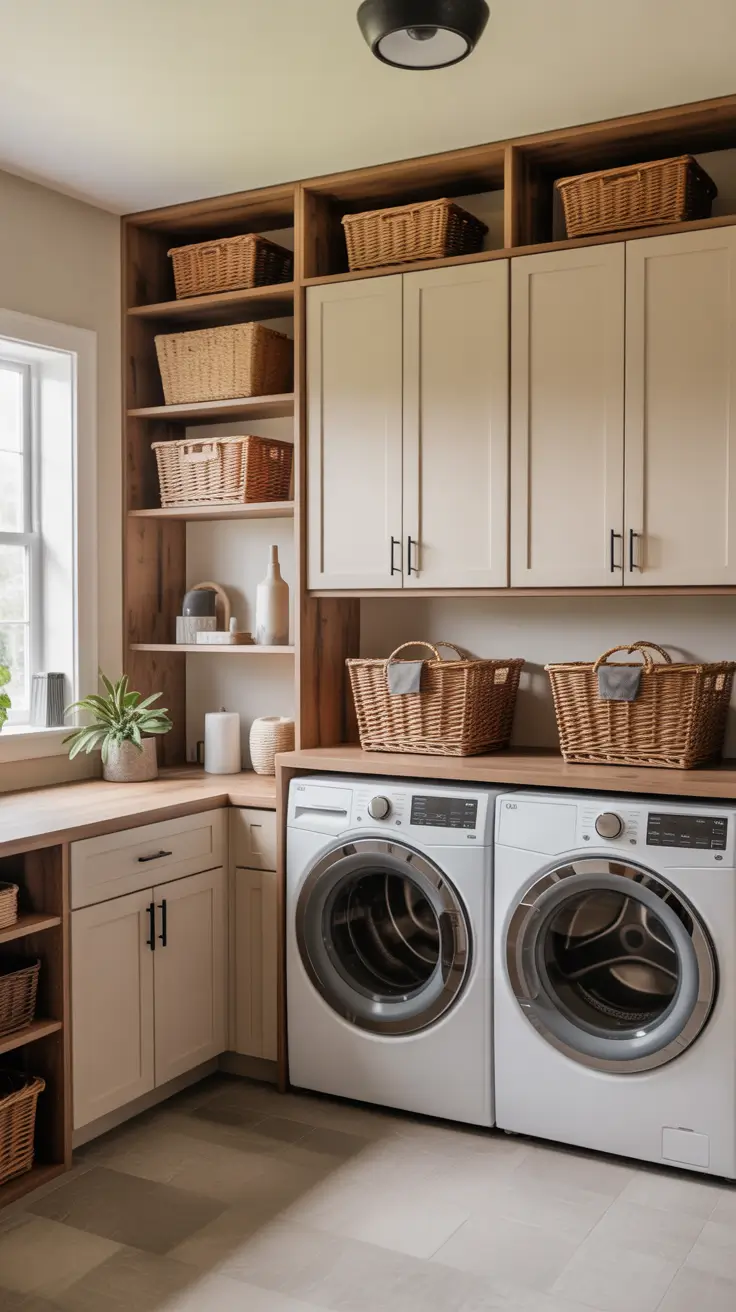
Essential components include base cabinets, overhead shelves, fold-up counters, and wall hooks to keep floors clear. Slim carts, built-in hampers, and clear containers help keep supplies contained and visible. In farmhouse-inspired spaces, my design leans toward warm wood and woven baskets; in contrast, luxurious settings favor flat-front cabinetry and slim black hardware for sleek sophistication.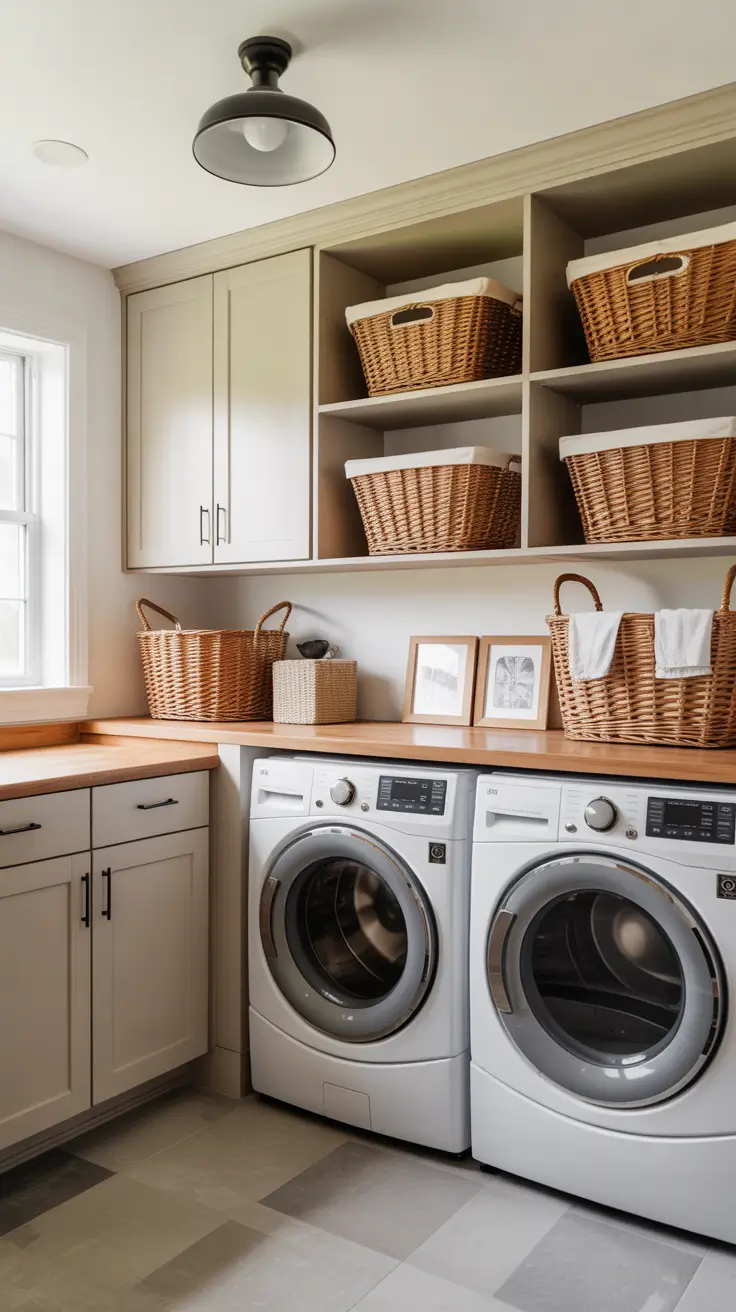
Regular decluttering and thoughtful placement of essentials ensure the laundry area stays orderly and pleasant to use.
Bright, even lighting and adequate ventilation are indispensable for a comfortable and functional laundry environment, enhancing both safety and user experience.
9. Optimizing Storage for Top-Loading Washers
Preparing a laundry setup that accommodates top-loading machines requires special attention to lid clearance and access. Homeowners often seek smart storage ideas that keep essentials handy without obstructing lids or control panels.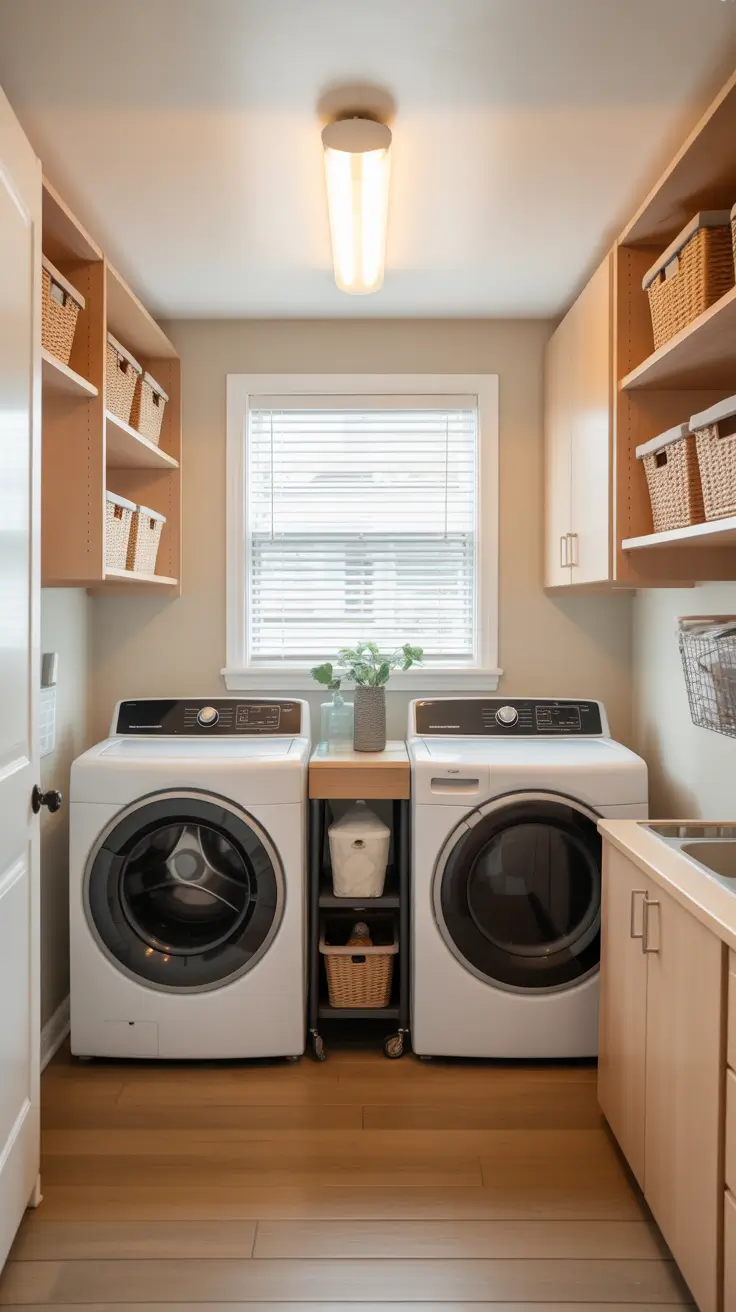
I elevate cabinets and shelving to provide ample space above machines and suggest hanging rails or compact upper cabinets over the dryer side. Between appliances, pull-out shelves or rolling carts offer convenient storage without sacrificing space. For narrow rooms, tall pantry-style cabinets across from the washer optimize vertical space. These choices respect the natural movements required for loading and unloading.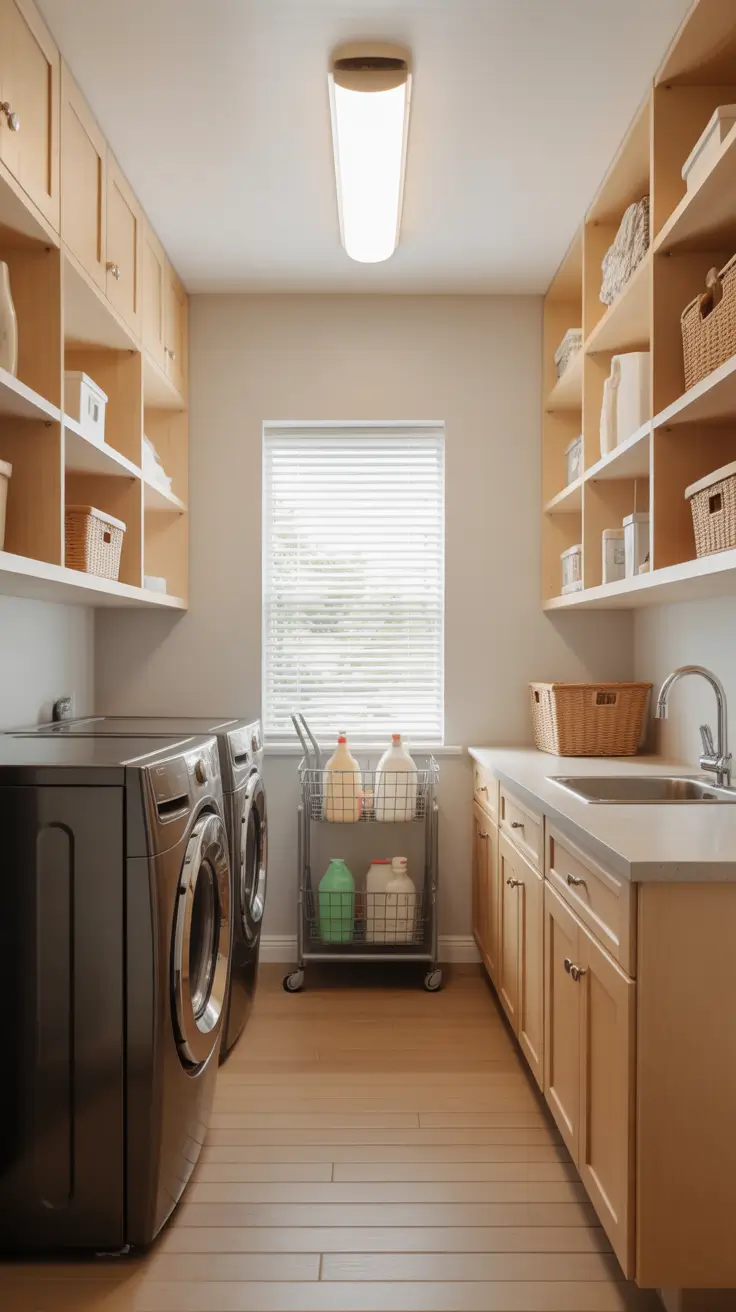
Separating long-term storage from high-use items ensures the room feels neat and efficient, with heavier supplies stored low and daily essentials like pods and sheets kept within easy reach.
Utilizing corners smartly with angled shelving, pegboards, or angled cabinetry captures awkward spaces without interfering with machine operation.
10. Basket-Based Systems for Seamless Laundry Organization
Basket systems serve as versatile, flexible storage solutions, especially useful for sorting laundry by color, person, or season. I conceptualize baskets as removable drawers that adapt as organizational needs evolve. Their tactile textures inject warmth into otherwise utilitarian laundry rooms. I anticipate that labeled laundry baskets will become standard features in homes.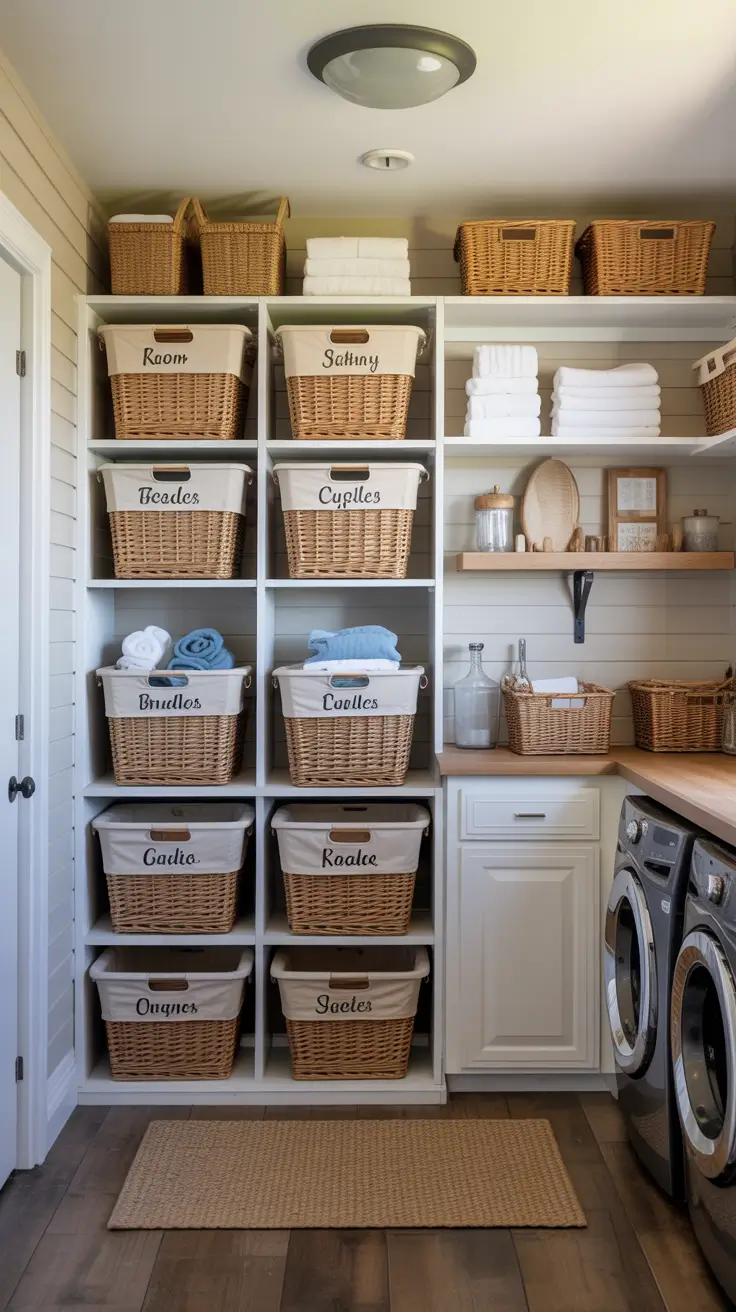
Typically, I design storage to incorporate two or three layers of baskets: one for sorting laundry, another for cleaning supplies, and potentially a third for less frequently used goods. Woven baskets complement rustic styles, while plastic or fabric bins suit modern interiors. Matching basket sizes to shelf dimensions creates a custom, built-in appearance. Placement under counters, inside tall cabinets, or on open shelving balances neatness with accessibility.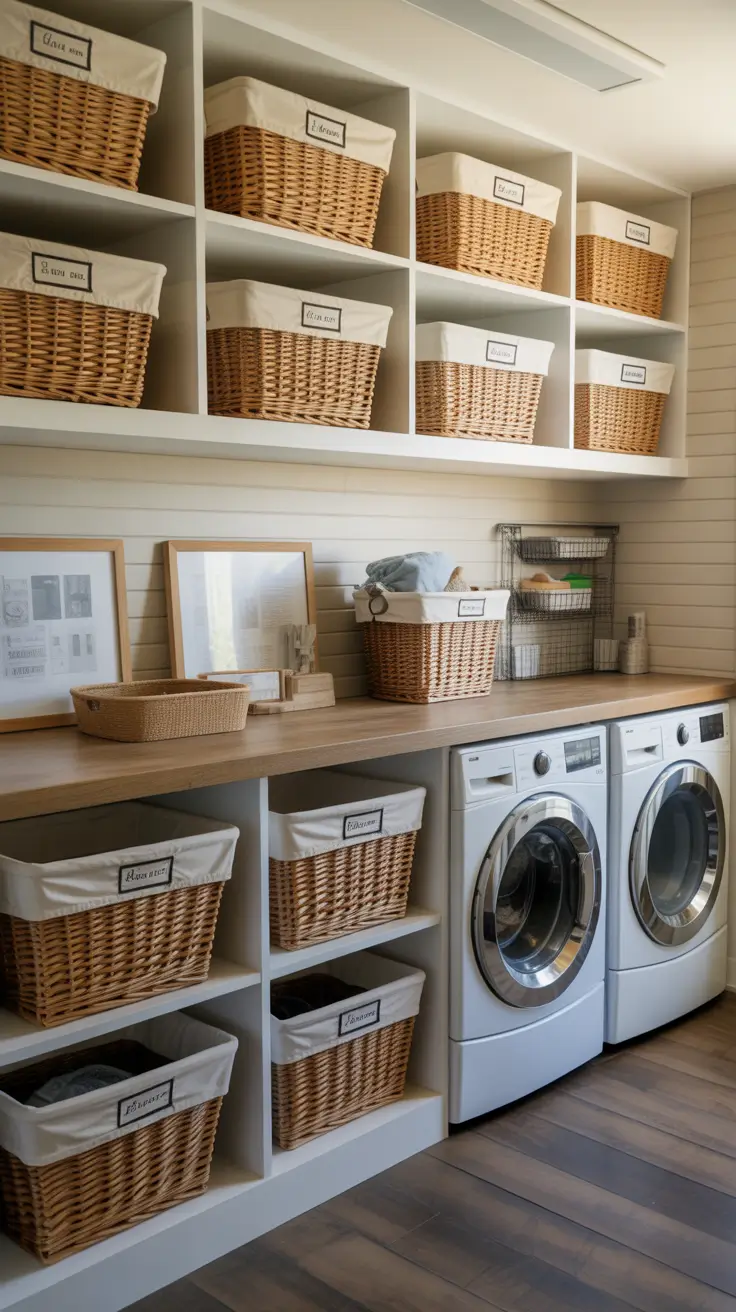
Labeling baskets simplifies organization and encourages all family members to maintain order, a strategy validated by professional organizers and my own practice.
Durability and moisture resistance are critical in basket selection, especially in basement laundry spaces prone to humidity. Avoid materials susceptible to mold or warping for long-lasting results.
11. Streamlined Organization for Compact Laundry Rooms
Designing for compact or closet-sized laundry spaces demands precise packing of essentials without impeding movement or creating a cramped atmosphere. I opt for crisp lines, muted gray tones, and green accents to keep rooms visually open.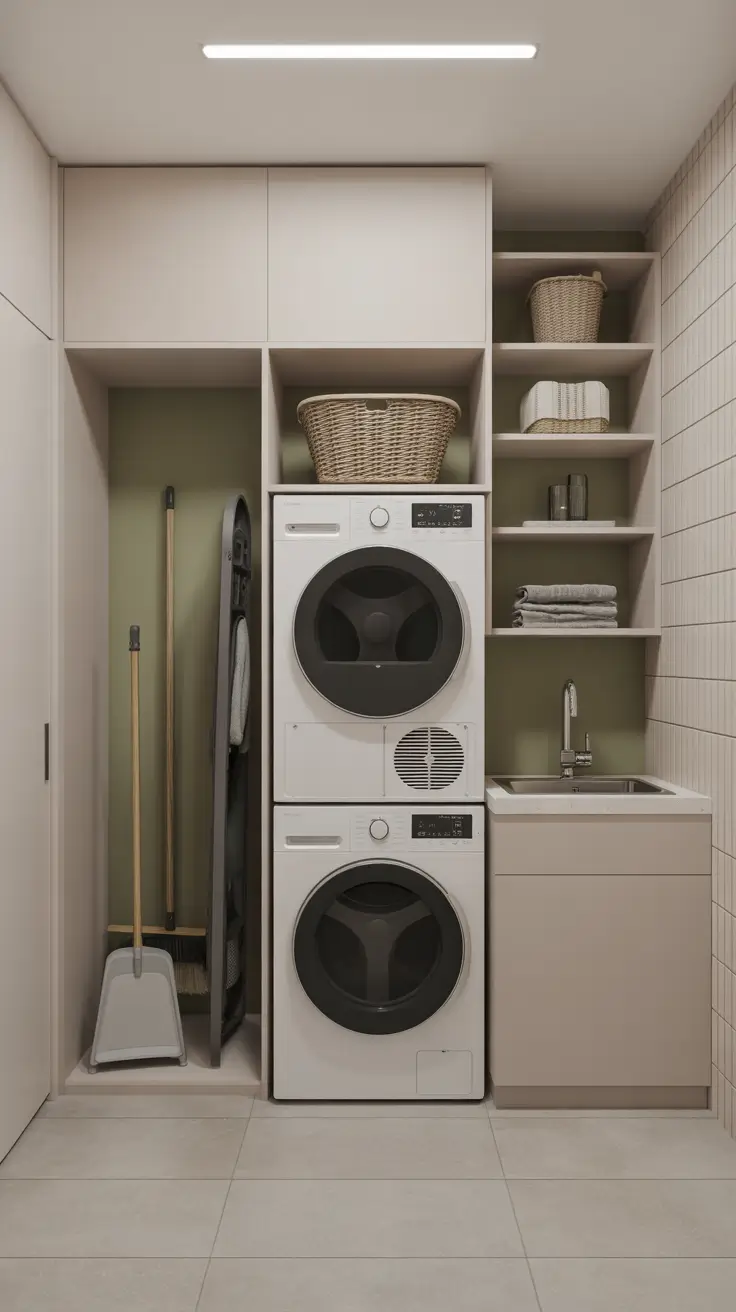
I cluster appliances side-by-side under continuous countertops, topped with floating shelves to enhance storage and lighting niches. Tall cabinets discreetly hide mops, brooms, and cleaning supplies. Space-saving hardware like wall-mounted drying racks and fold-down ironing boards maximize function without obstructing walkways.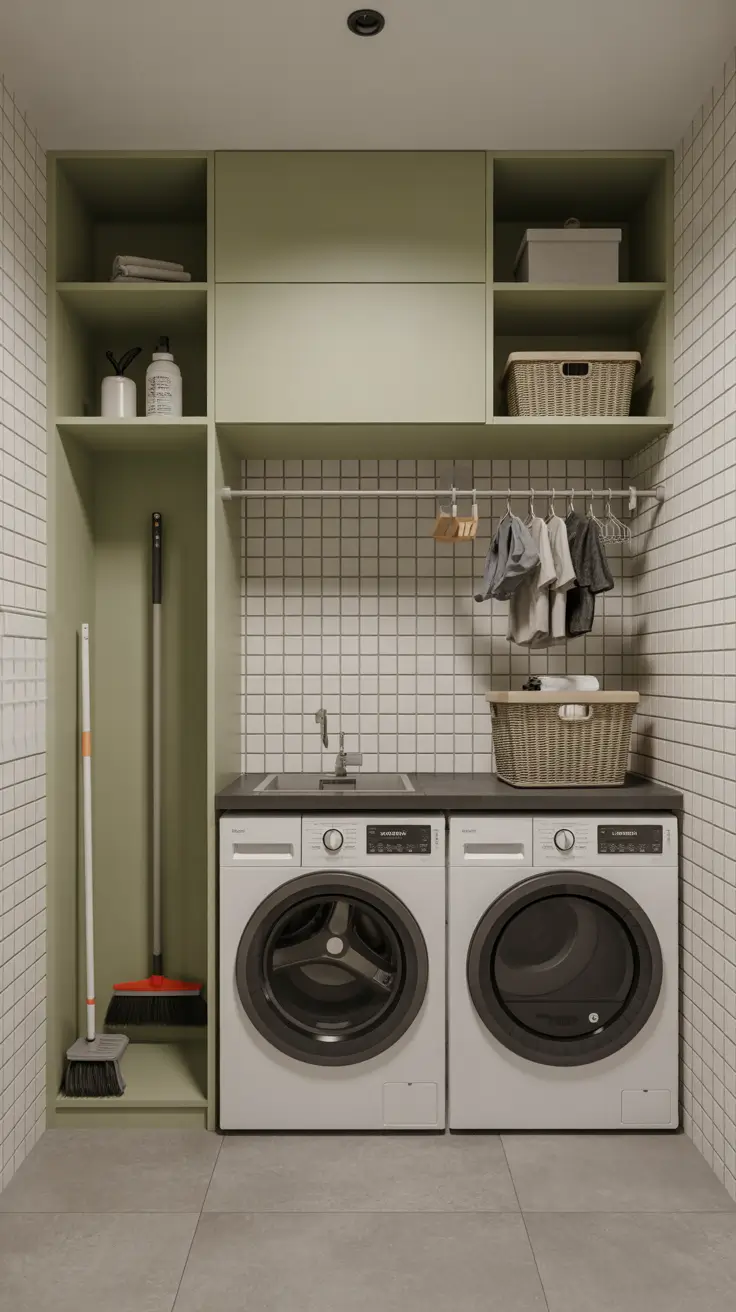
Success lies in embracing the constraints of small spaces rather than resisting them, often minimizing decorative excess and investing in quality finishes that balance style and tidiness smoothly.
Door type decisions also make a notable difference; pocket doors or sliding barn doors can save precious inches compared to standard swing doors.
12. Clever Detergent Storage for an Uncluttered Laundry Space
Efficient detergent storage is vital for keeping laundry rooms orderly and functional. I advocate for designated zones that provide easy access to daily products while removing visual clutter.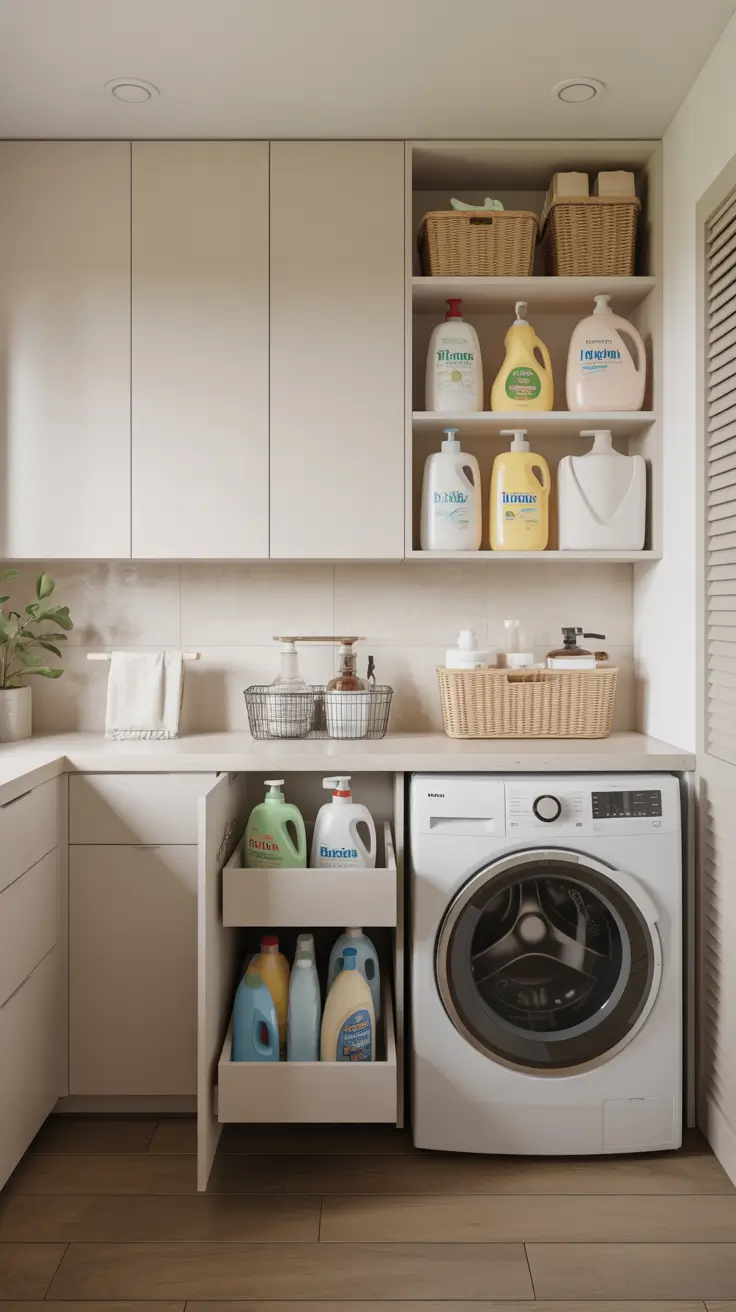
Typical solutions include narrow closed cabinets housing large bottles, transparent dispensers for liquids, and labeled jars for pods or powders. Slim pull-out pantries adjacent to washers allow for space-saving yet accessible storage. Simple upsides can be further achieved by repurposing budget-friendly containers arranged neatly together.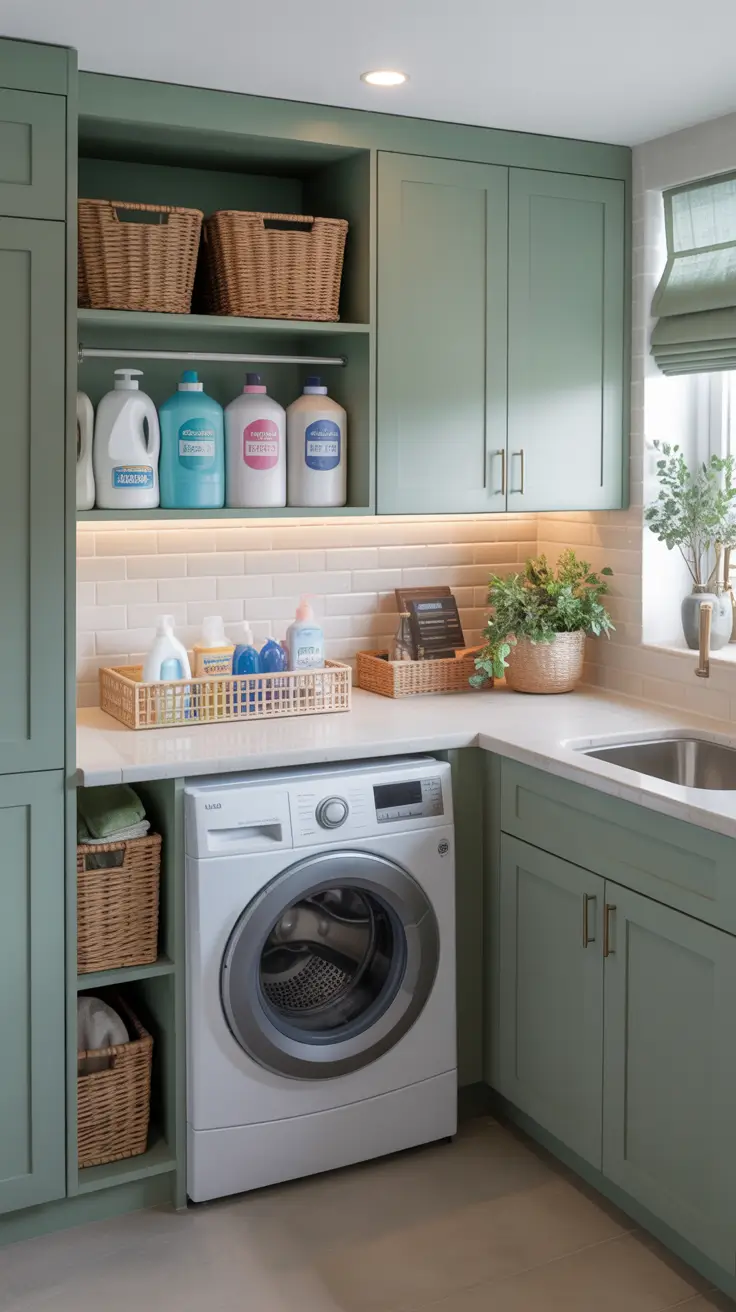
Drawing from practical experience and health guidelines, I stress keeping detergents out of reach of children and pets, supporting both safety and order.
Storing products in their original containers with instructions readily available is a simple but crucial safety and organizational practice.
13. Space-Savvy Tactics for Tiny Laundry Rooms
Tiny laundry spaces often serve as transitional zones and require smart vertical storage and multifunctional surfaces to remain practical.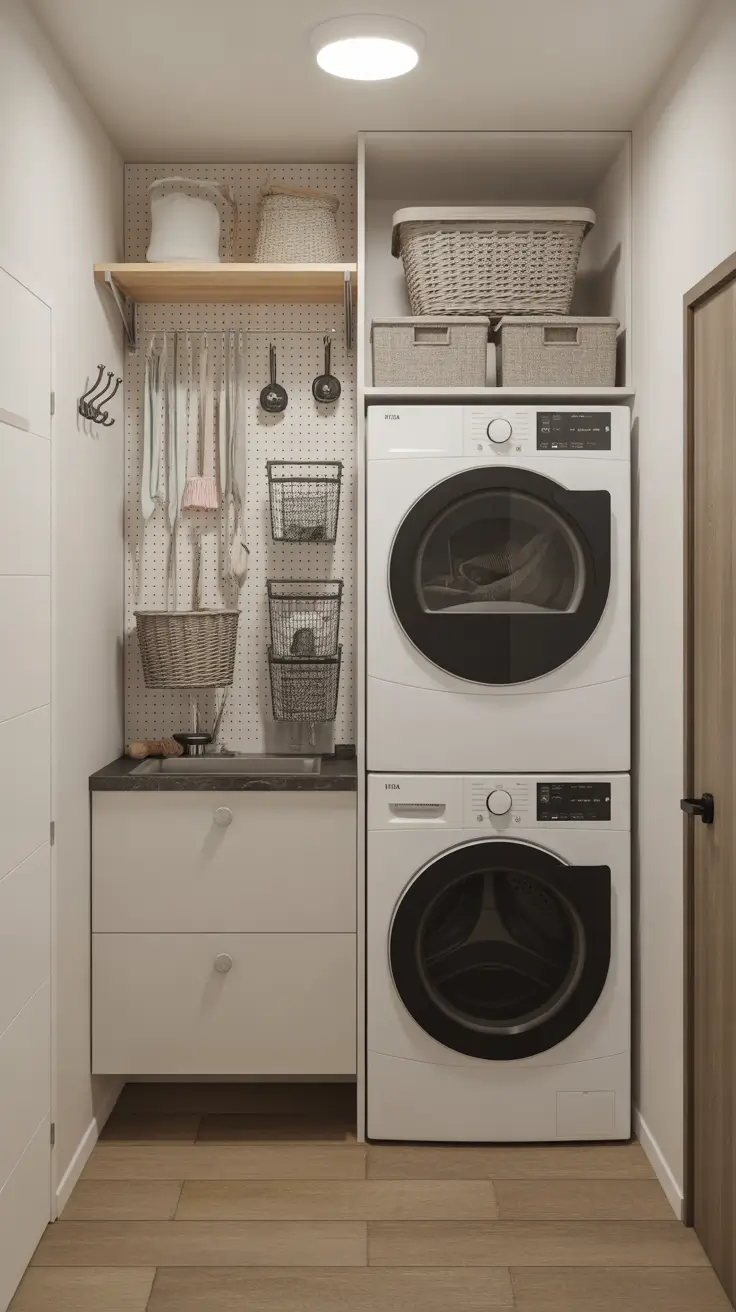
Building stacked appliances with shallow overhead shelves and wall hooks beside pegboards allows floor space conservation. Fold-down tables and drying racks offer flexible workspace that tucks away cleanly.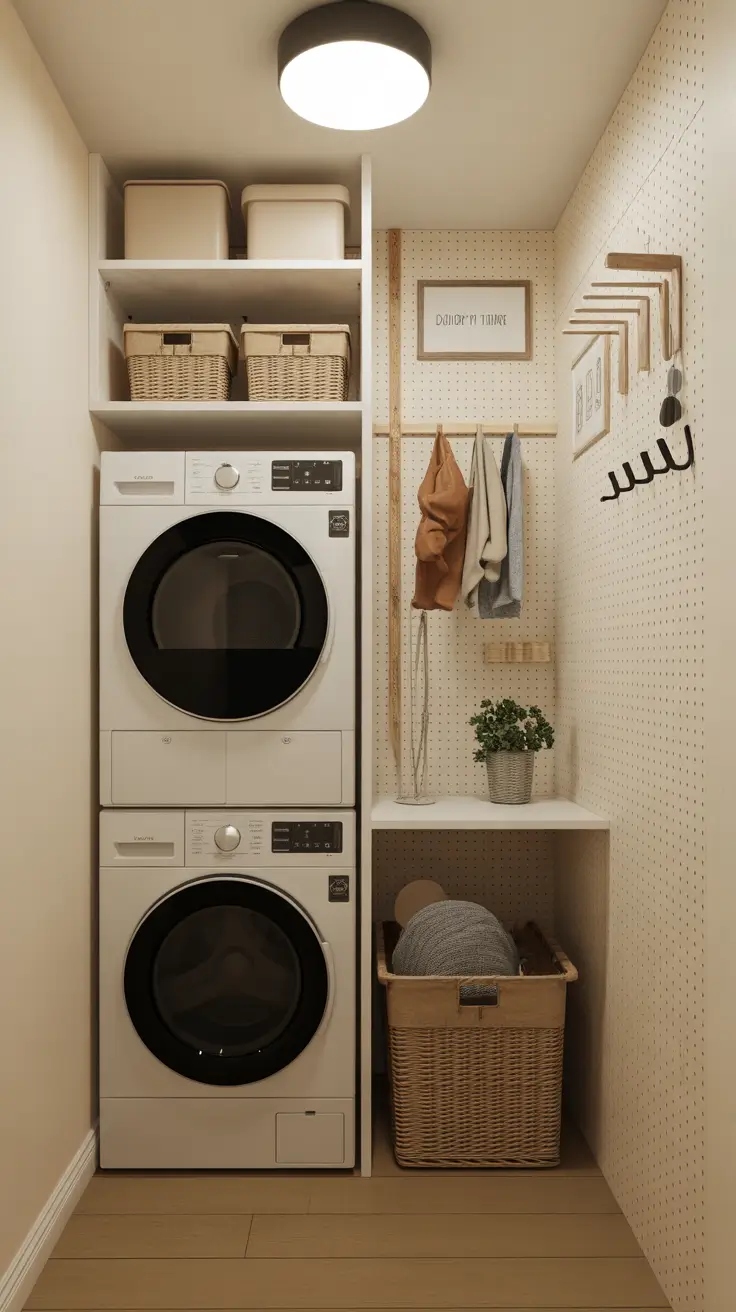
Strict curation of stored items—keeping only essentials in the laundry room and relocating others—helps maintain a sense of order and usability.
Proper lighting and ventilation are critical, even in confined laundry closets, to prevent heat buildup and maintain a comfortable environment.
14. Universal Storage Guidelines for Laundry Areas of Any Dimension
Whether a laundry room is expansive or petite, certain foundational storage principles apply: zoning tasks, ensuring workflow, and combining functionality with style. These tactics work across mudrooms, basements, or hallway closets to keep laundry zones tidy and efficient.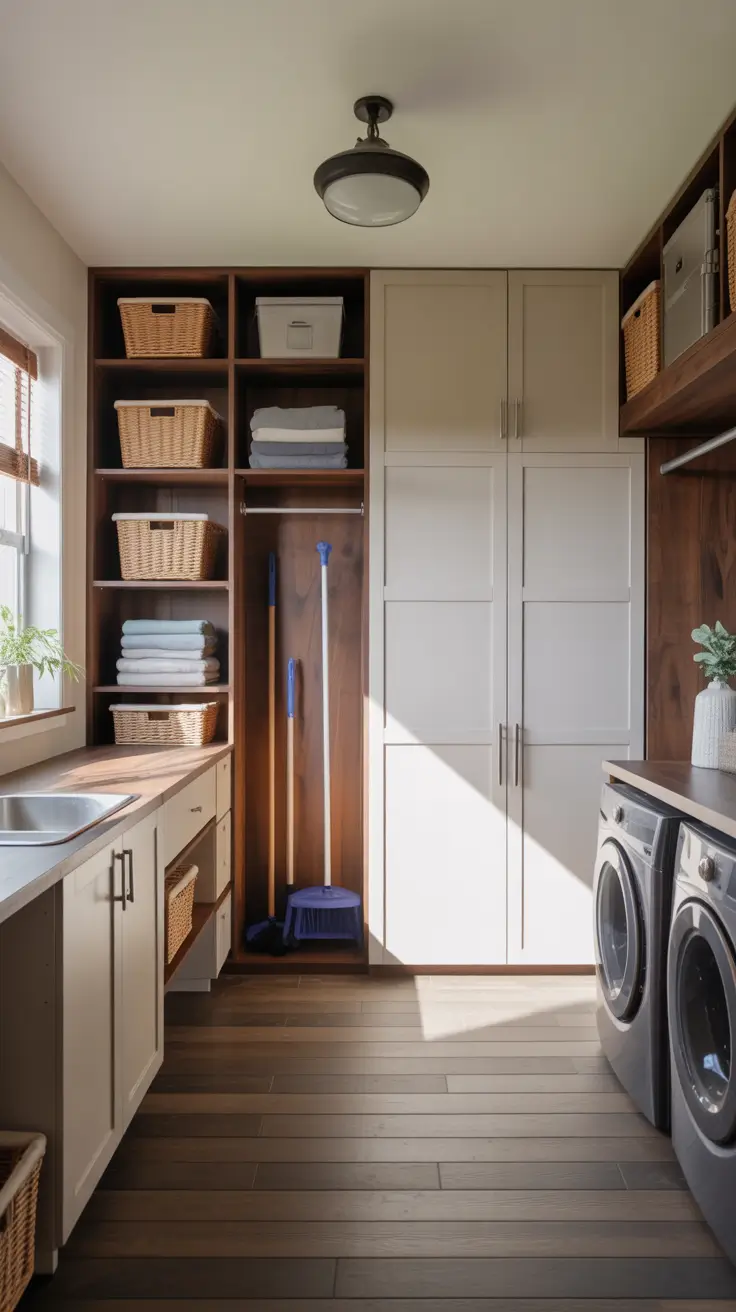
I segment spaces into sorting, washing, drying, folding, and storing. High shelves or cabinets house bulk items, with separate mop and broom storage and a dedicated folding area. Material choices and storage styles vary with themes—open wood shelving and metal baskets for farmhouse versus sleek, hidden hampers for chic interiors.
Consistent tidying routines supported by thoughtful design—like built-in benches or extra shelving—help maintain longevity of order and user satisfaction.
Regular decluttering sessions, ideally annual, ensure the space remains functional and free of obsolete or broken items.
15. Eco-Friendly Green Laundry Room Concepts
Green-inspired laundry rooms focus on sustainable materials and nature-infused décor, combined with efficient layouts that optimize laundry detergent storage and minimize clutter.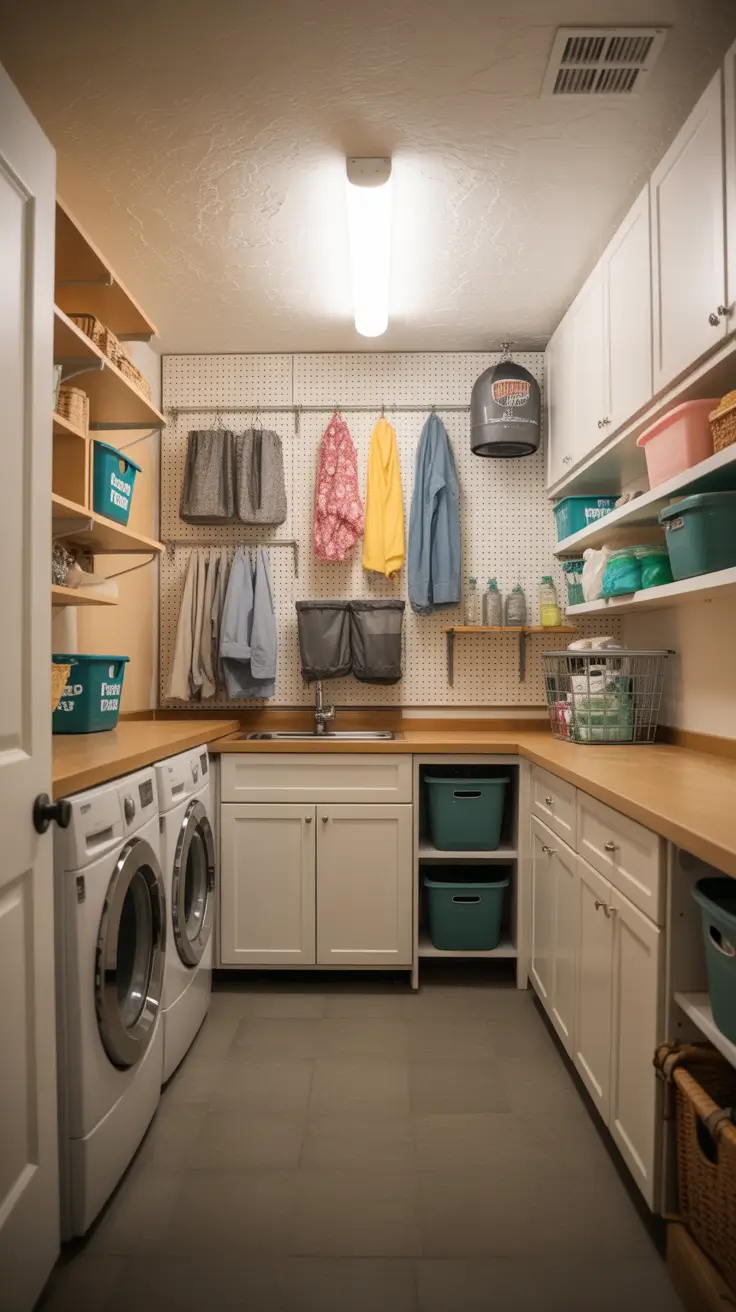
Earth-toned cabinetry, stone countertops, and ample natural light create a calm and inviting atmosphere. Sustainable storage elements such as bamboo shelves, recycled metal organizers, woven baskets, and biodegradable detergent containers embody eco-conscious living.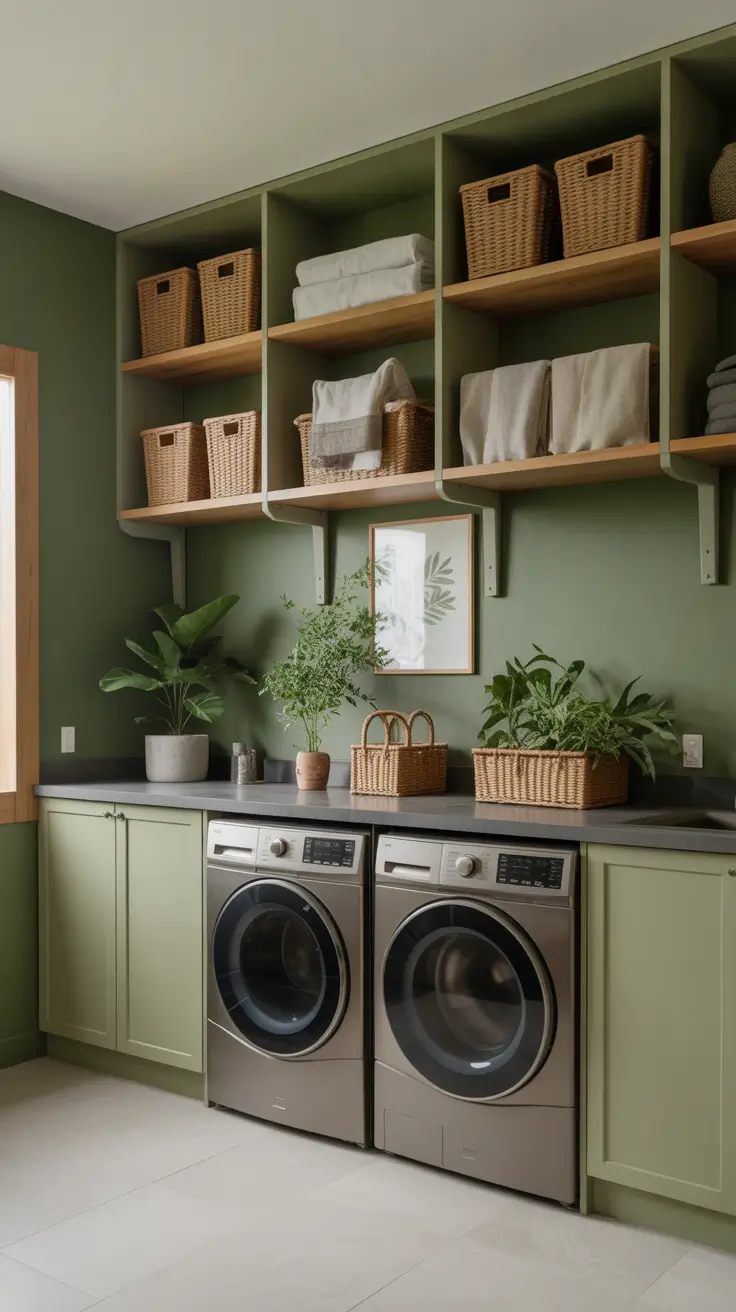
Integrating these with efficient mop and broom cabinetry and plant displays adds vitality and freshness. Soothing greens like sage, olive, and moss continue to appeal because they foster relaxation and connection to outdoor elements. Biophilic design not only beautifies but also supports mental well-being.
Prioritizing airflow with energy-efficient fans or improved ventilation prevents moisture buildup and preserves natural materials for durability.
16. Enhancing Laundry Rooms with Smart DIY Upgrades
DIY projects bring affordable and personalized improvements to small or unfinished laundry spaces, often transforming walls into functional areas with hooks, shelves, and modular racks.
Items like Ikea pegboard panels, economical bins, and custom detergent dispensers crafted from glass jars optimize storage with minimal investment. Portable rolling hampers are especially valued for adaptability under counters or in constrained areas.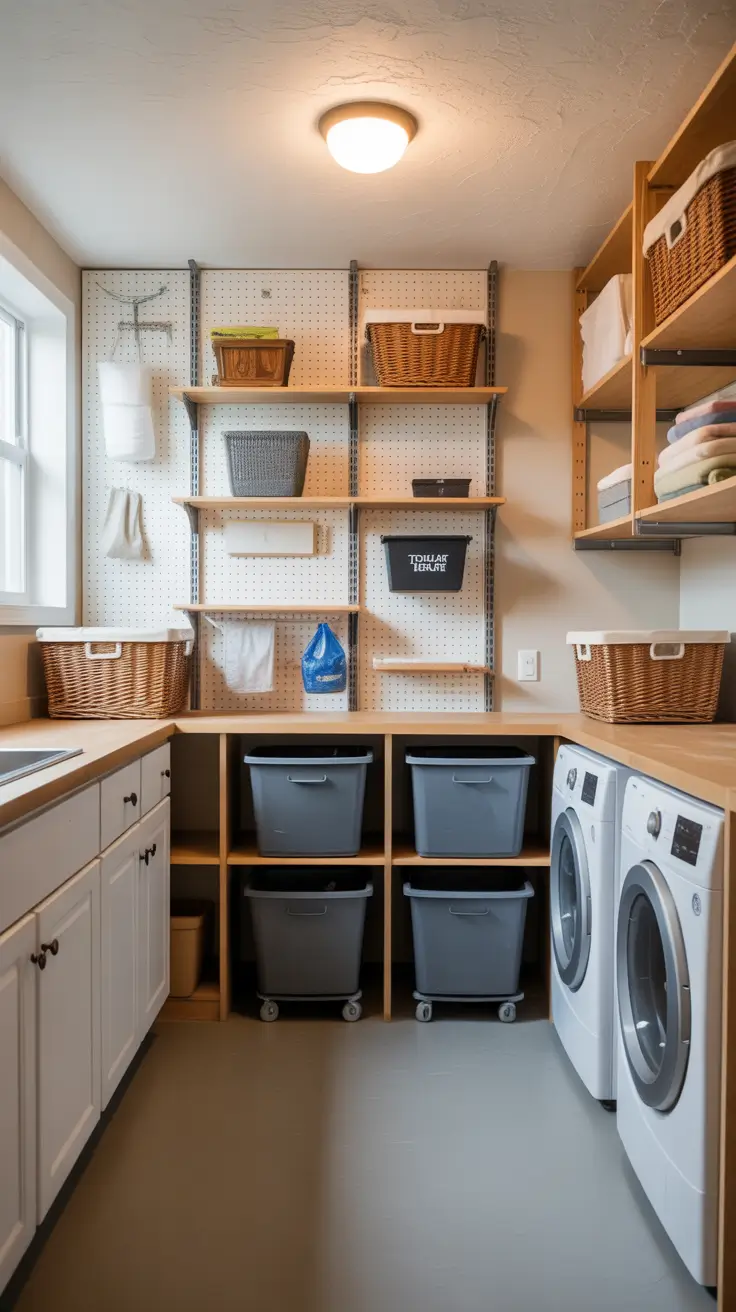
DIY enthusiasts appreciate painting old furnishings to refresh spaces affordably. Media outlets often recommend tackling clutter with simple projects that dramatically enhance appearance and utility.
Incorporating fold-away work surfaces complements DIY efforts by providing flexible, easy-to-install solutions well-suited to small space constraints.
17. Country Charm: Farmhouse-Inspired Laundry Room Designs
Farmhouse laundry rooms marry rustic warmth with practical features such as baskets, open shelving, and accessible cleaning supply storage. Warm wooden tones, vintage-inspired fixtures, and reclaimed wood counters evoke a cozy charm while supporting efficient chores.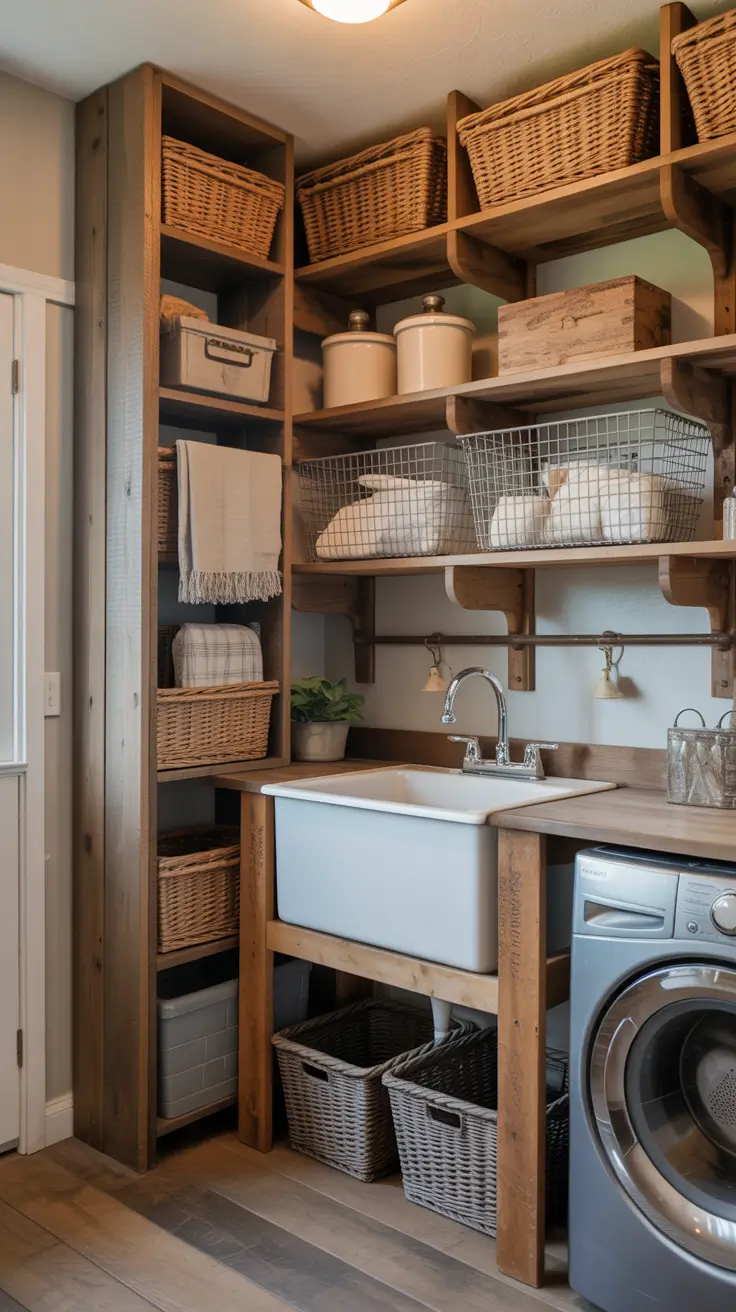
Typical elements include wire baskets, barn-style sliding doors, ceramic jars for detergents, and spacious utility sinks. Larger rooms might incorporate pet stations or multi-zone sorting setups.
Farmhouse interiors continue appealing due to their blend of nostalgic comfort and practical modernity, often enhanced by neutral palettes and balanced rustic textures.
Warm ambient lighting, such as sconces or pendant lamps, supplements daytime illumination to sustain a cozy atmosphere during darker hours.
18. Bold and Elegant Black-Themed Laundry Room Concepts
Dark-themed laundry rooms exude stylish sophistication through matte black fixtures, rich tiles, and sleek storage lines. This contemporary aesthetic works well in compact apartments and spacious homes alike.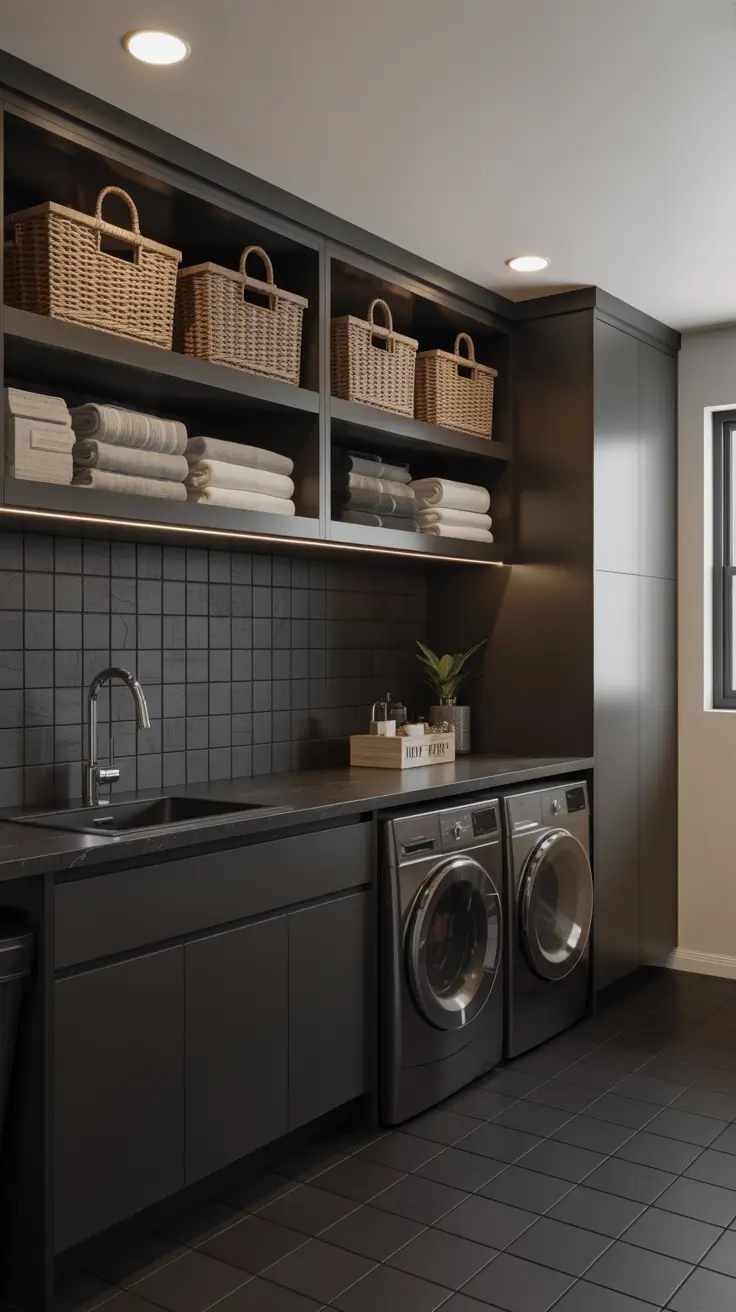
Furniture choices include black floating shelving, smooth quartz surfaces, glass containers for detergents, and slim towers near appliances. Elevated placement for top loaders ensures clearance, with under-shelf lighting enhancing functionality.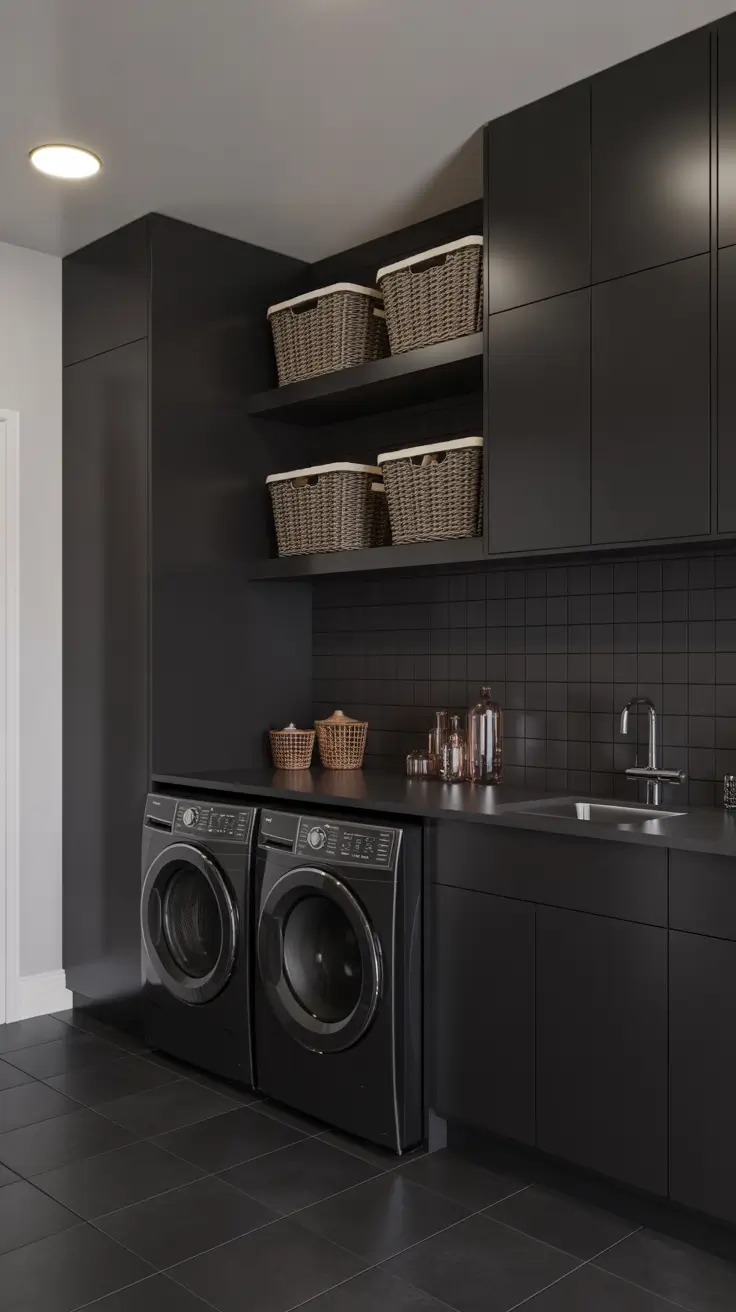
Contrasting finishes, such as matte cabinetry paired with glossy tiles, prevent a monotonous feel. Including a natural wood accent piece softens the dark palette and adds warmth to the space.
Soft-close fittings and sound-absorbing materials elevate daily use by reducing noise and increasing perceived luxury.
19. Streamlined Storage Strategies for Narrow Laundry Areas
Narrow laundry rooms demand smart space-saving solutions that prioritize vertical storage and efficient floor layouts. I emphasize using tall cabinets, slim shelves, and pocket doors to ensure free movement.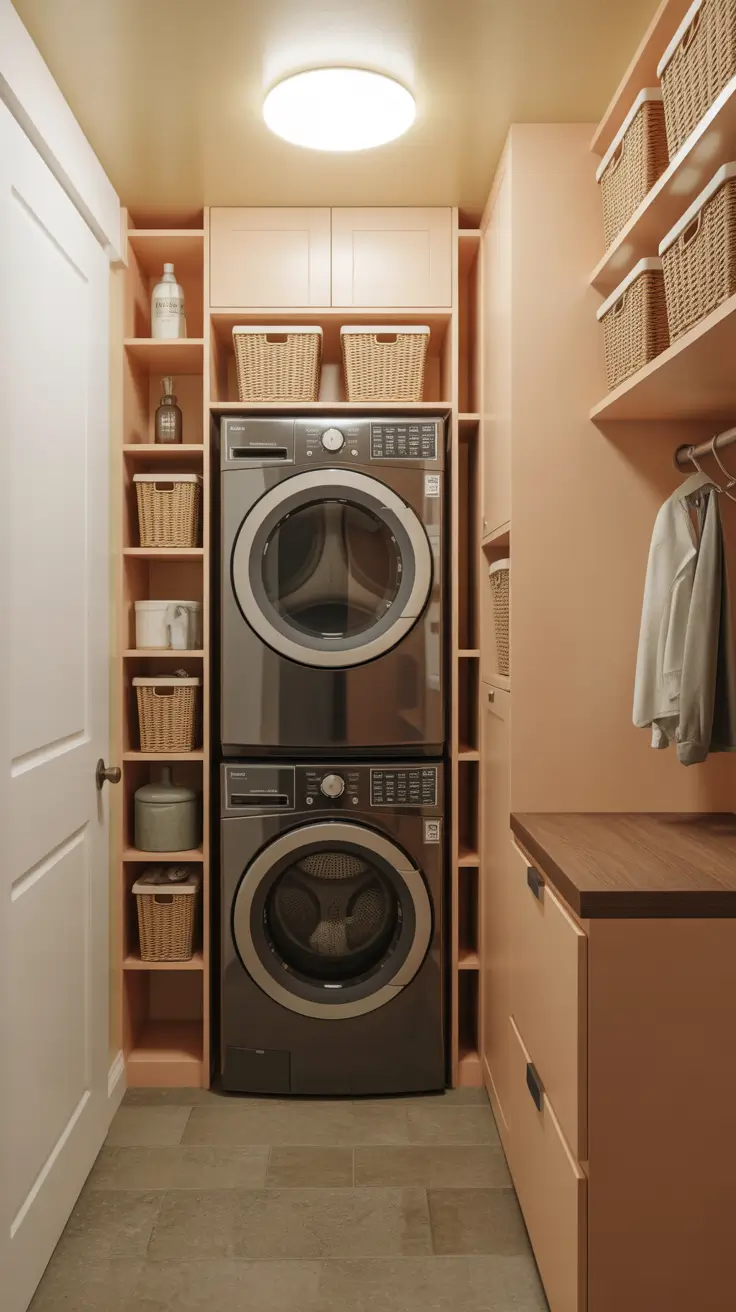
Stacked washer-dryer combos, pull-out hampers, and shallow bins minimize intrusion into walkways. Wall-mounted fold-down tables provide sorting/folding surfaces without occupying floor space. Detergent storage fits neatly into recessed niches, while vertical spots accommodate brooms and mops.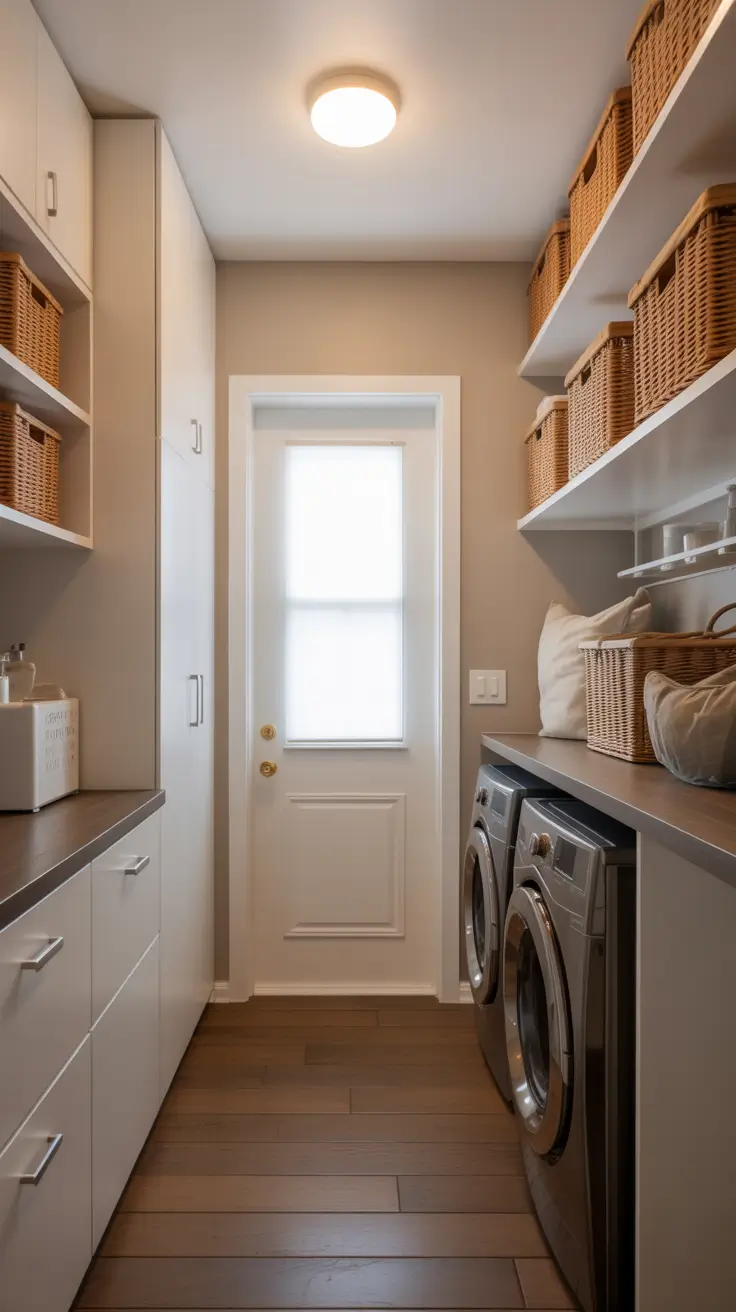
Bright lighting and reflective surfaces, such as mirrors or glossy wall panels, visually expand the area. A consistent color scheme maintains harmony and minimizes distractions.
Incorporating futuristic elements like motion-activated lighting and slim slide-out carts can further boost space efficiency and usability.
20. Embracing Moody and Artistic Laundry Room Styles
Moody designs employ deep colors like charcoal, forest green, navy, or plum to imbue laundry spaces with character and elegance while maintaining effective storage solutions.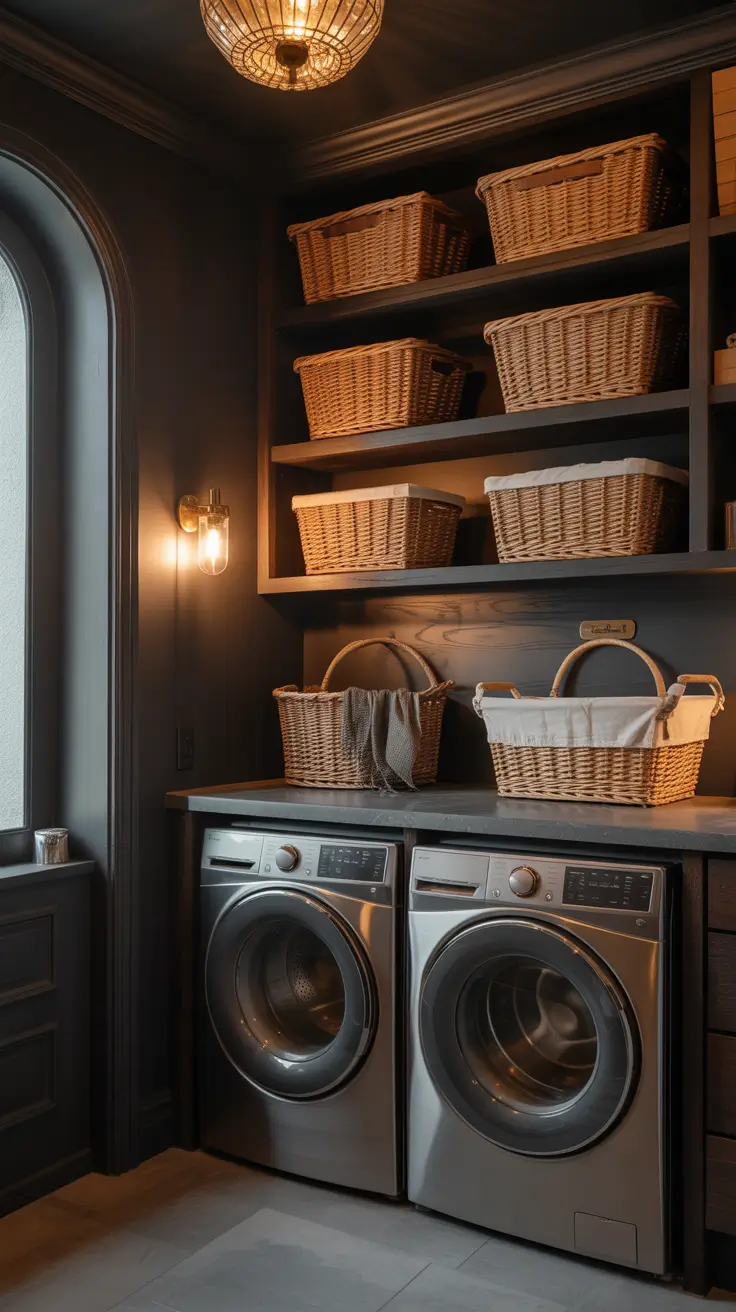
Dark wood shelves, brass hardware, ambient sconces, stone counters, and decorative detergent holders create a layered, tactile environment. Wall-to-wall shelving, built-in hampers, and labeled baskets maintain order amidst the rich palette.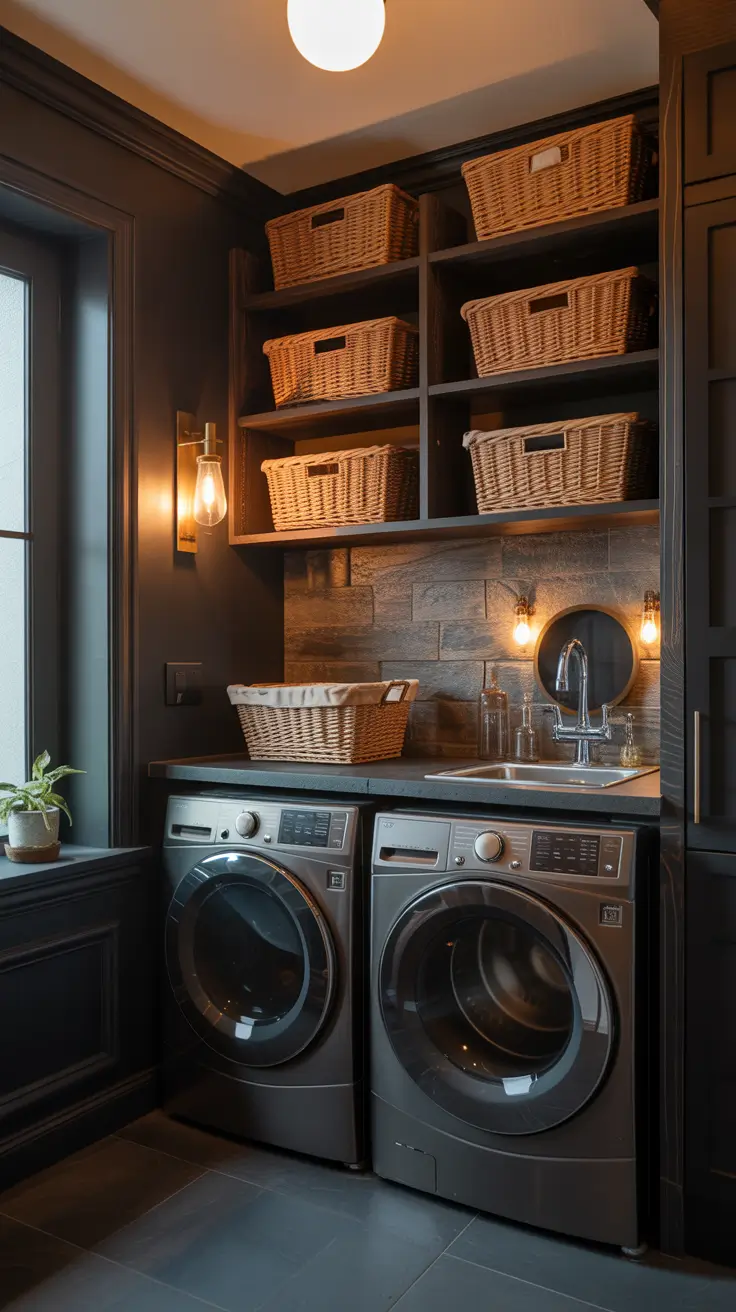
Thoughtful multi-source lighting ensures the space doesn’t feel oppressive, while textured fabrics and plants soften the atmosphere.
In basements, adding sound-dampening panels or rugs improves acoustics and complements the moody aesthetic.
21. Luxurious Laundry Rooms with High-End Functional Storage
Luxury laundry rooms blend premium materials, state-of-the-art appliances, and smart storage to create a refined and practical workspace.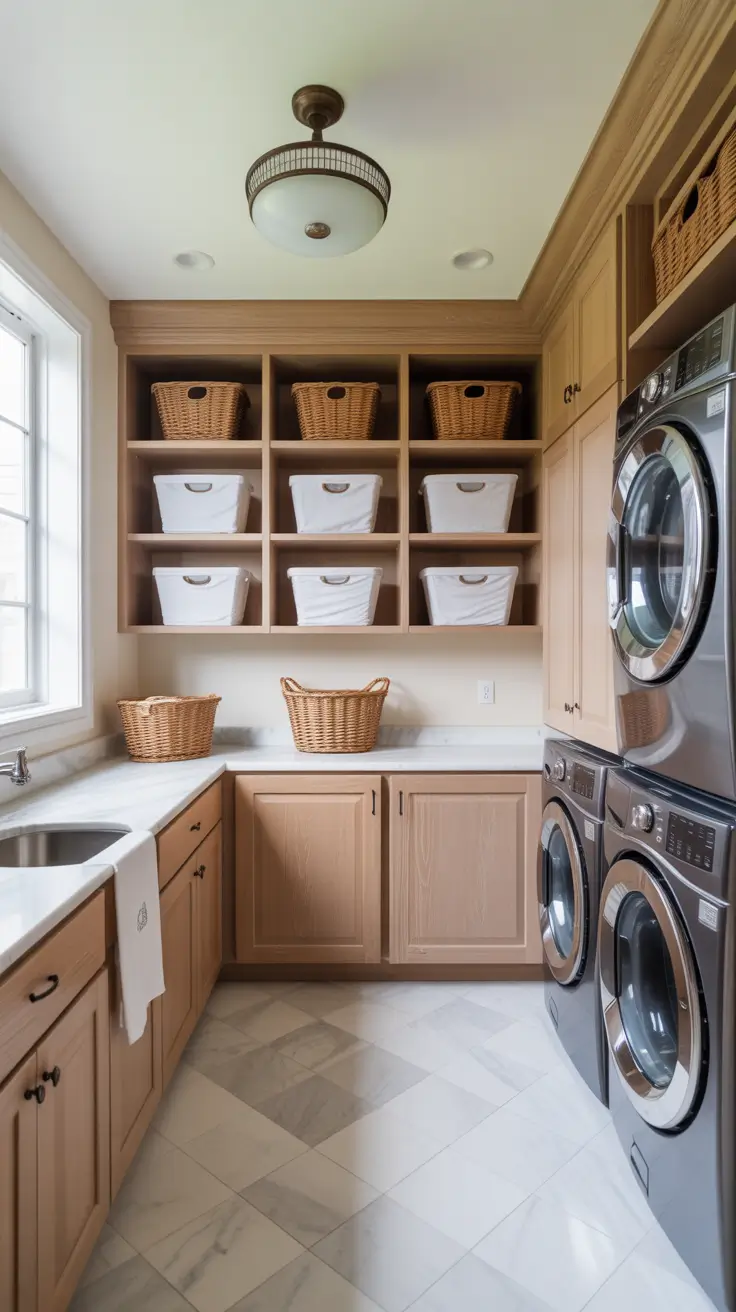
Elements like marble countertops, custom cabinetry, integrated lighting, and wall-to-wall shelving define the space. Built-in drying cabinets, soft-close drawers, and elegant backsplash tiles elevate style while practical storage options efficiently house cleaning products and pet supplies.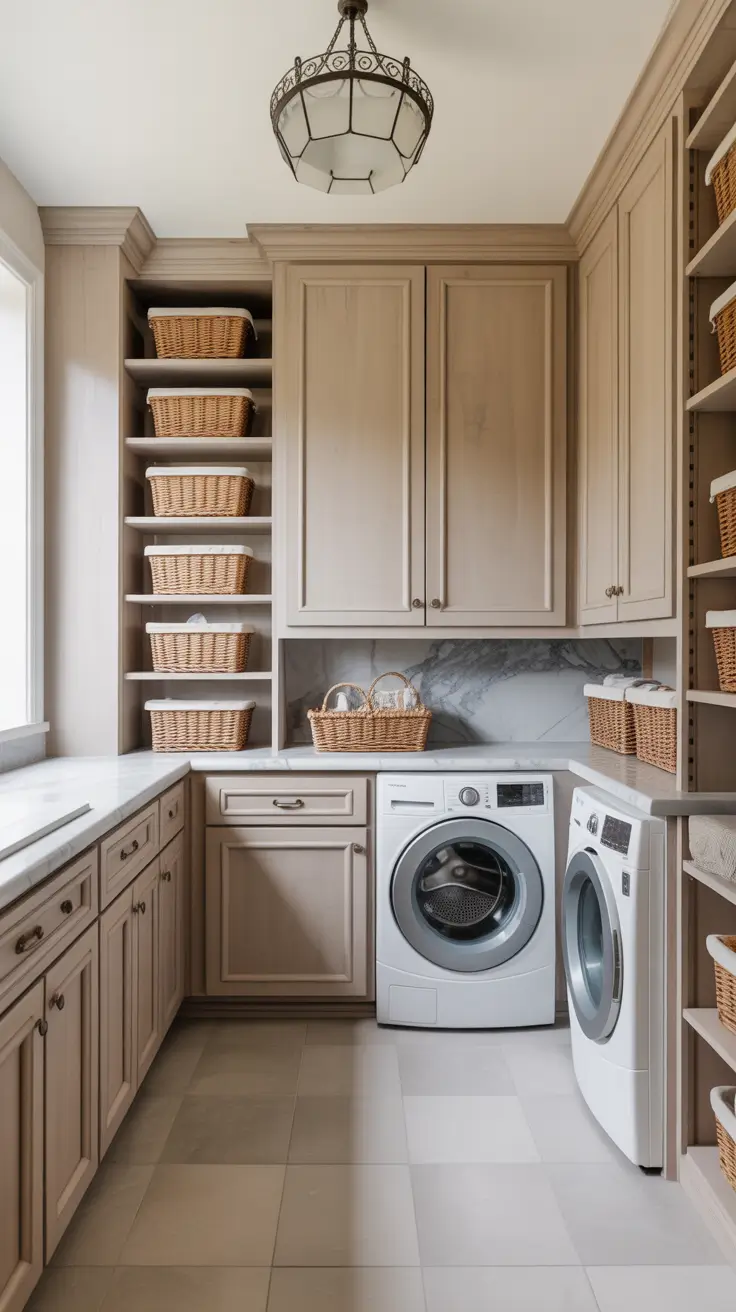
Cutting-edge features like steam closets or automated sorting systems add convenience and sophistication, imparting timeless value and ease of use.
Including ironing stations with integrated storage enhances workflow by consolidating folding and organizing processes.
22. Cozy and Practical Rustic Laundry Room Storage Ideas
Rustic laundry designs emphasize warmth, texture, and functional storage that feels inviting without being overly refined. I often liken these spaces to charming cottage utility rooms, ideal for large homes or unfinished basements.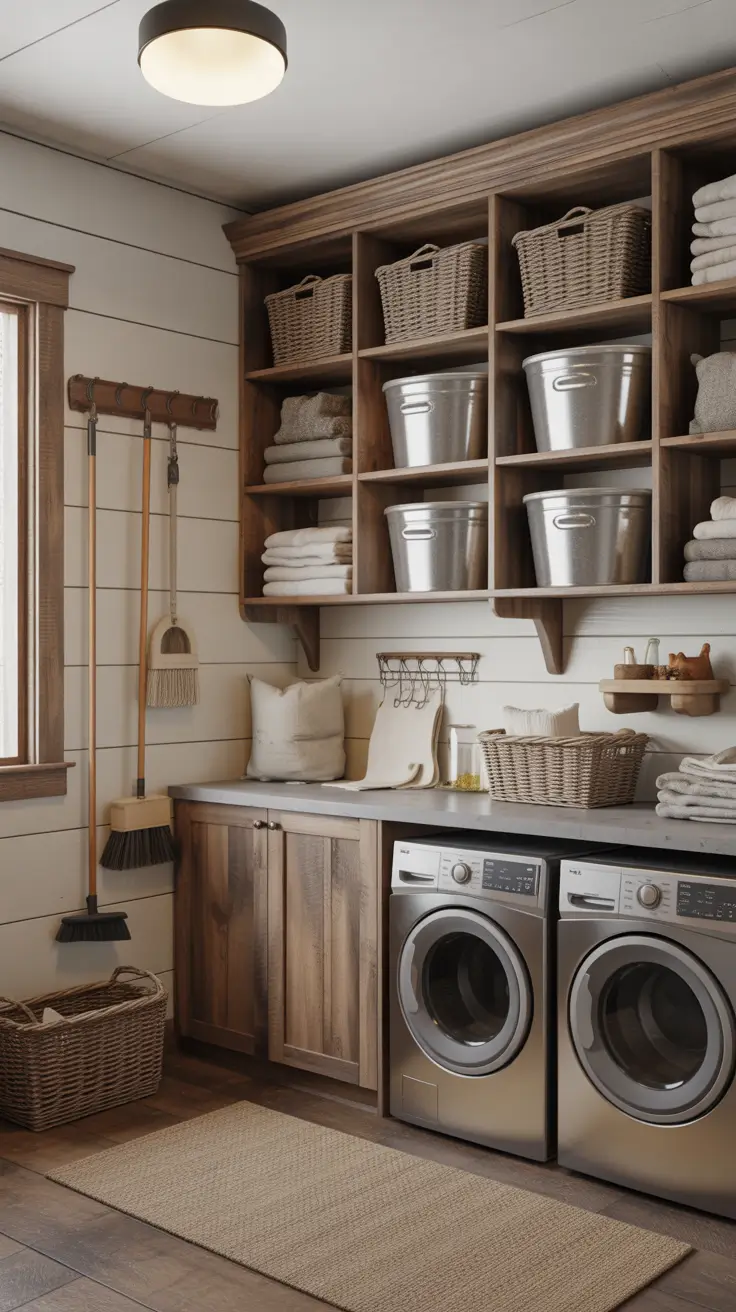
Chunky wooden shelves, shaker-style cabinets, galvanized metal bins, and woven baskets provide versatile storage. Assigning baskets per family member or fabric type streamlines sorting. Peg rails for mops, brooms, bags, or dog leashes blend utility with rustic charm. Detergent often resides in ceramic jars or glass containers for easy access and visual warmth.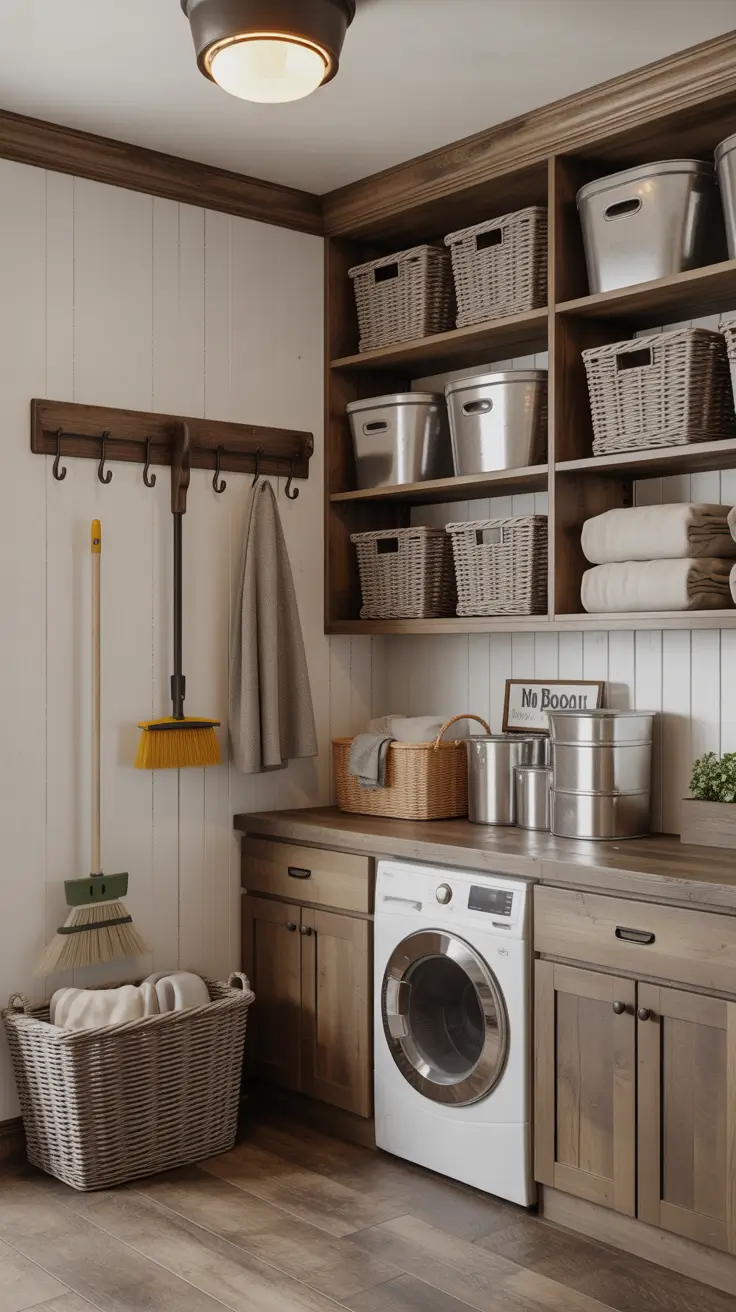
Rustic interiors allow flexibility, forgiving a busy household. Neutral textiles with stripes or plaids sustain the cozy aesthetic without overwhelming the space.
A dedicated dog food bin with a sturdy lid fits well in rustic designs, keeping pet items orderly and out of sight.
23. Elevating Laundry Rooms with Thoughtful Home Décor Integration
Modern laundry rooms often transcend utility by weaving decor elements that unify the space with the home’s overall style. Treating the laundry as an extension of living or kitchen areas results in cohesive color schemes, complementary materials, and curated art.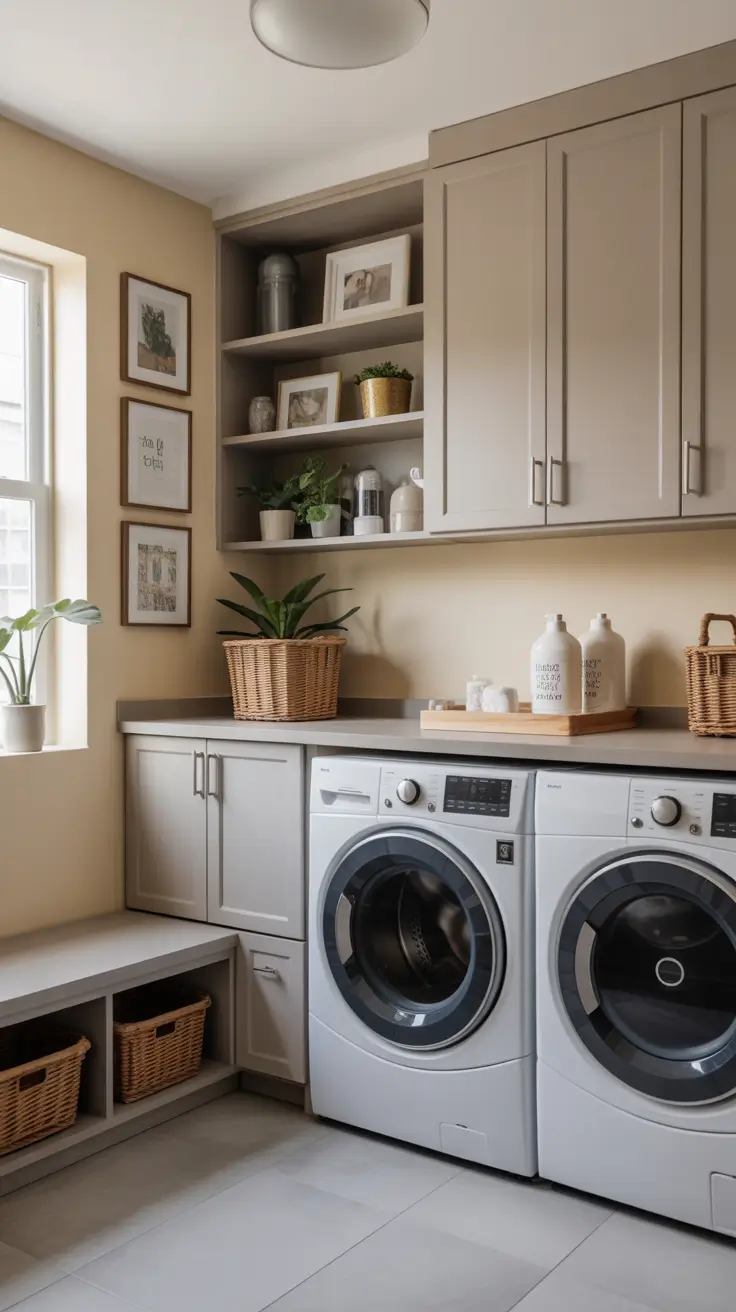
Furniture might include framed artwork, ambient lighting, and attractive containers for cleaning supplies. Staining cabinetry to match kitchen hues or choosing matching hardware further blurs the boundaries between functional and decorative zones. Space-saving benches or slim consoles add style and utility, particularly near entrances or hallways.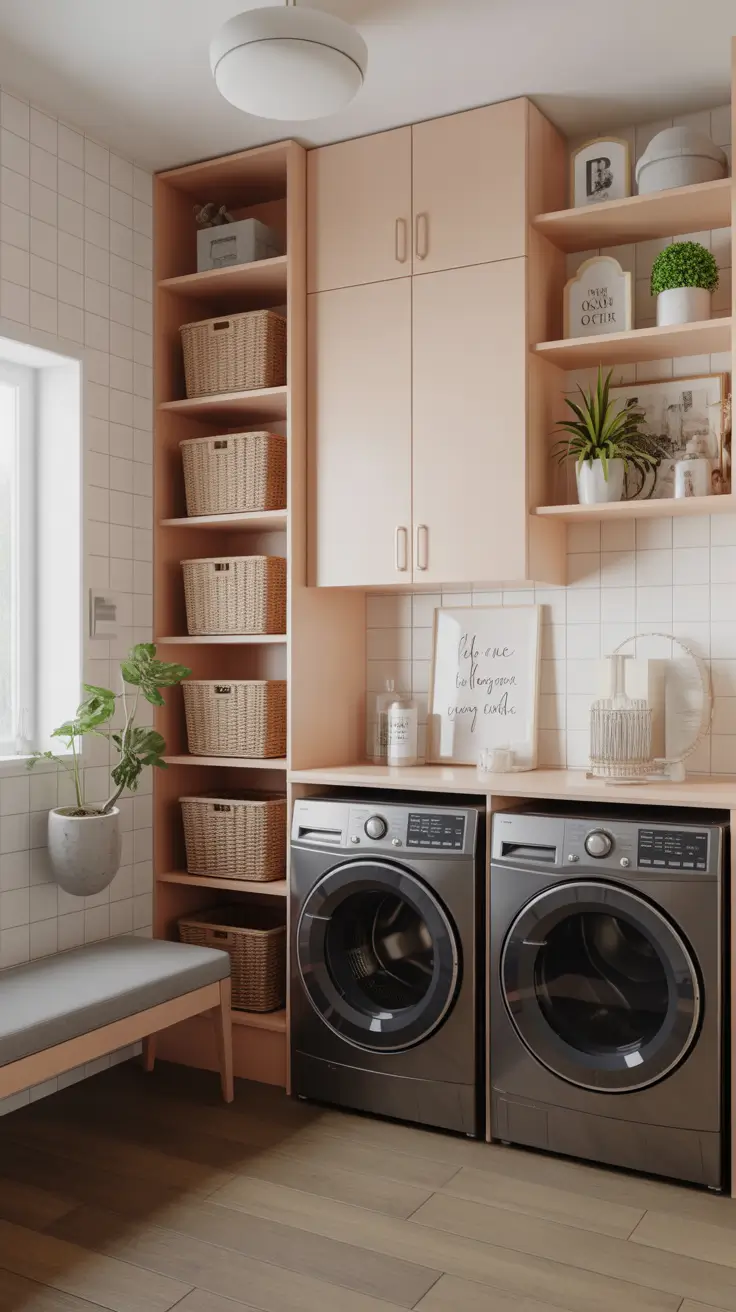
Homeowners often show increased motivation to maintain tidy spaces when their laundry rooms have a personal design touch that feels inviting rather than purely functional.
Using budget-friendly decorative items like Dollar Tree organizers alongside Ikea shelving demonstrates that stylish laundry rooms need not break the bank. Combining affordable, efficient storage with selected luxe accents strikes an ideal balance.